With autumn now officially here, the Botanic Garden is bursting with fungal wonders. Although fungi are present all year round, the cooler and wetter weather of autumn provides the ideal conditions for fungi to produce their fruiting bodies – the spore-producing parts of a fungus that allow reproduction. There’s no better time to embark on a fungal foray!
A Haven for Fungi
The Botanic Garden’s varied landscape and mix of habitats provide the perfect refuge for an extraordinary array of fungal species – each one as weird and wonderful as the next. From woodlands and meadows to lawns, flower beds, and even compost heaps, every corner offers something unique for these organisms. The Garden is also home to a whole host of different plant species, allowing fungi to create the vital mycorrhizal associations needed by both organisms to thrive.

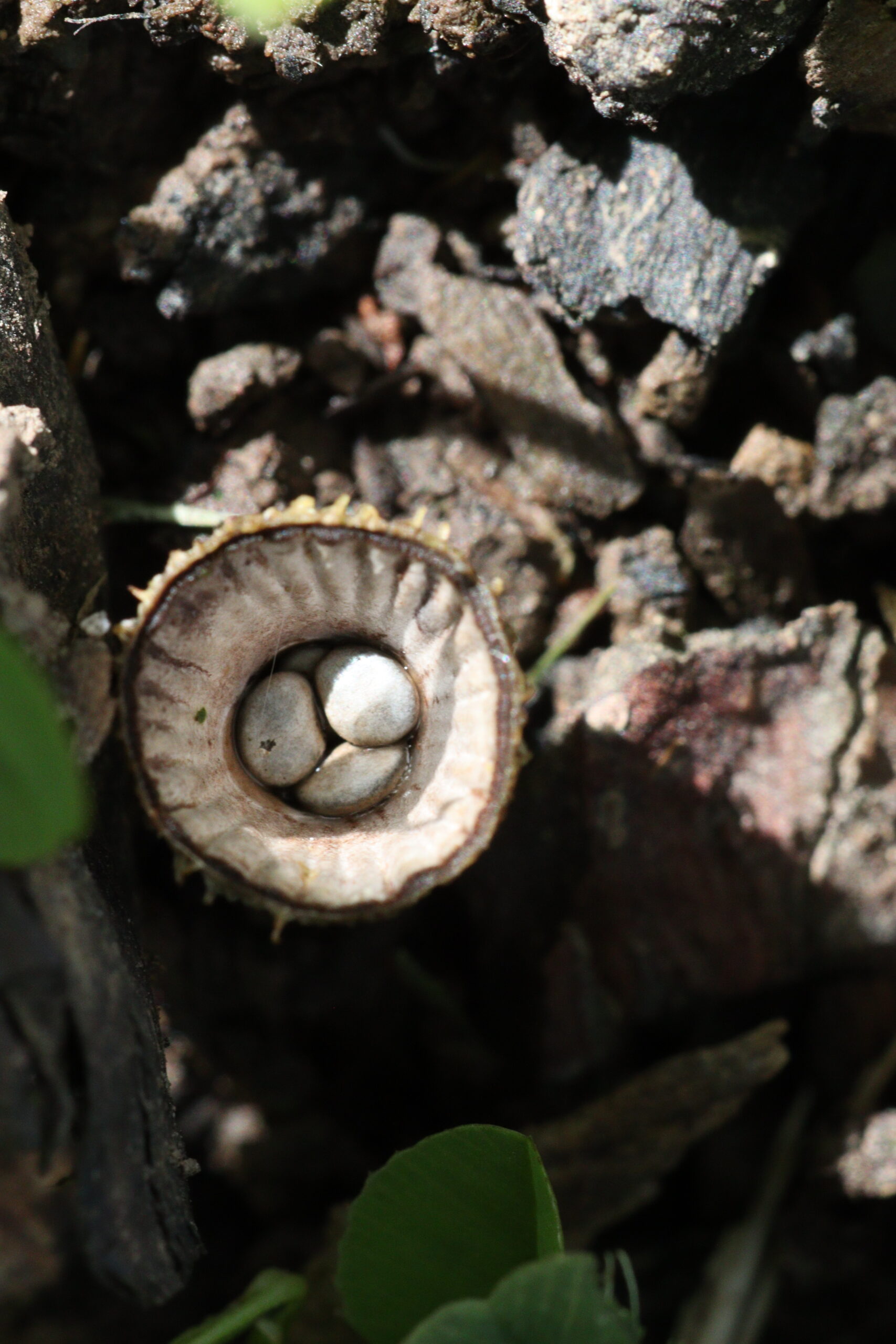

Celebrating UK Fungus Day
On October 5th, we celebrated UK Fungus Day; a whole day dedicated to the fascinating fungal kingdom. We welcomed local experts and even a professor to give talks and tours to share their knowledge and insights on fungi. Attendees searched high and low, staring closely at the ground, discovering species in new areas, and got to see these incredible organisms up close.
Exploring the Meadows
The day kicked off with a very well attended tour by local ecologist, and former Head of Interpretation at the Garden, Bruce Langridge.
As participants strolled through the Garden’s grassy habitats, they were captivated by the tiny fungi beneath their feet. Children, with their sharp eyes, spotted some of the smallest toadstools, adding excitement to the group’s findings. One such highlight was the Honey Waxcap (Hygrocybe reidii), which was passed around to smell its honey-scented flesh, delighting those who could detect it.
Exciting Discoveries at Cae Gwair
Cae Gwair, our experimental hay meadow, also delivered some discoveries. In 2019, green hay was used to restore the meadow and since then new species have been popping up every year, including fungi! On Bruce’s ‘Meadows and Grasslands’ tour, participants found five species of waxcap, bringing the total number of waxcaps recorded in Cae Gwair to six:
- Gliophorus psittacina – Parrot Waxcap
- Cuphophyllus virgineus – Snowy Waxcap
- Hygrocybe reidii – Honey Waxcap
- Hygrocybe chlorophana – Golden Waxcap
- Hygrocybe ceracea – Butter Waxcap
- Porpolomopsis calyptriformis – Ballerina Waxcap

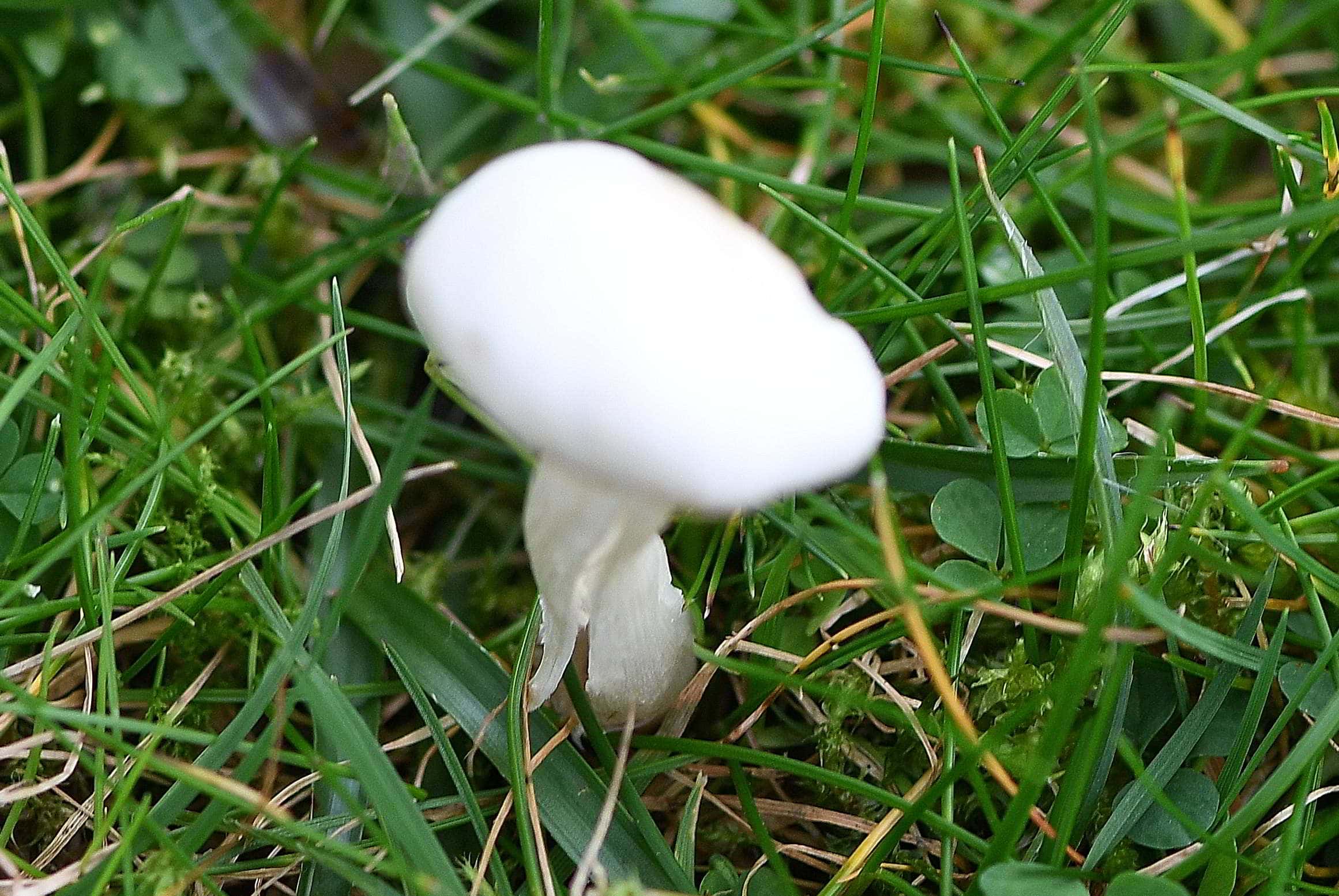
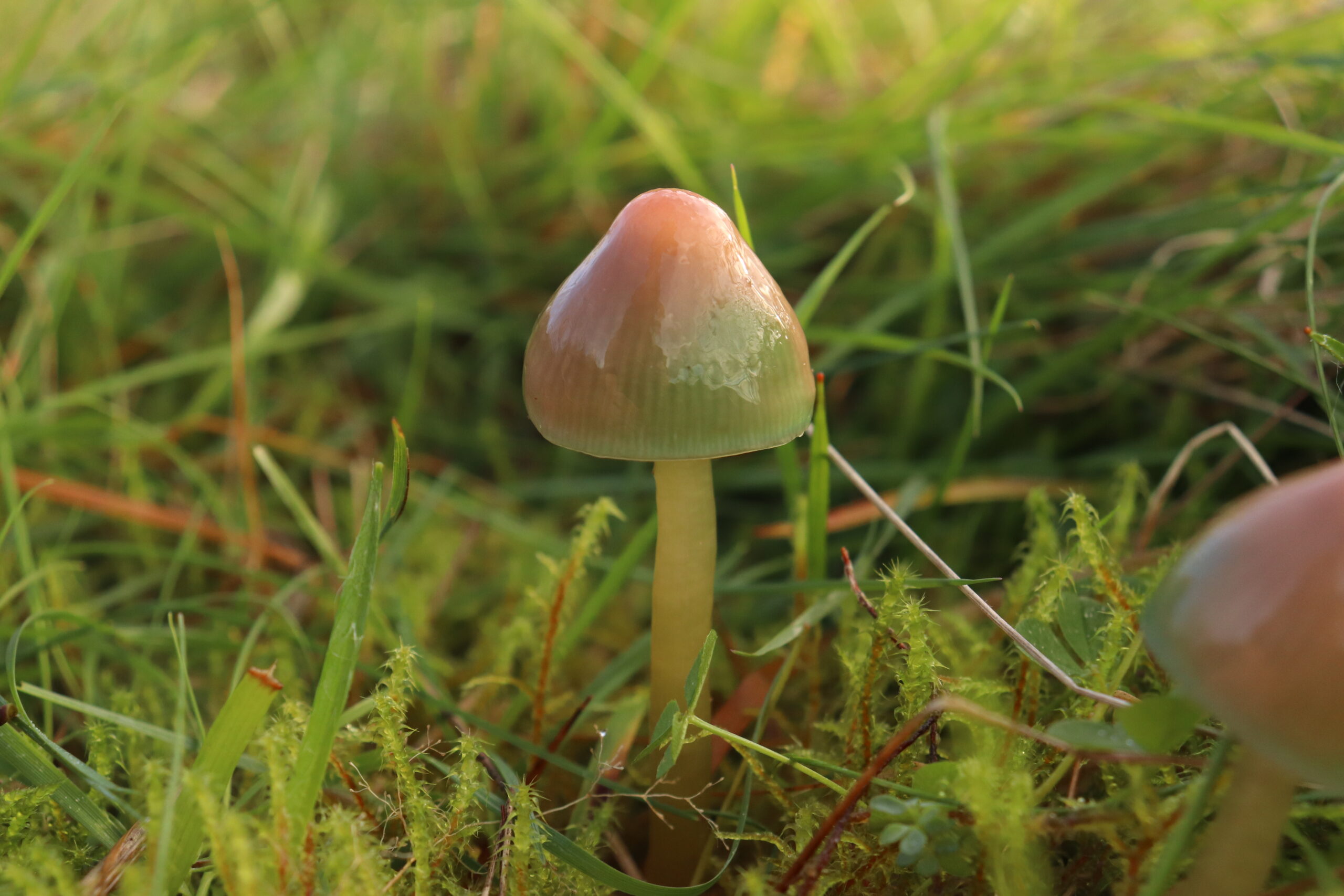
This is great news, as waxcaps are key indicators of healthy, biodiverse ecosystems, thriving in low-nutrient, undisturbed soils, of which we have plenty on our Waun Las National Nature Reserve. These discoveries are a sign of the success of our organic farming and land management practices, underscoring the importance of restoring and protecting species-rich grasslands.
Insights from Professor David Hawksworth CBE
We were privileged to have Professor David Hawksworth, CBE, share his vast knowledge of fungi. With over 50 years of research experience, Professor Hawksworth discussed the omnipresence of fungi, permeating all parts of our lives — from their role in medicine and food security to their impact on the environment. Despite fungi’s integral role in daily life, the majority of species remain undiscovered; Professor Hawksworth estimates that we’ve identified only about 6% of the world’s fungal species, leaving millions yet to be named (Hawksworth & Lücking, 2017).
More Mycological Wonders
Another highlight of the day was a tour by expert mycologist, Emma Williams of Coal Spoil Fungi, who led visitors through an exploration of the Garden’s fungal diversity. With her sharp eye and a vast wealth of knowledge, she introduced the audience to a host of new and unusual species, each varying in shape, size, colour, and even scent!
We were also excited to be joined by Plantlife this year, who brought some waxcap specimens for visitors to look at more closely. You, too, can get involved in identifying important grasslands by participating in Plantlife’s Waxcap Watch, helping to record waxcaps in any grassy habitats near you.
A Day to Remember
UK Fungus Day was a fantastic celebration of fungal life at the Botanic Garden and beyond. Children and adults alike were enthralled by these fascinating organisms, learning about their ecology and conservation, and viewing their intricate details up close under the microscope.
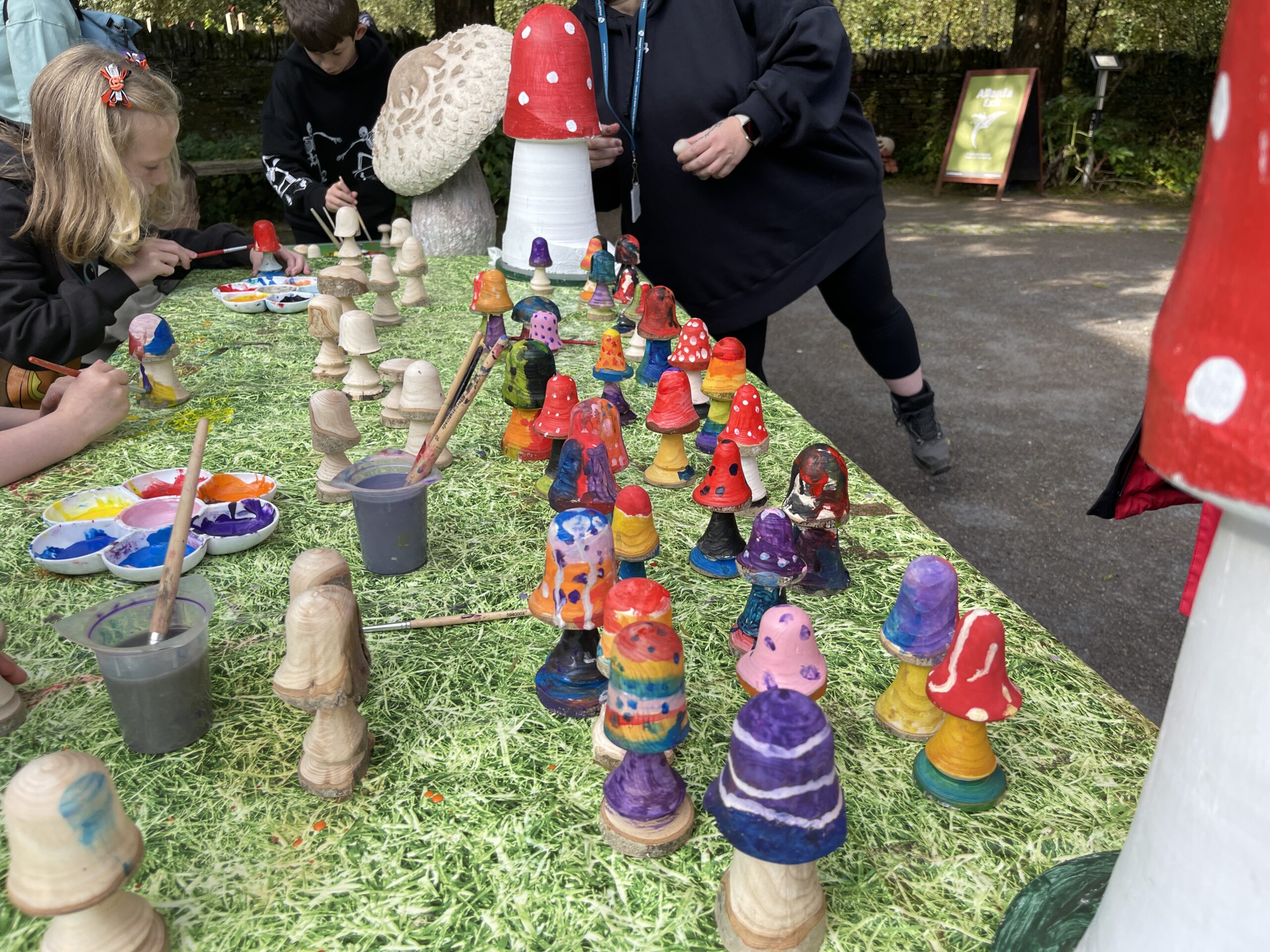
A QR code trail with some beautiful artistic illustrations took visitors on a journey to learn about different species and their identification. There was even the opportunity for visitors to create their own mushroom species with wooden mushroom painting.
Fungi Season is Just Beginning!
If you missed the event, don’t worry—fungi season has only just begun. Now is the perfect time to get outside and explore the fungal wonders hiding in plain sight. Remember, fungi are everywhere!


Further Reading
Hawksworth, D.L., Lücking, D. (2017). Fungal Diversity Revisited: 2.2 to 3.8 Million Species, Microbiology Spectrum.
Waxcaps and Grassland Fungi: A guide to identification and management, Plantlife Cymru.
For more insights into the fascinating world of fungi at the Garden, check out two episodes of The Flowerpot Podcast to hear Bruce Langridge and Emma Williams further discuss their passion and knowledge for fungi:
The National Botanic Garden of Wales is supported by Welsh Government’s Nature Networks Fund, funding work to deliver infrastructure improvements on Waun Las NNR, allowing us to manage the site for improved biodiversity and engage with visitors on our natural heritage.
