As the seed collecting season wraps up, it’s the perfect time to reflect on the seed banking work that the Science Team at the Garden has accomplished this year. Now into its fifth year, the National Seed Bank of Wales is steadily growing, with seeds preserved from a diverse array of both common and threatened plant species from across Wales.
We’ve also been contributing to some exciting reintroduction and conservation projects this year – continue reading to learn more!
Seed Collecting
As ever, we’ve been working in close collaboration with the Millennium Seed Bank (MSB), and have been actively involved in two of their projects this year: the UK Tree Seed Collecting Project and the Crop Wild Relatives initiative. Both projects are vital to safeguard the genetic diversity of native plant species, ensuring that seed is available for research, conservation and species restoration for decades to come.
UK Tree Seed Collecting Project
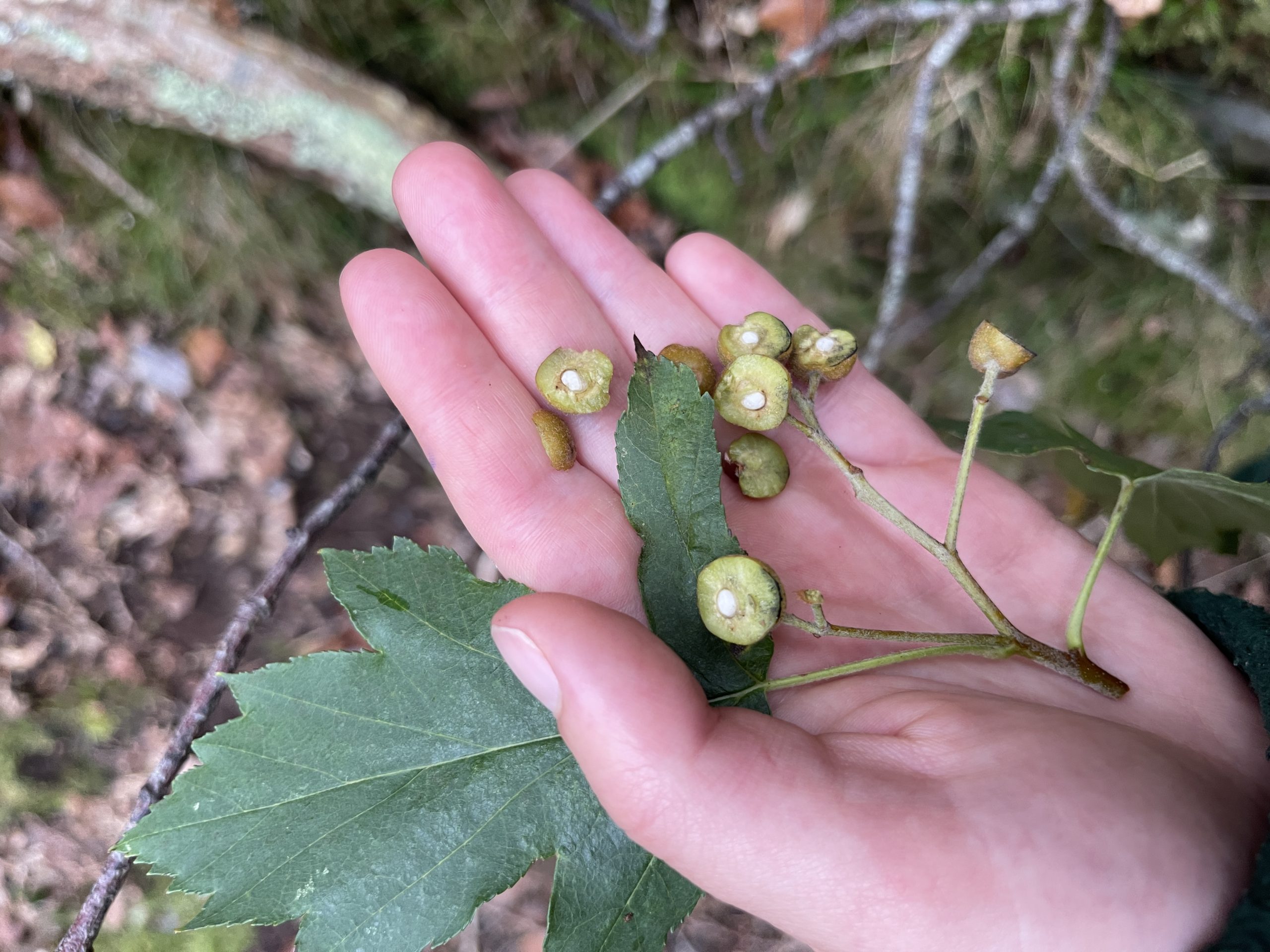
Building on the success of the UK National Tree Seed Project, this year’s tree seed collecting initiative aims to fill both species and geographic gaps in banked collections. This project targets a mix of common species, like Hawthorn (Crataegus monogyna), Blackthorn (Prunus spinosa), and Alder (Alnus glutinosa), as well as some rarer finds, such as the Wild Service Tree (Sorbus torminalis) – a key indicator of ancient woodland and increasingly scarce in Wales.
One of the challenges has been locating viable sites that meet the MSB’s guidelines, which recommends that seeds are collected from trees within on near ancient woodland. Thankfully, we received invaluable help from local contacts and botanists from the Botanical Society of Britain and Ireland, who guided us to promising sites.
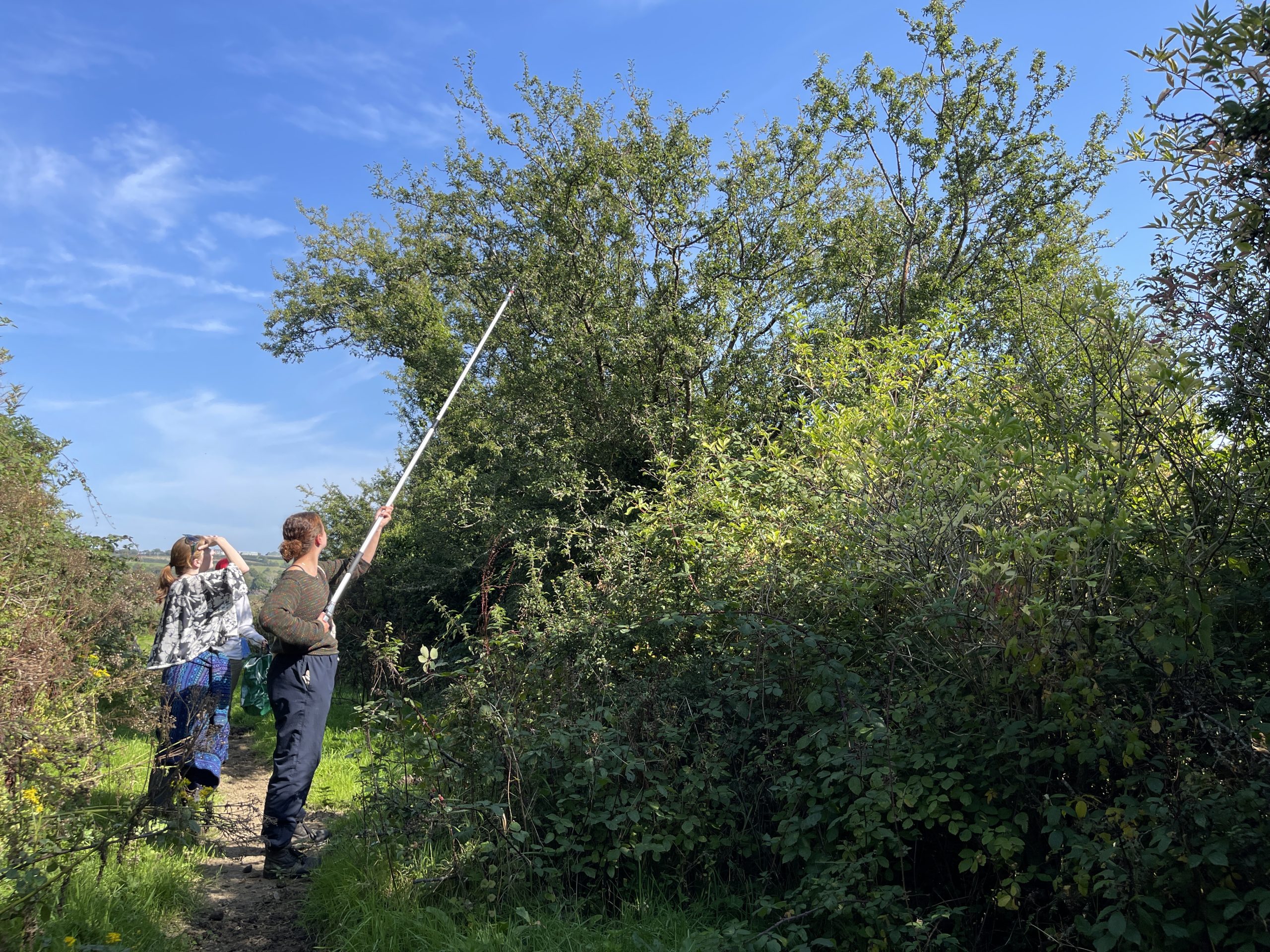
With the support of the Wildlife Trust of South and West Wales, we successfully collected seed from Hawthorn, Blackthorn, Alder and Wych Elm (Ulmus glabra) from sites around Cilgerran and the Teifi Marshes Nature Reserve.
Venturing further afield, we visited the Aber Mawddach area of North Wales, where we managed to collect Guelder Rose (Viburnum opulus), Hawthorn, Alder and Wild Service Tree from various sites.
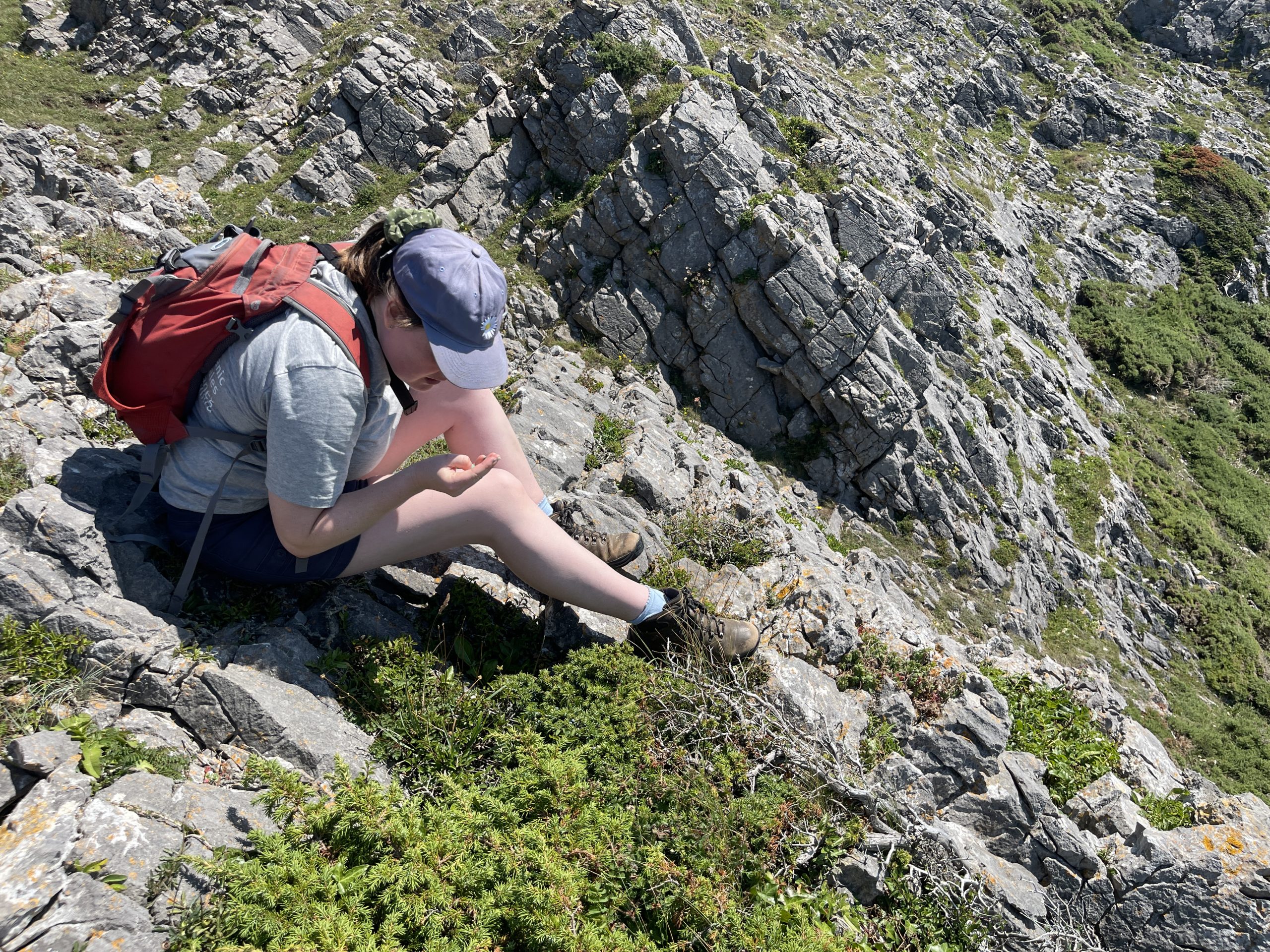
We also explored the Gower coast in search of Juniper (Juniperus communis), which we found a good population of along some areas of craggy cliffs. Despite the presence of the shrubs, seed collecting this species proved challenging; sparse cones and low-viability seeds meant that we had to hold off on collecting Juniper this season. Such are the ups and downs of seed collecting – never quite knowing what each field visit will yield. We hope that seed set will improve in future years, enabling a collection to be made.
In total, we successfully made nine tree seed collections this season, from six different species covering various locations across Wales.
Crop Wild Relatives
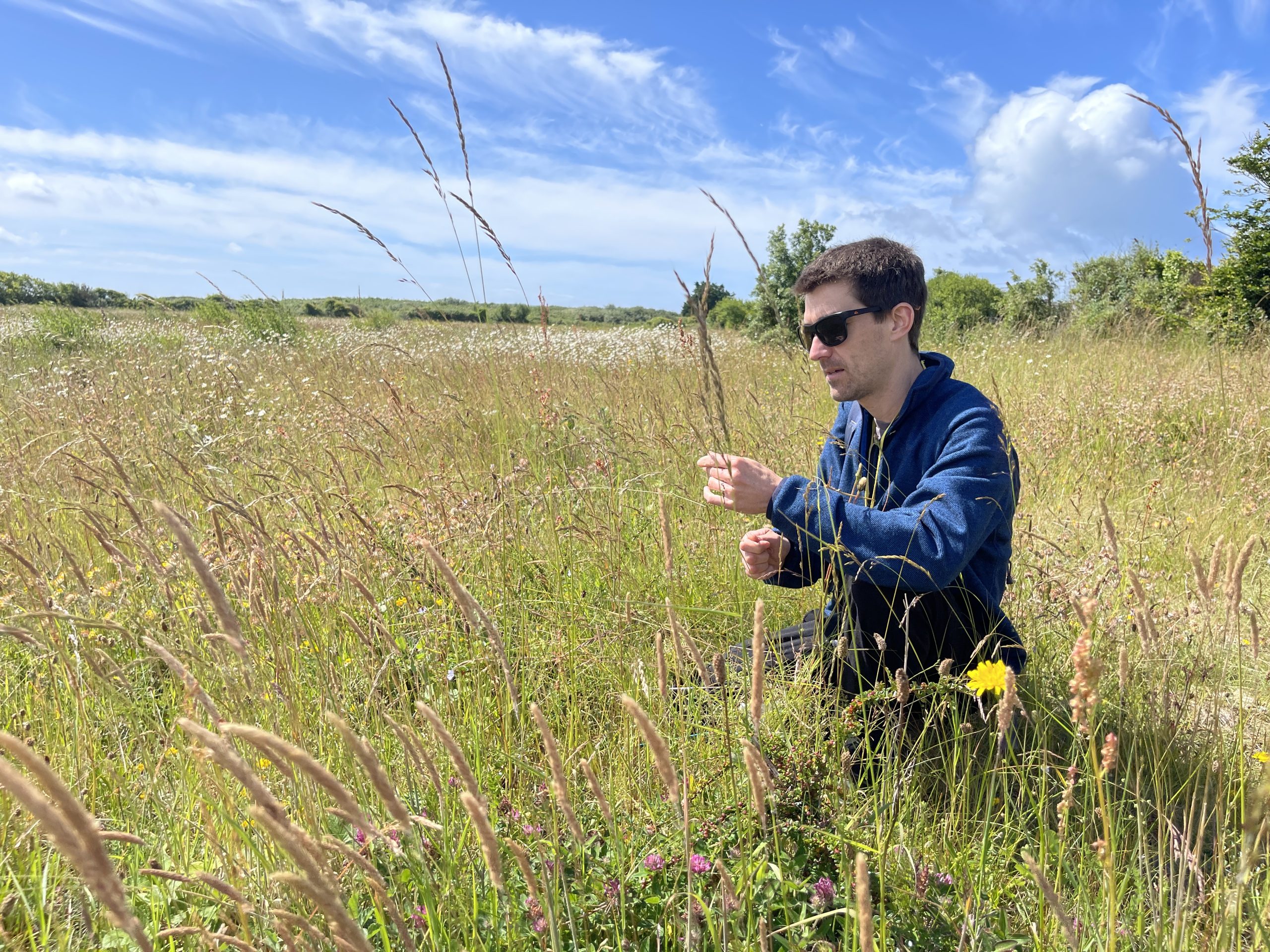
Our work on the Crop Wild Relatives project this year has been a great success, with 21 collections made exceeding our target of 15 species!
Crop wild relatives are undomesticated plants that are genetically related to cultivated crops, including pasture species. As they are undomesticated, they retain a much greater genetic diversity, making them valuable for breeding resilient crops that can withstand pests, disease, and climate challenges. Hence, collecting these seeds is as critical for food security as it is for conservation.
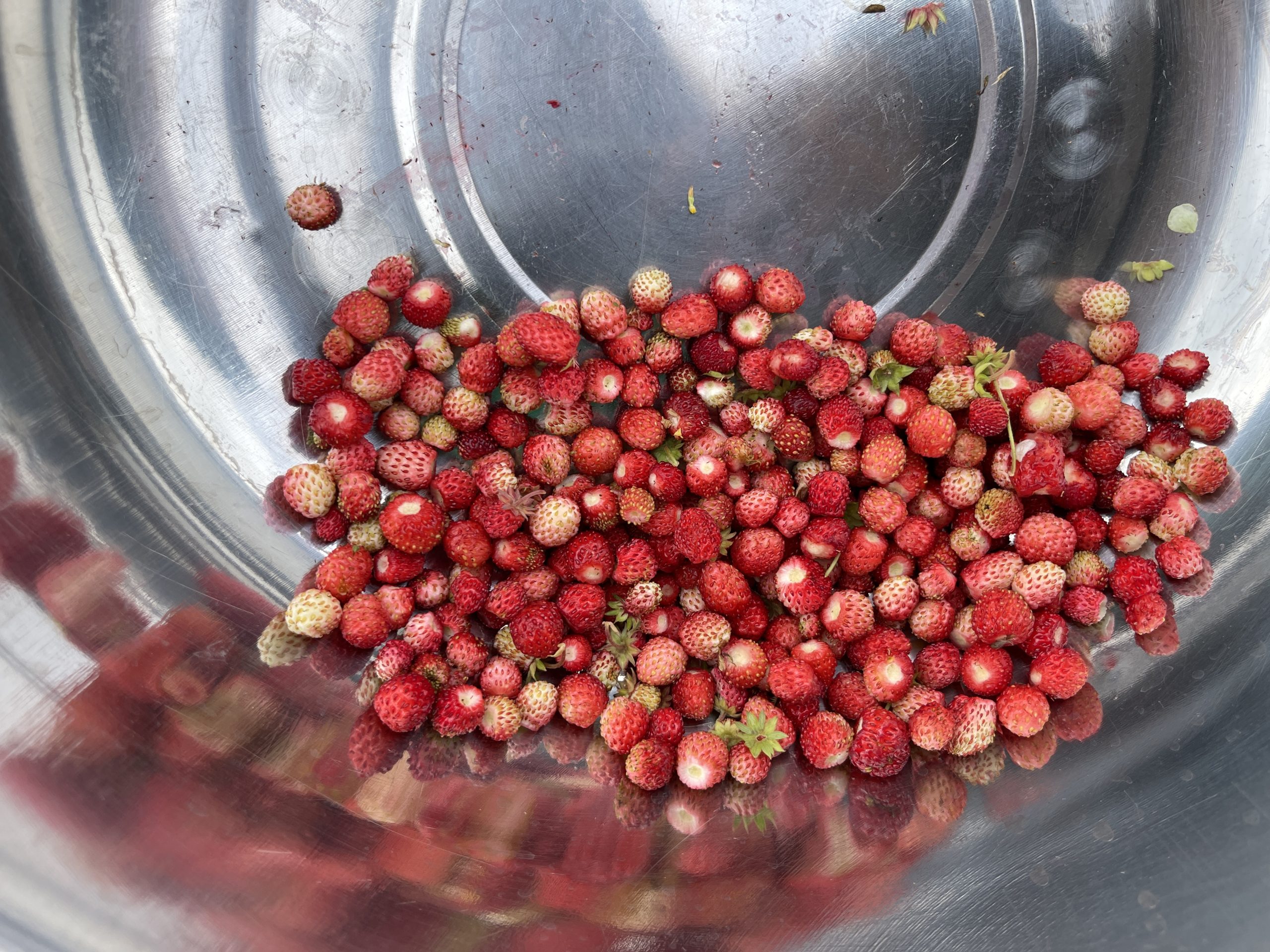
The target list includes both scarce species, like Western Clover (Trifolium occidentale), Knotted Clover (T. striatum) and Rough Clover (T. scabrum), and more common species, particularly grasses and other clovers. We even collected some species right here at the Botanic Garden, including Ribwort Plantain (Plantago lanceolata), from Cae Trawscoed, and Prickly Lettuce (Lactuca serriola) and Wild Strawberry (Fragaria vesca) which were collected from right outside the Science Centre!
These efforts mean that we have now successfully banked 10% of Wales’ flora from at least one population!
Next Steps: Seed Processing
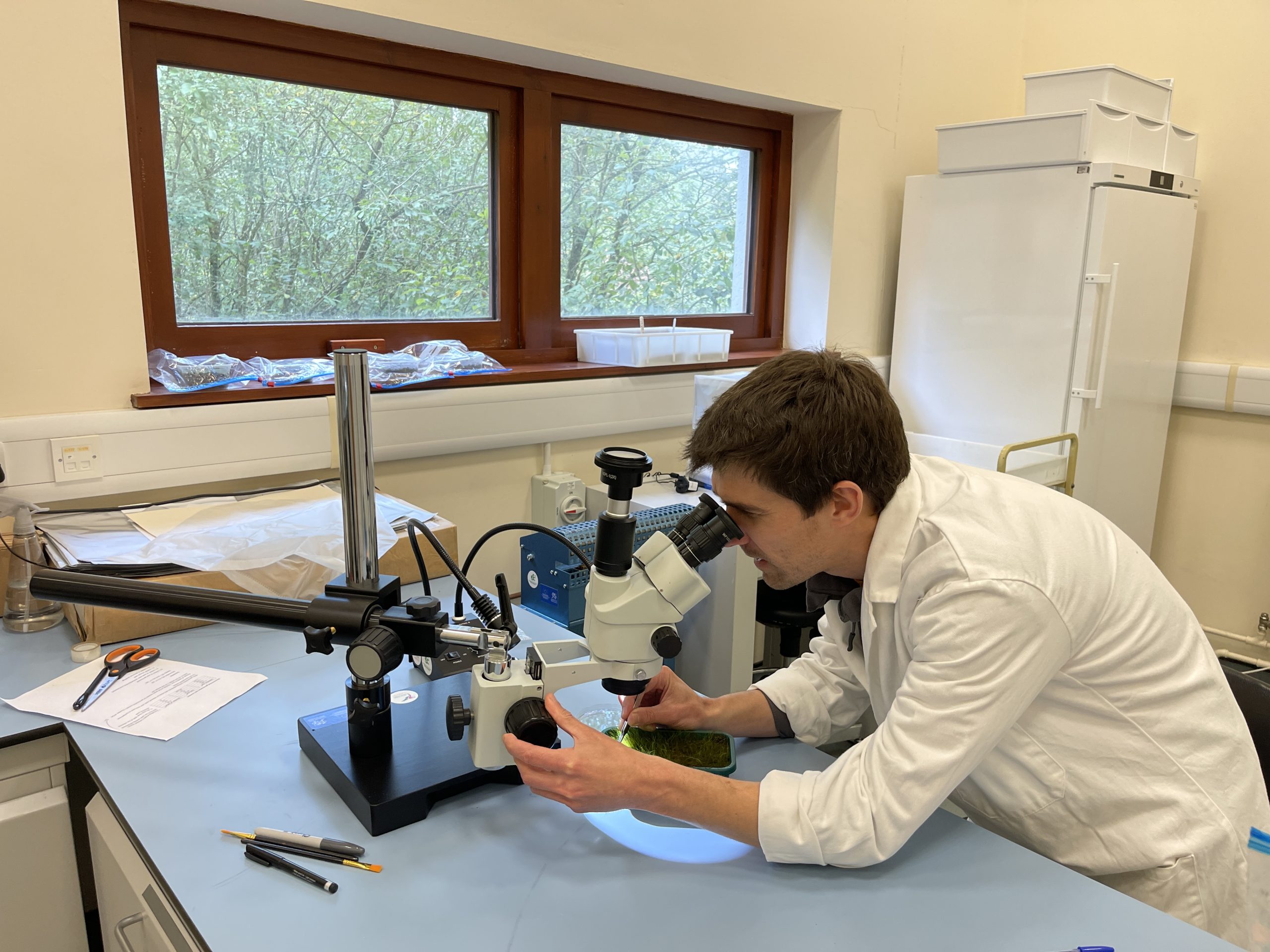
With our seed collecting season completed, we’re now turning our attention to processing in the lab. This involves cleaning each collection and separating seeds from chaff and debris using manual sieving and aspirator machines. Once cleaned, seeds are counted, weighed, quality-checked, and dried before being stored in the freezer. Half of each collection will also be sent to the MSB for safe storage within their bomb-, flood- and radiation-proof underground facility!
Germination Tests

Back in the Science Centre, we’re also conducting germination tests on our banked collections to assess their viability.
Seeds are placed on agar plates, which provide the necessary moisture and nutrients, all within a clean environment to prevent contamination. These plates are then moved into an incubator, where temperature and light levels are controlled to match the germination requirements of each species. Germination is monitored weekly until no more seeds germinate, and viability is calculated from this.
So far, germination tests have been completed for 15 of our banked collections, with an excellent average viability of 94%. By continuing to monitor these collections, we’ll be able to flag any declines in viability over time. However, with careful storage practices (dried to 15% relative humidity and stored at -20℃), most seeds are expected to last for decades, even centuries!
Conservation Projects
The seed bank isn’t just about freezing seeds for the future – we also actively use the collections and facilities to aid conservation and reintroduction projects.
Shoredock (Rumex rupestris)
One such project, led by Natural Resources Wales (NRW), aimed to reintroduce the globally threatened Shoredock (Rumex rupestris) to Dunraven Bay. This species had recently become locally extinct in the area due to erosion and rockfall. Thankfully, seeds from this population had already been collected and propagated at the Botanic Garden before it disappeared. This seed was then used to grow more plant material for the reintroduction project.
In April this year, teams from the Botanic Garden, NRW and the Glamorgan Heritage Coast planted 66 Shoredock plug plants at carefully chosen sites around Dunraven Bay. The exact location of each plant was recorded using GPS devices, and NRW will continue to monitor them over the next few years to determine the success of the reintroduced population. We are hopeful that this reintroduction will secure the future of this rare species in Wales!


Dog Screw-moss (Tortula canescens)
Another exciting conservation project involves Tortula canescens, a rare moss now restricted to just two locations in Wales. As part of a Natur am Byth! project, in collaboration with Plantlife, we’ve been experimenting with methods of growing this species ex situ, aiming to bolster wild populations in the Welsh Marches in Powys.
To perfect our techniques, we first conducted trials using the more common Tortula subulata. By experimenting with different soil sterilisation methods and incubator settings, we found that the moss grew best in an incubator set at 20°C and 24 hours light. Once we’d fine-tuned the process, we applied these methods to the precious spores collected from T. canescens.
This species is now growing well in the incubator, and the next phase will involve trial transplants of the moss into areas within the Botanic Garden to monitor its success once transferred to natural conditions. Eventually, the Natur am Byth! project aims to plant out the material we have grown in the wild to strengthen the population in the Welsh Marches.
Meanwhile, Plantlife staff are improving the original site for the species, experimenting with clearing scrub and goat grazing, creating a more favourable habitat to support the moss’s recovery.


Continuing the Mission
Our work this year highlights both the rewarding and challenging nature of seed banking. While we make steady progress toward our long-term goal of banking all Welsh flora, we’re also using our expertise to directly support conservation projects on the ground. From storing seeds to reintroducing rare plants and mosses, the seed bank is an invaluable resource for preserving Wales’ rich biodiversity.
We’re excited to keep building on these efforts, preserving Wales’ flora one seed at a time!
The National Botanic Garden of Wales is supported by Welsh Government’s Nature Networks Fund, funding work to deliver infrastructure improvements on Waun Las NNR, allowing us to manage the site for improved biodiversity and engage with visitors on our natural heritage.
