There are two iconic plants most of us will be familiar with at this time of year. One, we use to adorn our wreaths and front doors, and the other, we try to avoid getting stuck under at Christmas parties. Yes, I’m talking about Holly and Mistletoe!
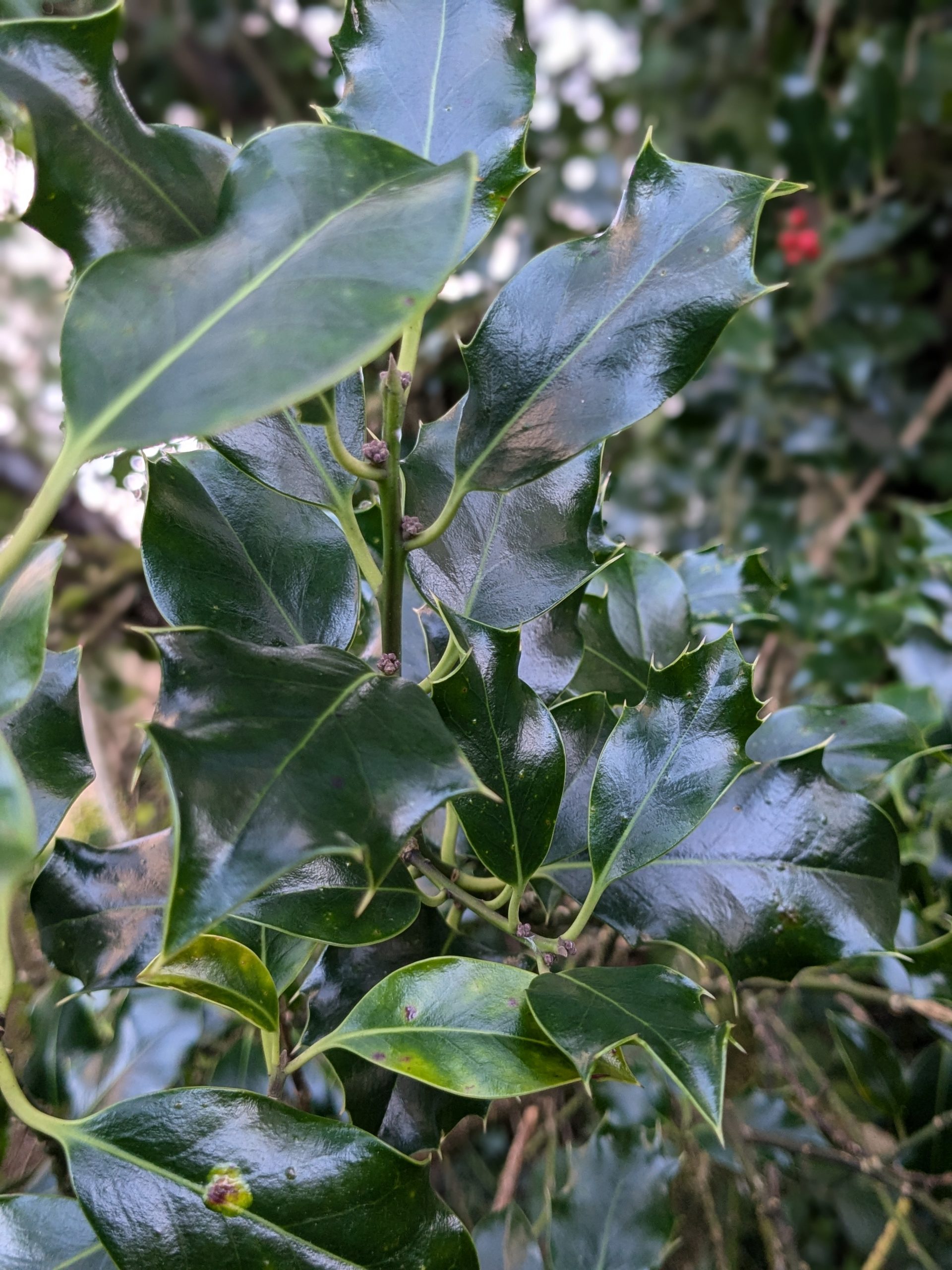
Our ever-prickly friend Holly, or going by the botanical name Ilex aquifolium, belongs to the plant family Aquifoliaceae. Ilex is in fact the only genus within the family.
Holly is a welcome sight in winter with its evergreen glossy leaves. It has a huge value to wildlife, from providing habitats for Hedgehogs to being a protective bird nesting area. Not forgetting those red berries, which are a food source for birds and mammals alike in the winter. There is a huge amount of folklore that surrounds this plant, one of which is that it was believed that it would ward off evil spirits if hung on the front door.
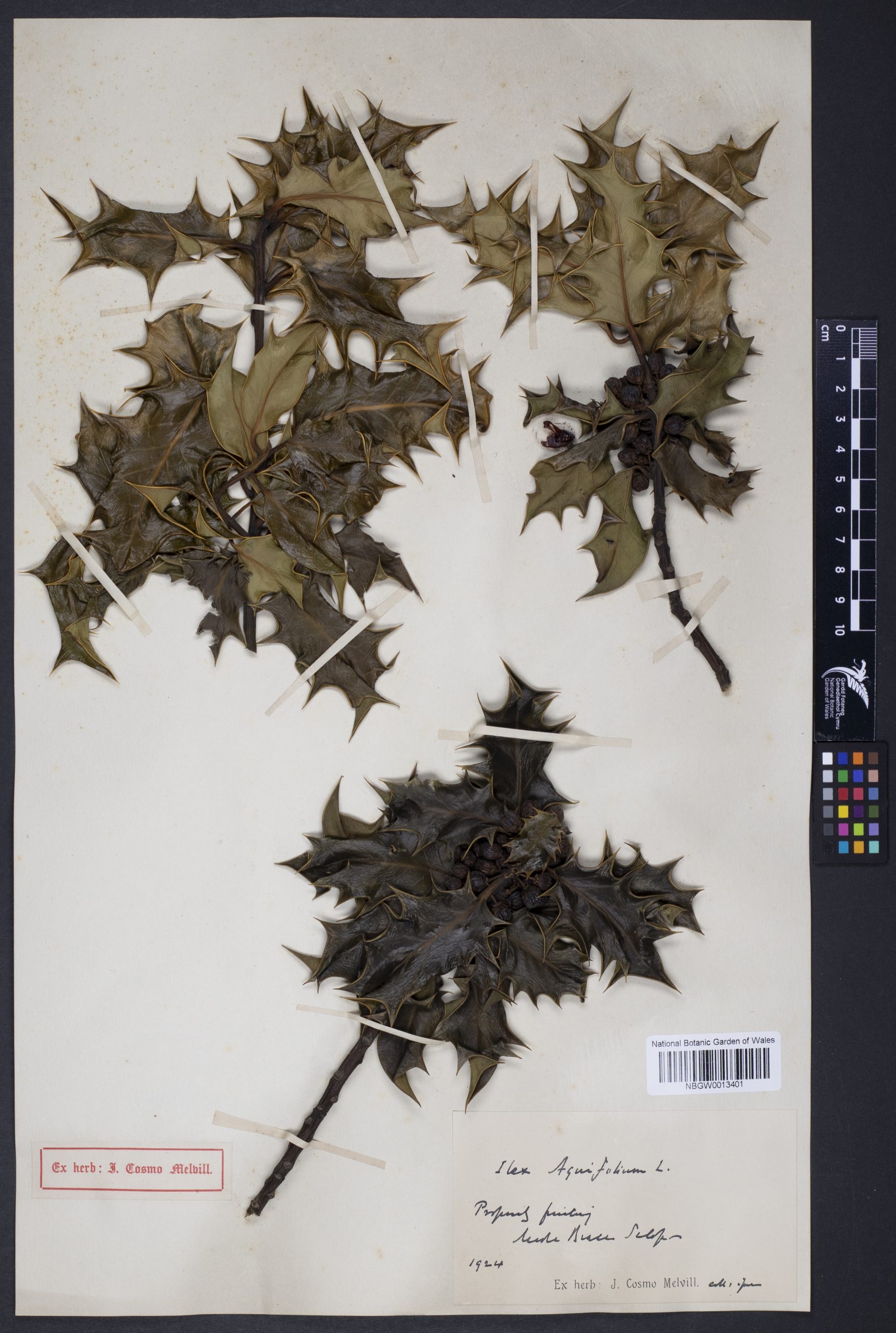
We have a few herbarium specimens of Ilex here at the Garden. Below is an example of one collected by James Cosmo Melvill in 1924 from Meole Brace in Shropshire. It’s amazing to see how it’s managed to maintain the shiny green leaves. I think the berries have seen better days though.
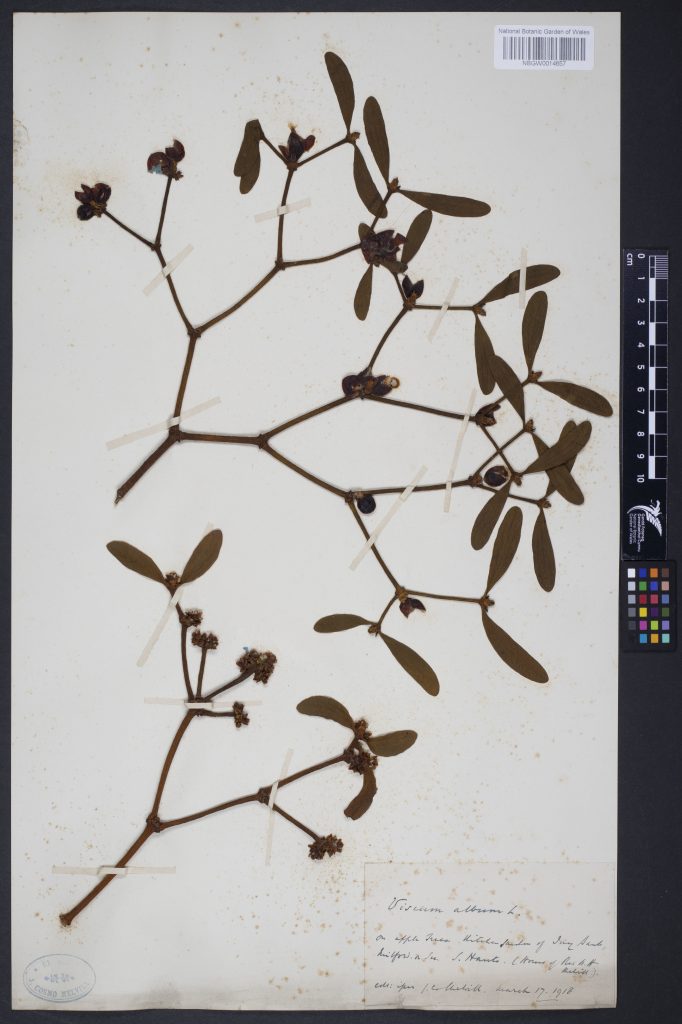
Next on our list is Mistletoe, or Viscum album, belongs to the family Santalaceae (it was destined to be a Christmas icon!). It’s a very interesting plant as it’s a hemiparasitic epiphyte, which means it grows on trees to survive, taking nutrients and water from its host. You may notice big clusters of it high in the canopies of trees at this time of year. There are many Mistletoe species around the world, but Viscum album is the only native to the UK.
Again, Mistletoe comes with many seasonal traditions, including being kissed under the mistletoe. Many people enjoy hanging it in their houses, but due to its toxicity, I think I prefer to see it in its natural state.
The herbarium specimen to the right was collected from apple trees, which is one of its preferred hosts, in a kitchen garden in South Hampshire in 1918.
We are ready to put our feet up here in the Herbarium as we reflect on a very busy and enjoyable year. We look forward to what the next year brings! See you all in 2025.
The Plants Past, Present and Future project is digitising our herbarium and is funded by the National Lottery Heritage Fund Dynamic Collections initiative, made possible thanks to National Lottery players.
