This August, Botanic Gardens Conservation International (BGCI) hosted their 8th Global Botanic Gardens Congress in the spectacular city of Singapore.
A team from the National Botanic Garden of Wales attended, which consisted of myself (Research & Collections Assistant within the Science Team), Freddy (Horticultural Trainee), Elizabeth (Glasshouse Horticulturalist) and Mia (Broadwalk Horticulturalist). This trip was an unforgettable experience, providing an opportunity to exchange ideas, showcase our work and reinforce our connection to a global network of botanic gardens.
Read more about what we got up to on our trip, and what we learnt from the Congress!
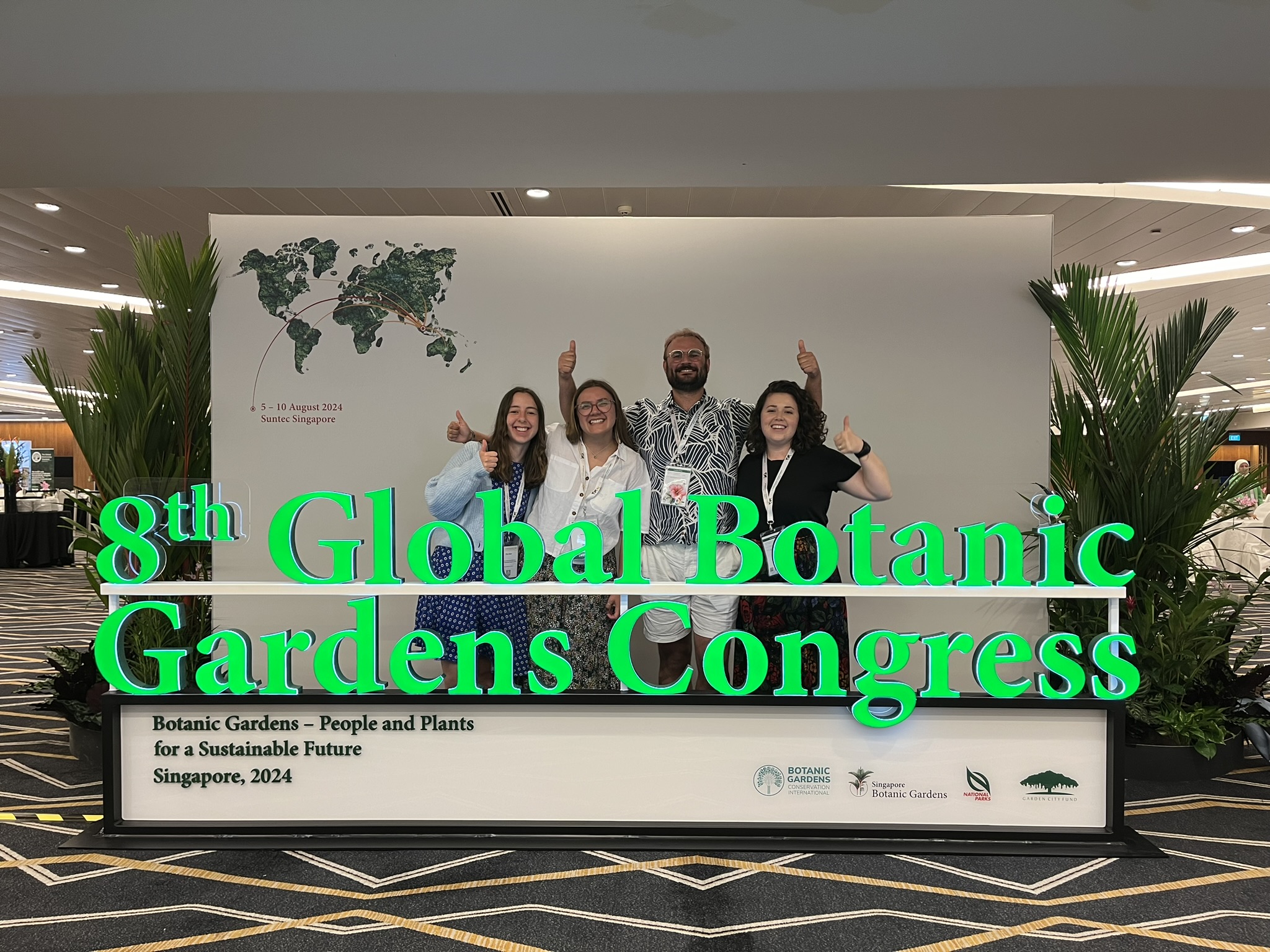
‘Think Global, Act Local’
The event brought together a global community of 900 delegates, including academics, researchers, policymakers, botanic garden staff, and plant enthusiasts from across the globe.
The theme, “Botanic Gardens – People and Plants for a Sustainable Future,” focused on how botanic gardens can help address global challenges, such as biodiversity loss, climate change and societal issues.
A key takeaway was “think global, act local,” which encourages local actions to tackle global challenges. It was a powerful reminder of how local conservation efforts contribute to the global fight against biodiversity loss.
This adds extra meaning to our work in conserving Welsh flora within the seed bank and living collections. Every botanic garden has a role to play in safeguarding the planet’s biodiversity, therefore by protecting our native species, we are contributing to a much larger picture.
Seed Banking Insights
As a member of the Science Team, here at the Botanic Garden, much of my work revolves around the National Seed Bank of Wales, where we collect and conserve seeds of Welsh native species. Therefore, I was especially excited to meet other seed bank professionals and learn about their work to conserve flora from all different kinds of habitats and climates.
It was inspiring and eye-opening to learn about various seed banking methods, and the unique challenges of conducting fieldwork in different regions. For example, to make collections for the Victorian Conservation Seedbank in Australia, often teams will have to arrive at sites by helicopter as species grow in remote locations.
Further seed banking talk highlights included:
- Digitising seed collections by taking high quality photos for broader access (Kingsley et al., 2022).
- Pollen banking and developing pollen conservation protocols, which was a new concept for me.
- Using drones to collect seeds from remote locations in Hawaii (Nyberg et al., 2024) which looked spectacular.
Singapore Botanic Gardens Seed Bank
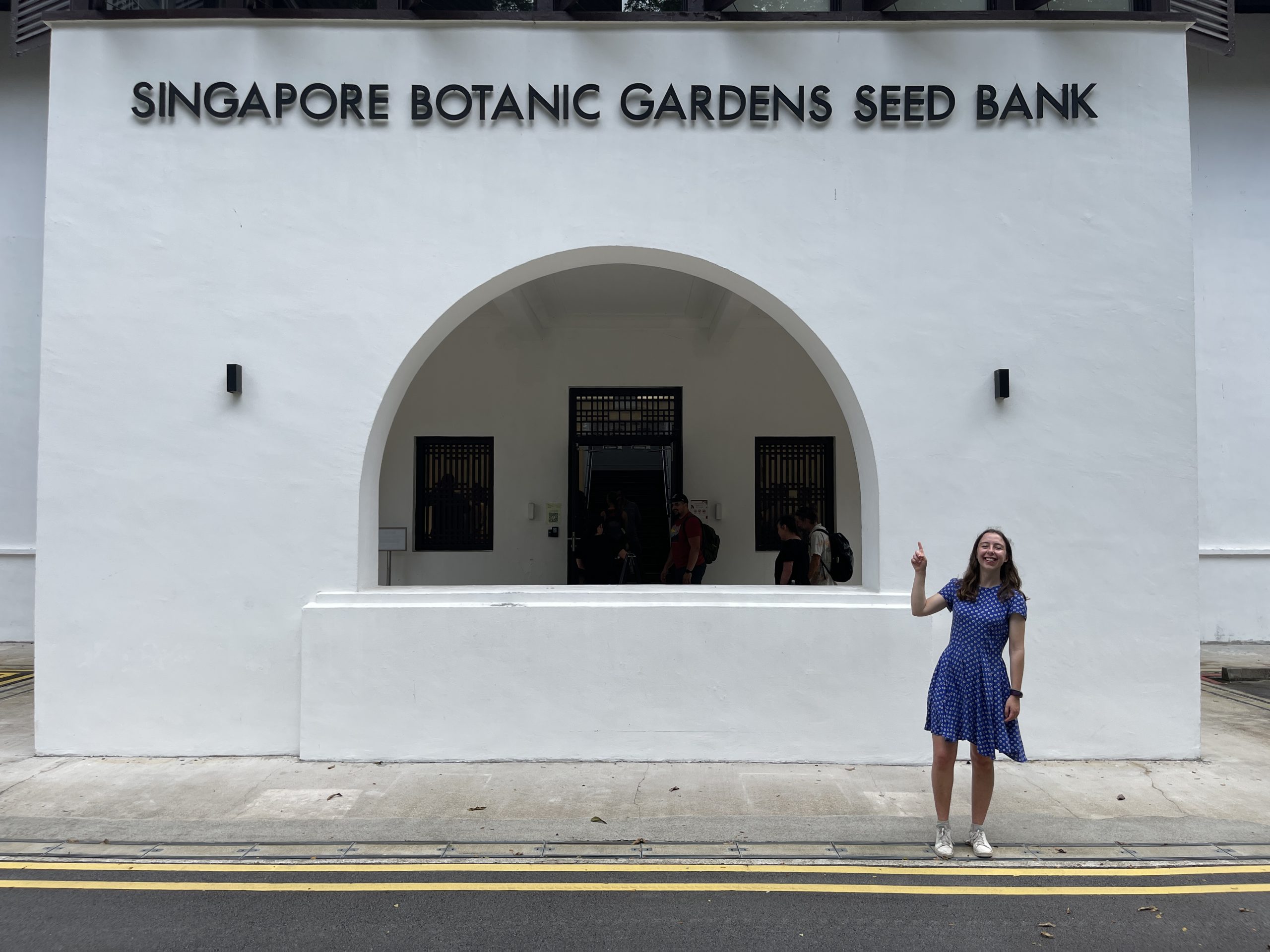
A trip highlight was visiting the Singapore Botanic Gardens Seed Bank. Established in 2019, the same year as our own seed bank, it focuses on conserving the flora of Southeast Asia.
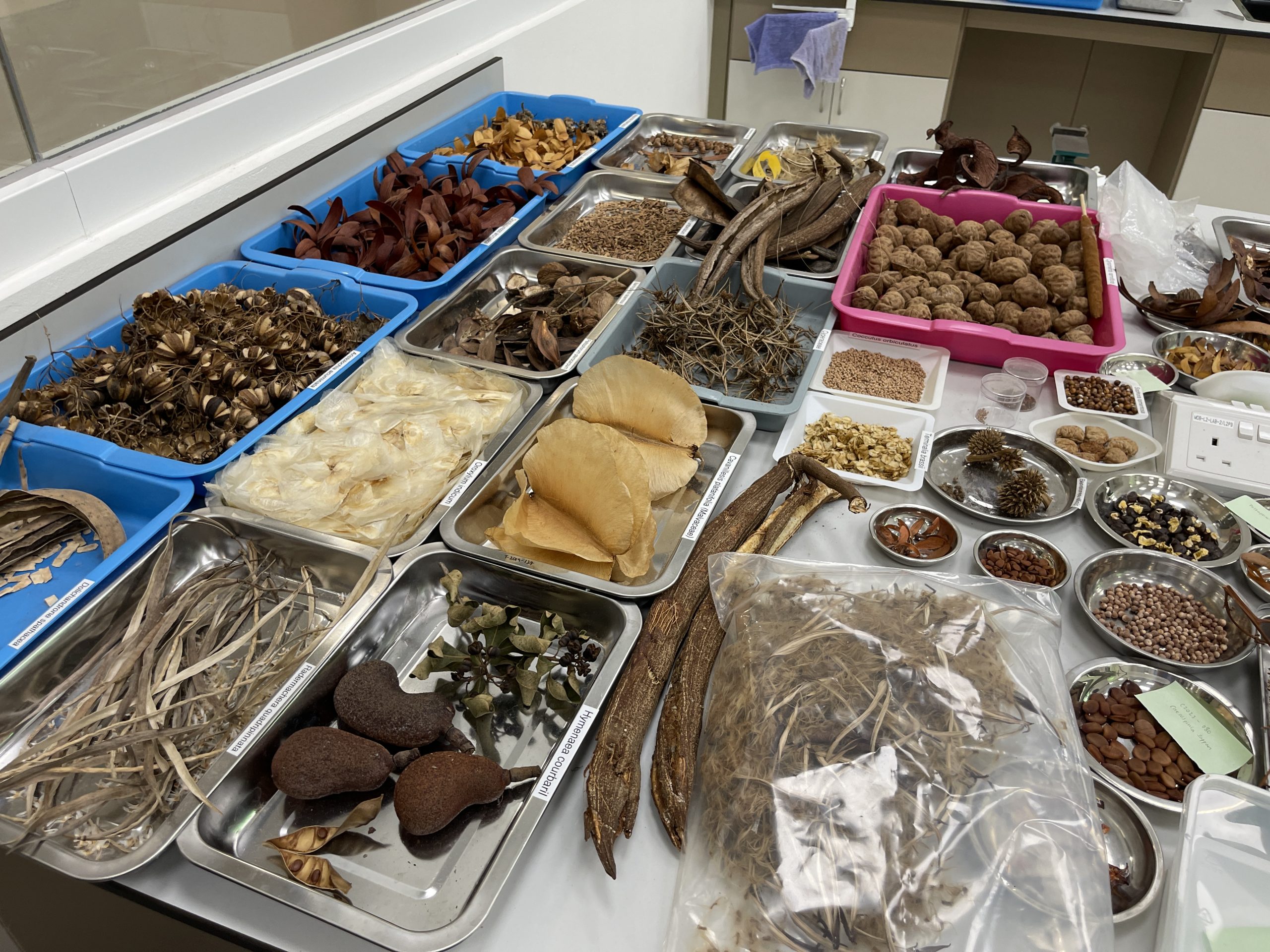
While many aspects of their operations were similar to ours—such as seed cleaning and processing equipment—they also had cutting-edge innovations like cryogenic storage labs for deep freezing seeds, and x-ray machines for seed viability checks. It was fascinating to see another seed bank in action, conserving seeds in a tropical environment on the other side of the world.
The large size of many tropical seeds and pods was a striking contrast to the Welsh native flora I’m used to collecting, requiring larger storage spaces and specialised drying and freezing facilities. The seeds on display in trays looked more like a buffet of food items than seed collections!

Singapore as a ‘City in Nature’
Singapore was the perfect host city for this event, with its vision of being a ‘City in Nature,’ which we could see demonstrated through its green infrastructure and biophilic urban design. From the UNESCO-listed Singapore Botanic Gardens to the futuristic Gardens by the Bay, Singapore exemplifies how urban spaces can be transformed into lush, thriving ecosystems.
As we explored the city, we noticed how trees were abundant, covered in amazing ferns, orchids and other epiphytes, thriving amidst the skyscrapers. The boundaries between buildings and green spaces, as well as indoors and outdoors, were often blurred. At times, it didn’t feel like we were in a city at all, but in the middle of a jungle, with glimpses of the city skyline through the dense canopy.
Other Trip Highlights
While in Singapore, we made the most of being in such an amazing city by exploring many of the horticultural and wildlife attractions that the city has to offer.
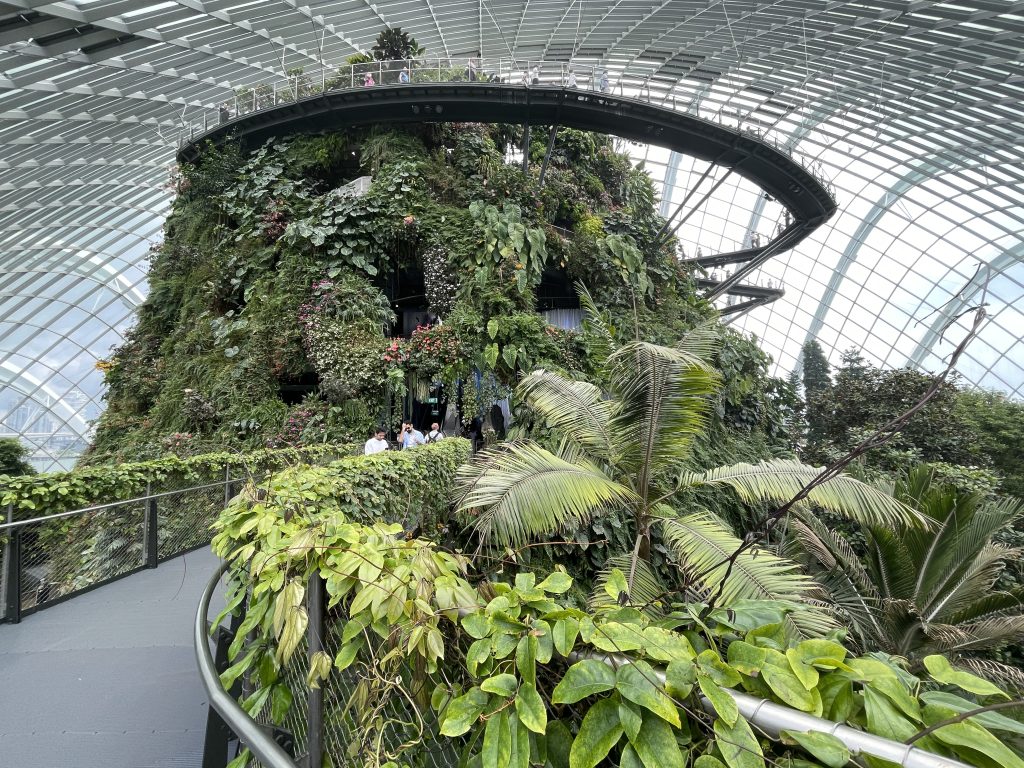
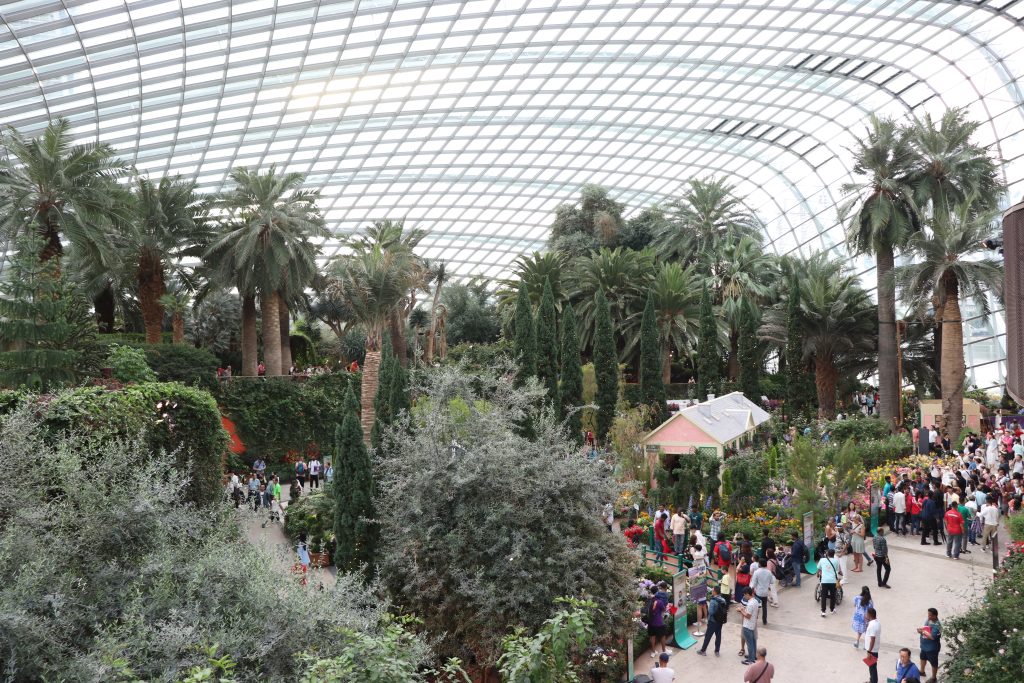
Our visit to Gardens by the Bay was spectacular. The Cloud Forest, with its 58-metre-high glass climate-controlled dome is designed to replicate the cool, misty conditions of South-east Asia’s tropical highlands.
The Flower Dome imitates the cool-dry climate of the Mediterranean – similar to that of our Great Glasshouse at our Botanic Garden, therefore housing many of the same plant species. It was interesting to see familiar plants displayed in different ways, and provided ideas for new species and planting methods.
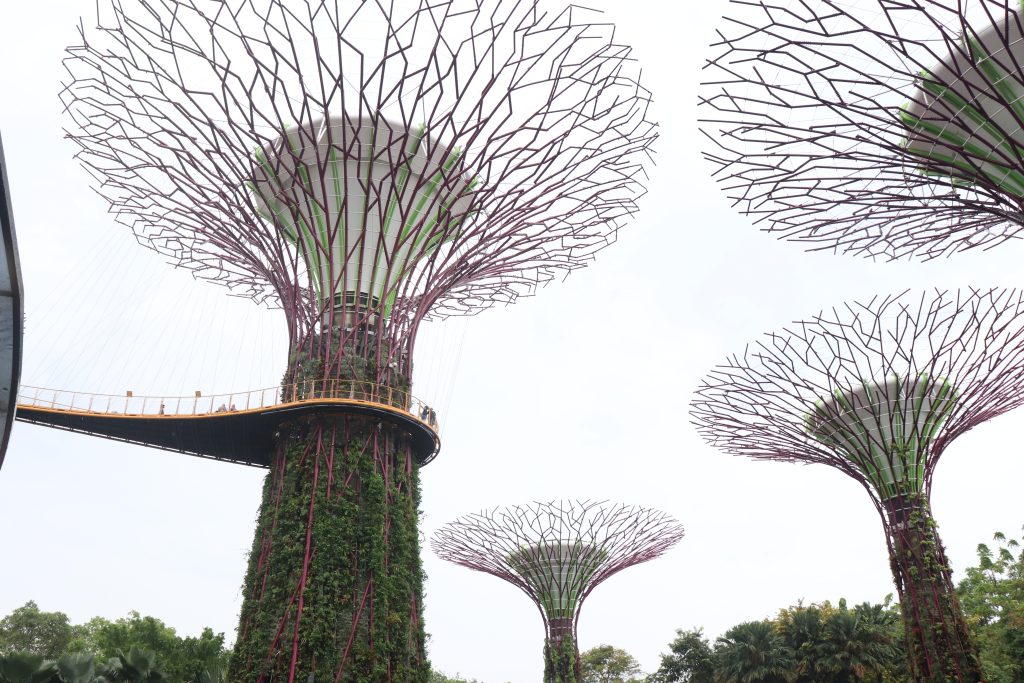
We also got to see the iconic Supertrees, towering above us, which are great examples of innovative biophilic and sustainable design. Inspired by the eucalyptus trees of Western Australia, each Supertree collects rainwater, has solar panels on top, and is covered in climbing plants which provide habitat.
Singapore Botanic Gardens were also very impressive, and not only serve as a centre of conservation, but as a beautiful place where locals and tourists alike go to relax and enjoy being in nature. We saw lots of wildlife at the Gardens, including butterflies, dragonflies, birds, otters, and even a huge Asian Water Monitor lizard!

Empowered by Collaboration
The importance of collaboration was emphasised throughout the Congress, with a message of connecting people with plants into the future. The sessions reinforced the idea that conservation isn’t just about plants – it’s also about people. Empowering communities to connect with plants and take action is critical to safeguarding ecosystems and enhancing societal well-being.
Inspired by the global network of passionate professionals I encountered, I am determined to take this message forward and apply what I have learnt to inform my work and strengthen our efforts at the Botanic Garden to conserve Welsh flora.
This transformative trip wouldn’t have been possible without the support of the RHS and Merlin Trust, whose generous bursaries enabled us to attend.
Click here to read full report