Biological recording involves collecting data on the presence and distribution of living organisms, such as plants, animals, insects and fungi. Anyone can create these records, whether you’re an expert or just interested in nature. These records are vital for conservation as they create a snapshot of the species in an area that can be used to track changes in the environment and diversity over time. Biological recording can be done anywhere, whether it’s in your garden or out in nature.
Today, we can use apps like iRecord and LERC to upload and share pictures, species information, and locations. The recording data held by the Botanical Society of Britain and Ireland (BSBI) is vital for our understanding of the British and Irish flora and to track changes.
In the 19th and 20th centuries, herbarium collections, scientific journals, and letters were used to share and record flora. Specimens would be collected and described, and then collectors could send duplicates to each other to confirm species or share information about the flora of a particular place (see letter). In fact, this is how the BSBI began.
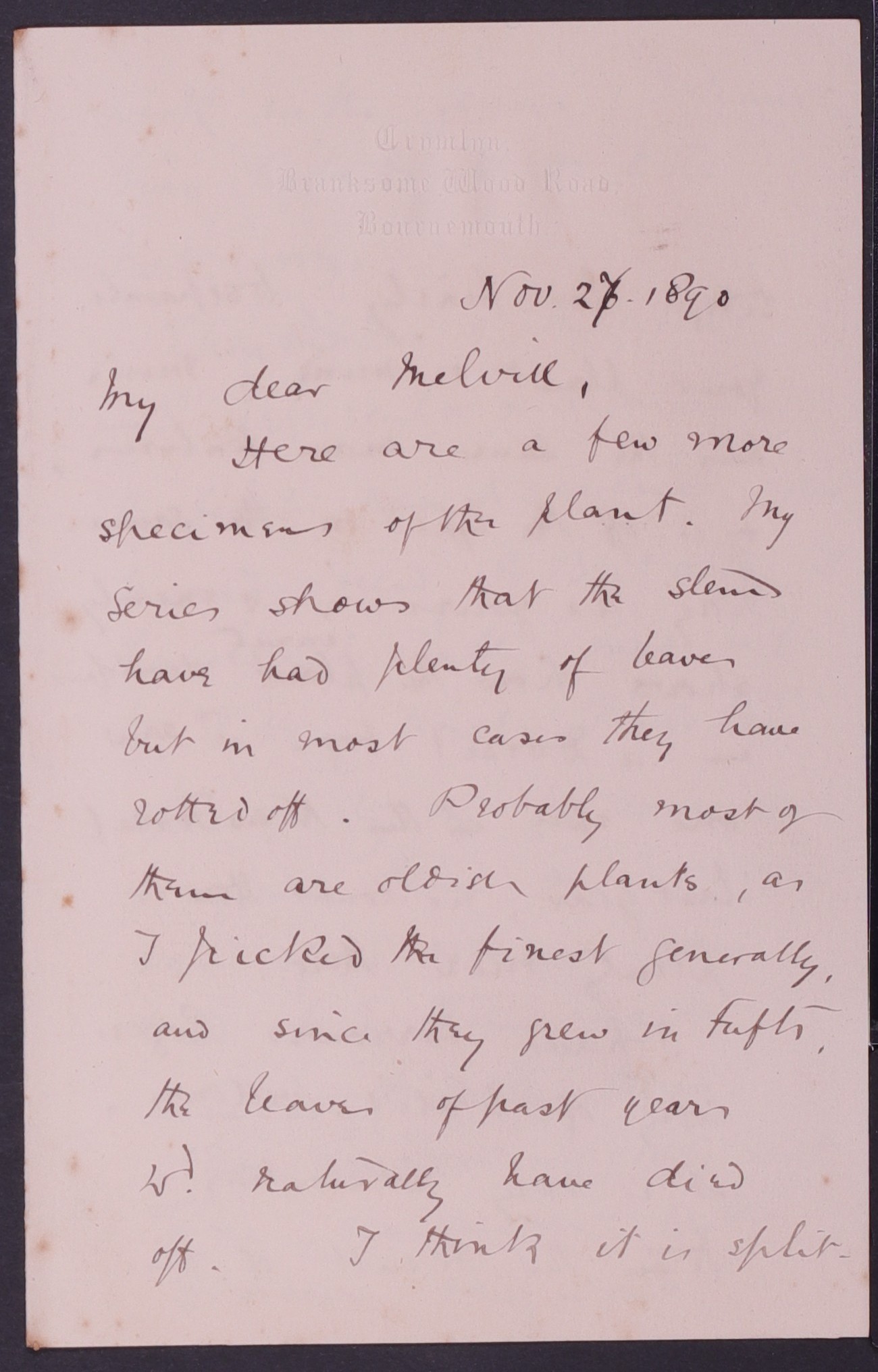
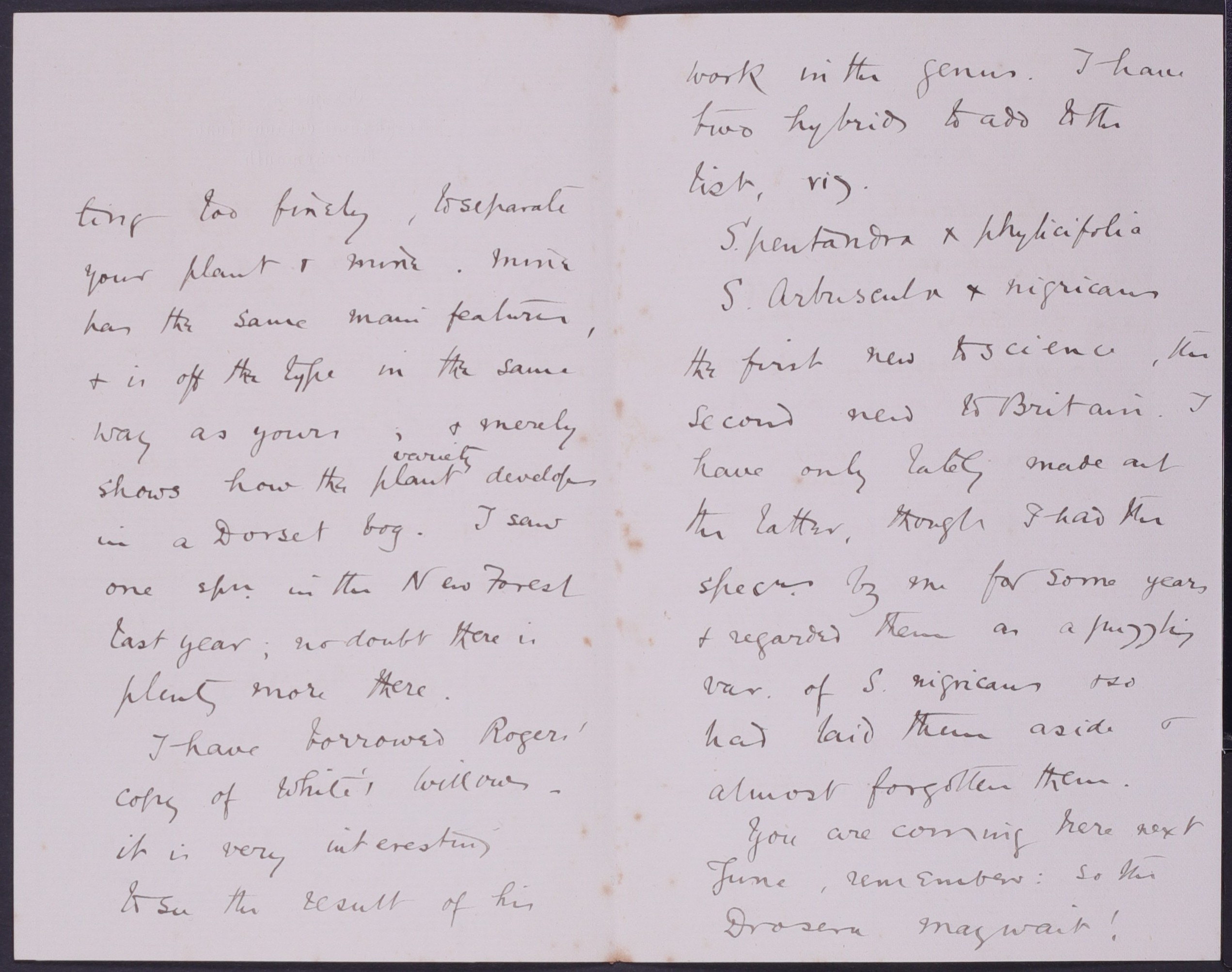

A letter from a member of the Botanical Exchange Club of the British Isles, Edward F. Linton, to Melvill. Linton discusses specimens he had sent to Melvill from Dorset and New Forest. As well as a recent work published on white willows, asking for Melvill’s help to confirm his willow hybrids.
In 1836, the Botanical Society of London pioneered the exchange of herbarium specimens; members kept reference collections, exchanged duplicates and aimed to record precise collection localities to make county and national Floras. The society then developed into the Botanical Exchange Club of the British Isles in 1856, publishing journals to share their latest discoveries and biological records. Then, in the 1950s, it changed its name to become the BSBI. The BSBI is now one of the world’s largest biological recording organisations: using their records they create national atlases of the distribution of plants that are used in conservation efforts.
Our historic herbarium collection is comprised of specimens from a prominent member of the Botanical Exchange Club of the British Isles, James Cosmo Melvill (1845-1929). The collection holds over 30,000 specimens collected by Melvill and several other professional and amateur men and women with a passion for botanical recording. These herbarium specimens have handwritten collection labels that contain the species name, collection location, date of collection, and sometimes information on habitat. This is the same information that is collected on apps today and used by organisations like the BSBI.
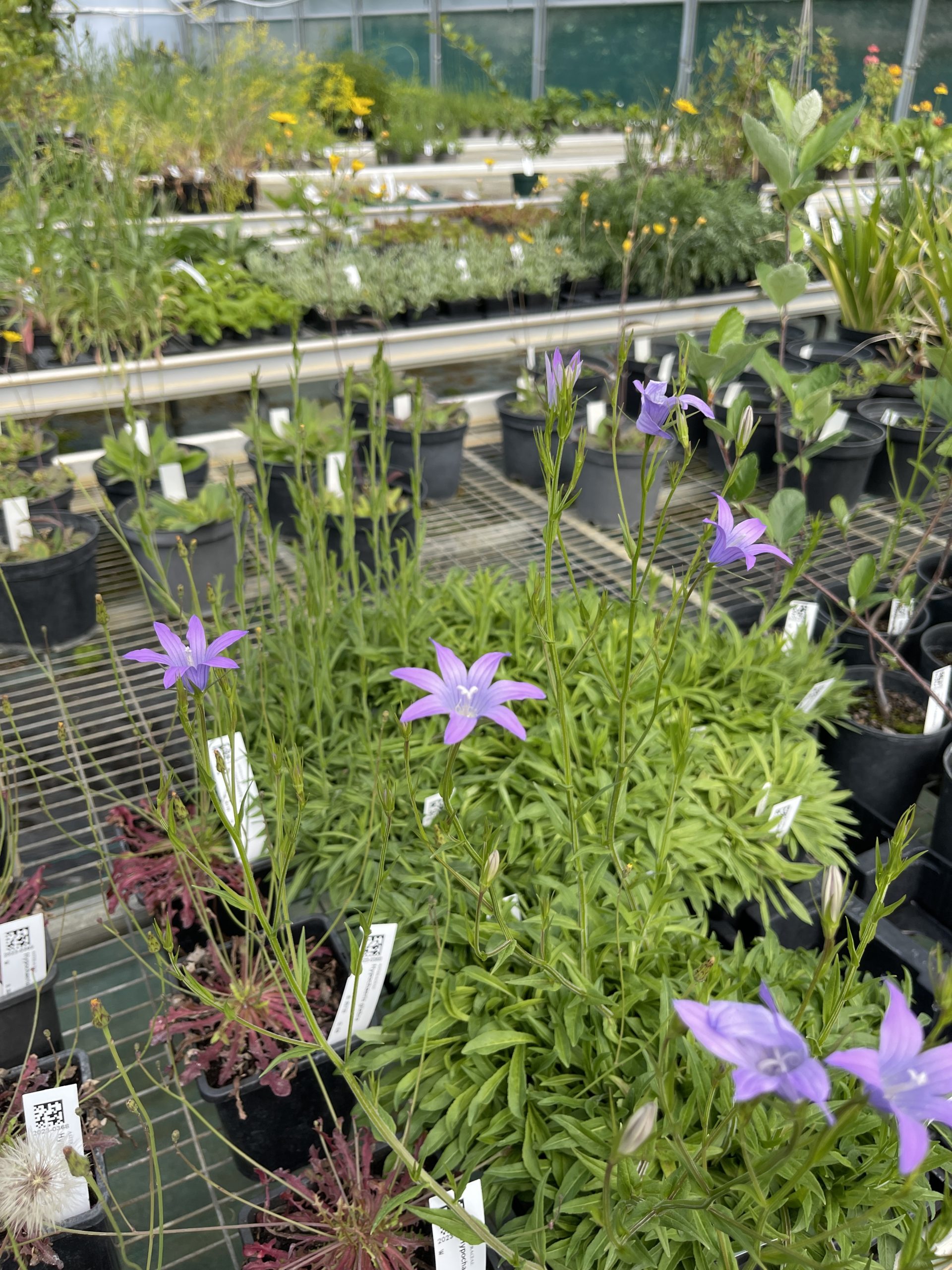
As Melvill was a member of The Botanical Exchange Club of the British Isles, our historical collection contains a comprehensive record of the native flora of Britain and Ireland, which we can use to survey areas with records of that species. One example is the spreading bellflower (Campanula patula), which Melvill and others collected in the 1800s. Campanula patula is one of Wales’ rarest plants and a species the Science Team has done a lot of work on to help conserve using modern and historical records. Seed collecting trips for our National Seed Bank of Wales have meant we can now grow this critically endangered species here at the Garden and safeguard the seed for the future.

Bibliography:
Marsh, L. Potted history of the organisation(s) which evolved to become the BSBI. https://bsbi.org/wp-content/uploads/dlm_uploads/2022/03/BSBI-potted-history.pdf
The Plants Past, Present and Future project is digitising our herbarium and is funded by the National Lottery Heritage Fund Dynamic Collections initiative, made possible thanks to National Lottery players.

