Autumn is an exciting time of year, with lots of weird and wonderful mushrooms popping up. Many fungi that remain hidden in the soil for most of the year reproduce when the weather becomes colder and damper in autumn. This is the perfect time for spotting their familiar fruiting bodies, or ‘toadstools’ that we see above ground. These range from the iconic red Fly Agaric mushroom to the tiny, almost microscopic Holly Parachute. Fungi come in all shapes, colours and sizes, and you can see a vast diversity of them right here, with over 350 species recorded at the Botanic Garden!
It seems to be a bumper year for waxcaps and other grassland fungi, so now is the perfect time to come and explore Waun Las National Nature Reserve and see if you can spot some of these colourful and rare mushrooms for yourself!
What is a waxcap?
Waxcaps are a family of brightly coloured grassland fungi, often with waxy or slippery-looking caps. They range from deep red and scarlet colours, to shades of orange, yellow, green, brown, grey and even pink! They are found in low nutrient grasslands that haven’t been agriculturally ‘improved’ – not ploughed or fertilised, meaning the organically managed permanent pasture in Waun Las NNR is well suited. Grasslands in Wales are particularly important for these species and may be amongst the best places in the world to find these rare grassland fungi.
How rare are waxcaps?
The types of permanent pasture grassland habitats in which waxcaps thrive are becoming increasingly rare in Wales and across the UK. Many waxcap species are listed as being vulnerable to extinction according to The IUCN Red List of Threatened Species – they have the same threat status as the Manatee, Snow Leopard or even the Polar Bear.
The fungal equivalents to these endangered species live right here at the Botanic Garden! At least ten threatened species of grassland fungi can be found in just one field, aptly named Cae Waxcap. They are spreading across the whole site and are being found in more places every year. This is very exciting and encouraging – some good news for these threatened species.
“We need to understand and appreciate that Wales is blessed with being the custodian of some of these rarest fungi on Earth.” – Bruce Langridge, local ecologist
Where to spot waxcaps at the Botanic Garden
Waxcaps can be spotted across the Botanic Garden in areas of short grass, including on the lawns around the Great Glasshouse and Tŷ Melyn and mown grass verges.
For the best chance of spotting the rarer and more colourful waxcaps, you will need to venture into Waun Las National Nature Reserve – follow the blue route to reach Cae Waxcap (number 5 on the map). Keep your eyes peeled as you walk through the grass and you may be lucky enough to spot some of these brightly coloured mushrooms. The bank to your right as you walk into the field is the best area for spotting them.

Autumn and winter are the best times for finding these fungi. Over the last few weeks, staff and volunteers have been busy finding, identifying and recording many species.
Some species to look out for
Of the 30 waxcap species that have previously been recorded at the Garden, at least 15 of these have been spotted already this year, including:
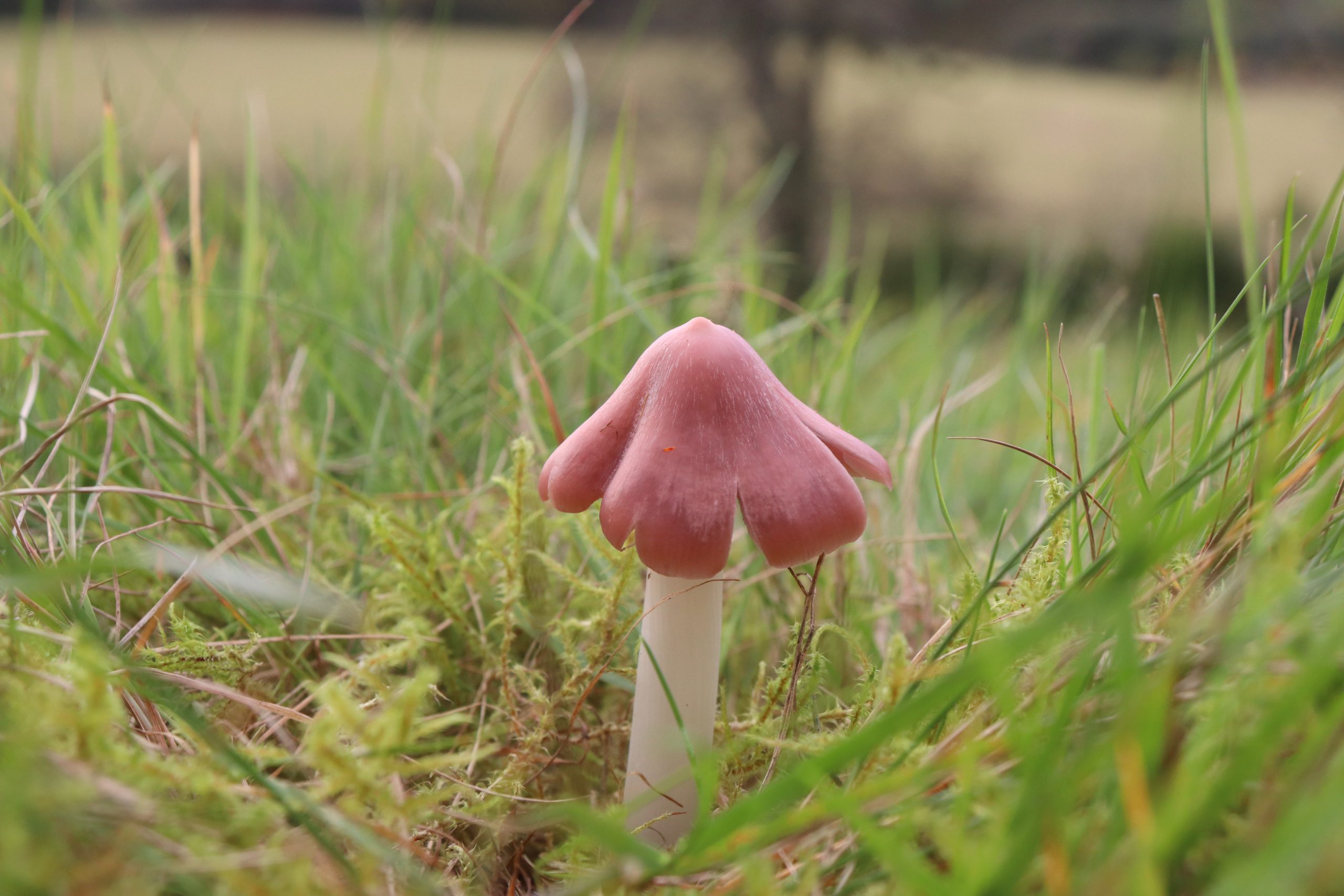
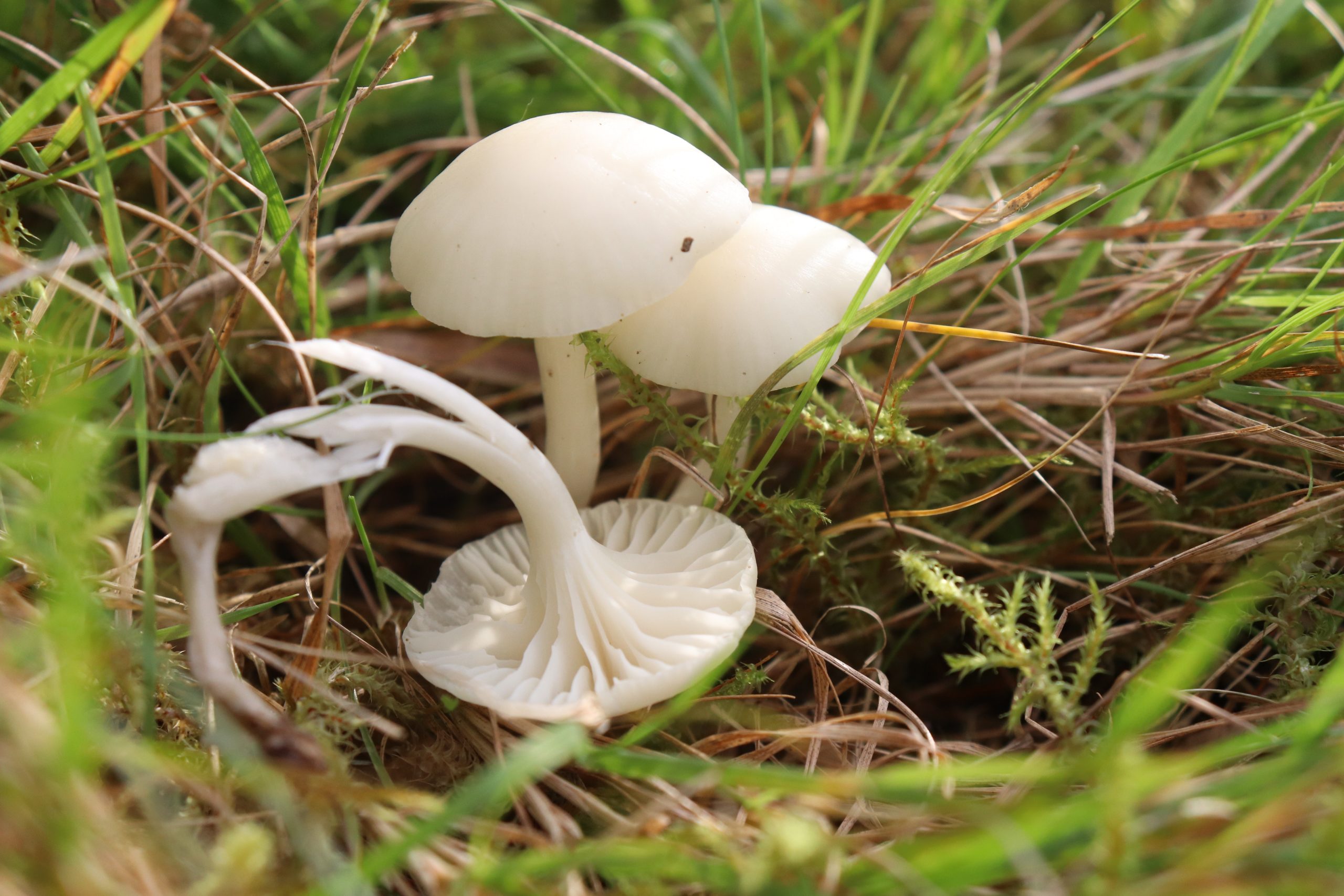
(Cuphophyllus russocoriaceus)

(Hygrocybe punicea)
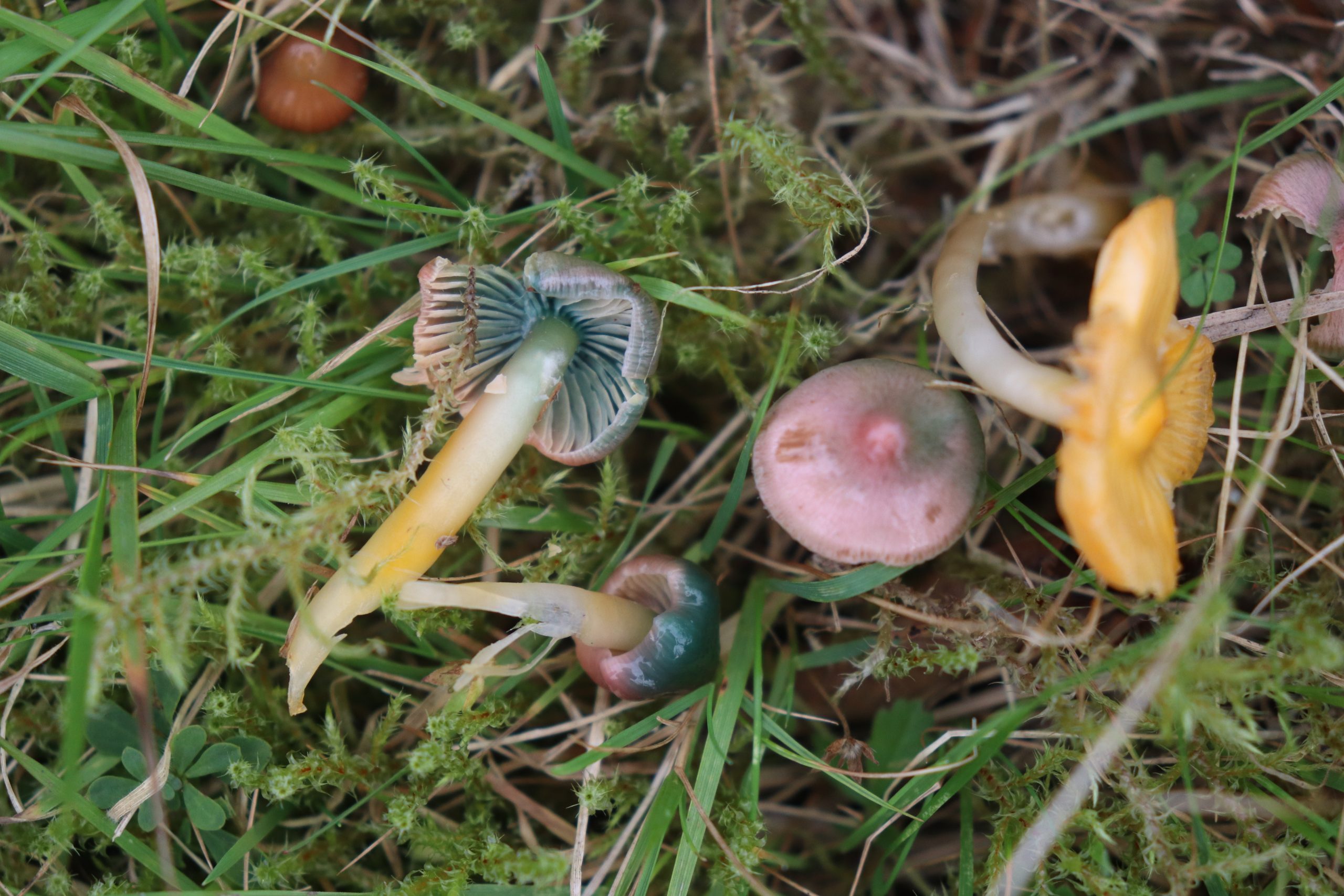
(Gliophorus psittacinus)

(Hygrocybe chlorophana)

(Gliophorus irrigatus)

(Hygrocybe splendidissima)

(Cuphophyllus pratensis)

(Hygrocybe reidii)
Why do waxcaps thrive here?
At the Botanic Garden, we manage our Waun Las National Nature Reserve as an organic farm, without any addition of fertilisers or pesticides. Some fields are grazed by Welsh Black cattle to keep the grasses low, which is great for fungi. Other fields we manage as hay meadows, taking a cut at the end of summer to maintain the low nutrient level, allowing the fungi to thrive. We manage the land to nurture biodiversity, protecting these fungi of international conservation importance, along with many other species.
Find out more
Pick up a Guide to Grassland Fungi from the Gatehouse as you enter or download here.
You can also learn more about grassland fungi by following the Waun Las audio trail. The episode all about grassland fungi can be found here:
The National Botanic Garden of Wales is supported by Welsh Government’s Nature Networks Fund, funding work to deliver infrastructure improvements on Waun Las NNR, allowing us to manage the site for improved biodiversity and engage with visitors on our natural heritage.
