As the Botanic Garden marked its 25th anniversary, 2025 proved to be another busy and rewarding year for the Science Team. Throughout the year, we continued our work to conserve the Welsh flora, travelling far and wide across Wales to collect and bank seed from wild plant populations as part of our long-term commitment to safeguarding the Welsh flora.
Since its establishment in 2019, the National Seed Bank of Wales has steadily grown, with the team seeking out priority species and carefully collecting seed to store as a vital safety net and conservation resource for the future.
In 2025 alone, over 200,000 seeds were collected of 25 different species from across Wales! This takes the total species banked up to 11% of the Welsh flora now safely conserved within our seed bank – a significant achievement when you consider that Wales is home to nearly 1,500 species of flowering plants.
As ever, our work has been carried out in close collaboration with the Millennium Seed Bank (MSB), contributing to two of their projects this year: the UK Tree Seed Collecting Project and the UK Threatened Flora Project. Both initiatives are vital to safeguard the genetic diversity of native plant species, ensuring that seed is available for research, conservation and species restoration for decades to come.
Planning for the season ahead
The start of the year began as it always does – at the desk, with plenty of planning. We spent the winter and spring looking through records and scanning maps, trying to pinpoint the most promising sites for our target species. Local contacts, landowners and conservation organisations once again proved invaluable, sharing their knowledge of potential locations and granting permission to access their land. We are incredibly grateful to everyone who helped and supported our seed banking efforts this year.
After months of research, careful planning and some early recce trips to scout out target populations, the seed collecting season finally began in mid-July. We started close to home, visiting a range of sites across Carmarthenshire and Glamorgan, before the summer fieldwork gathered pace.
Getting the timing right is one of the most critical parts of seed collecting. Ideally, we collect seed when it is fully mature — just as it is naturally falling from the plant. Collect too early and the seed may be unripe and unviable; leave it too late and there may be nothing left to collect at all. Weather conditions and temperature play a major role in how quickly plants flower and seeds develop, so getting the timing spot on can be very tricky.
Where we went and what we collected
Black Mountains, Carmarthenshire
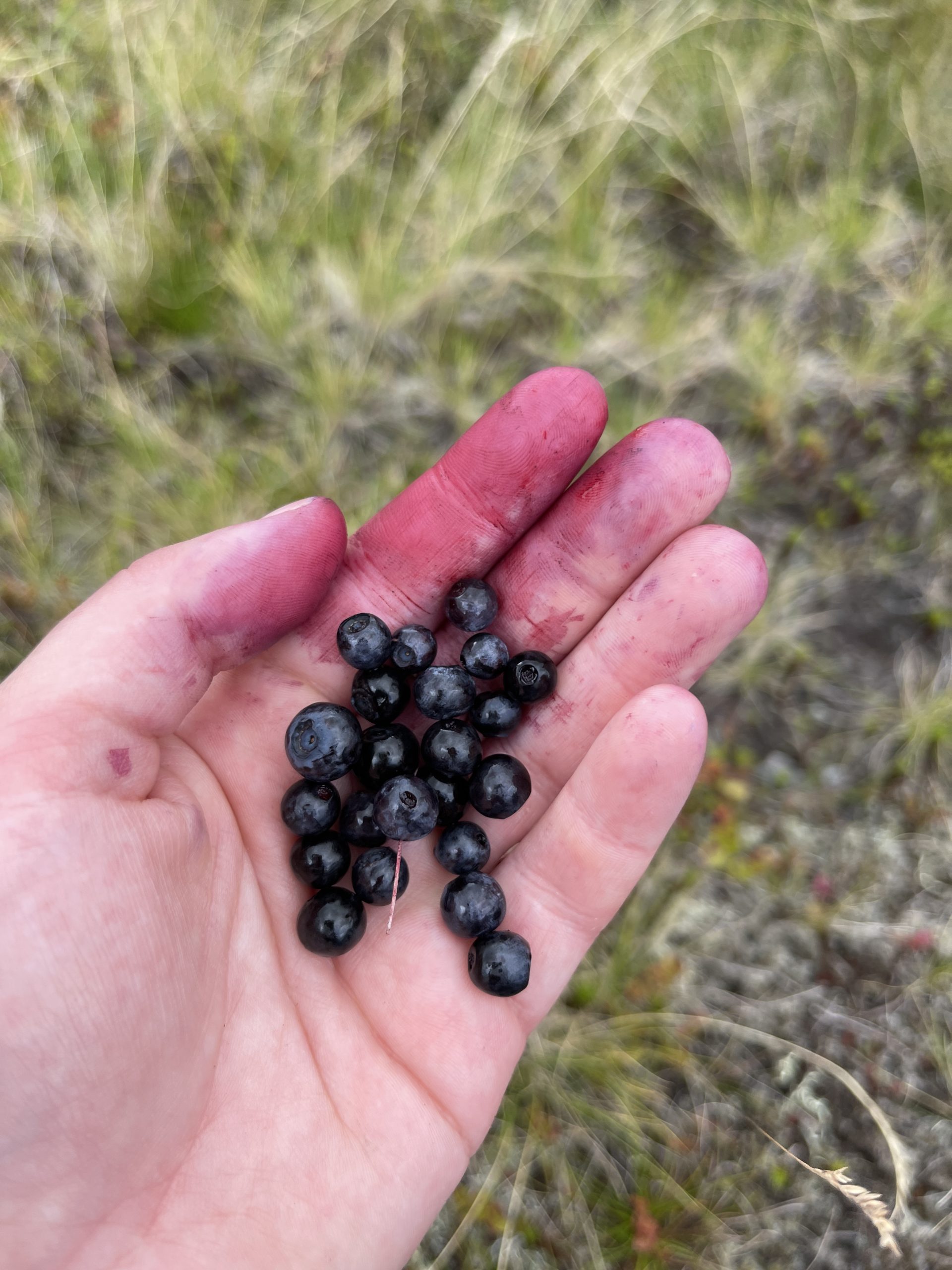
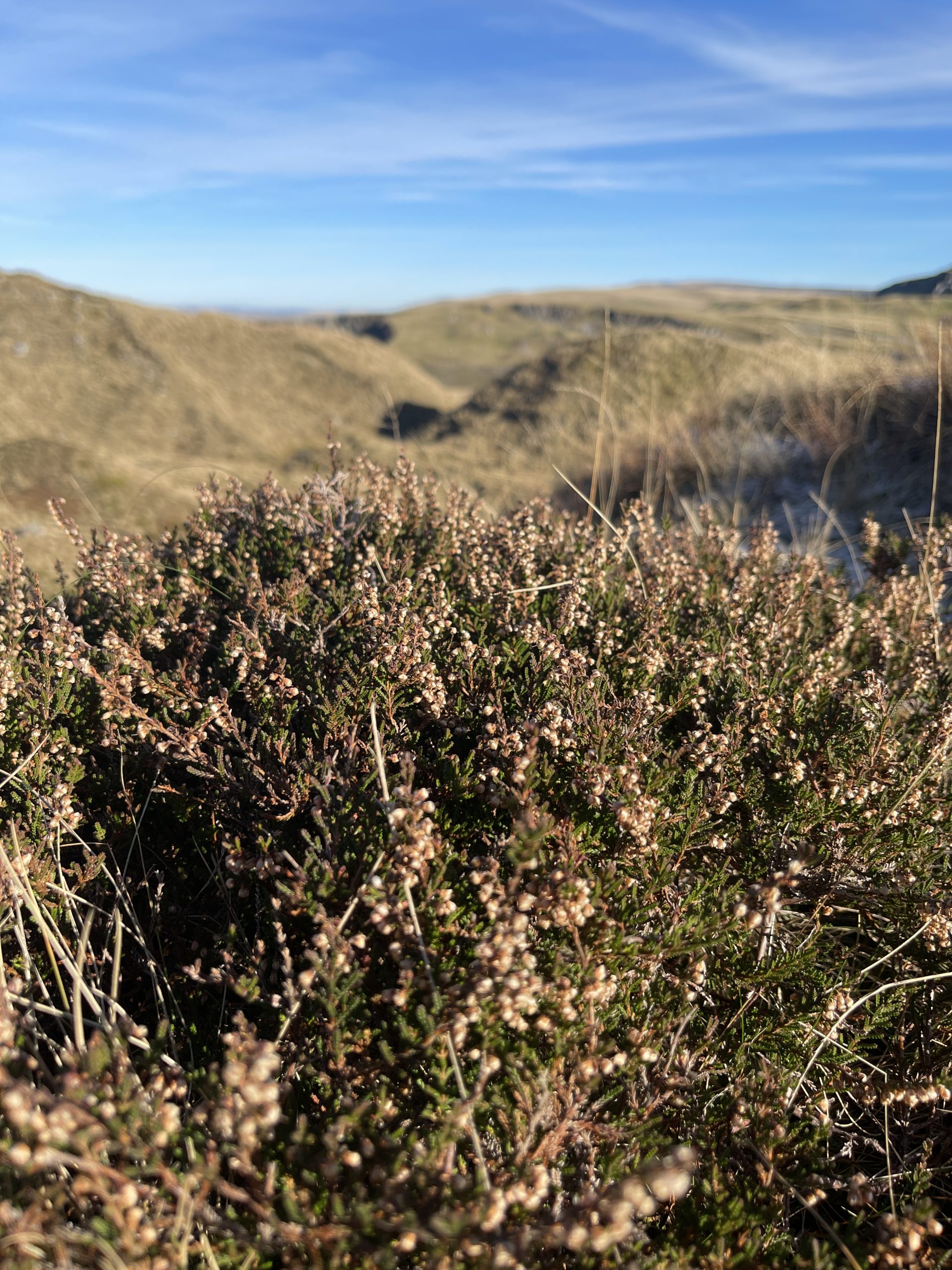
One of our most successful sites for seed collecting this year was the Black Mountains Quarry in the Bannau Brycheiniog National Park, which we visited twice in search of three different target species. We found Mossy Saxifrage thriving at the bases of the quarried cliffs and scree slopes. Our fingers were stained purple as we collected the juicy berries of Bilberry. In late November we returned for our frostiest day of fieldwork yet to collect Heather seeds, which is much later to flower and set seed. Three successful seed collections from one very valuable site!
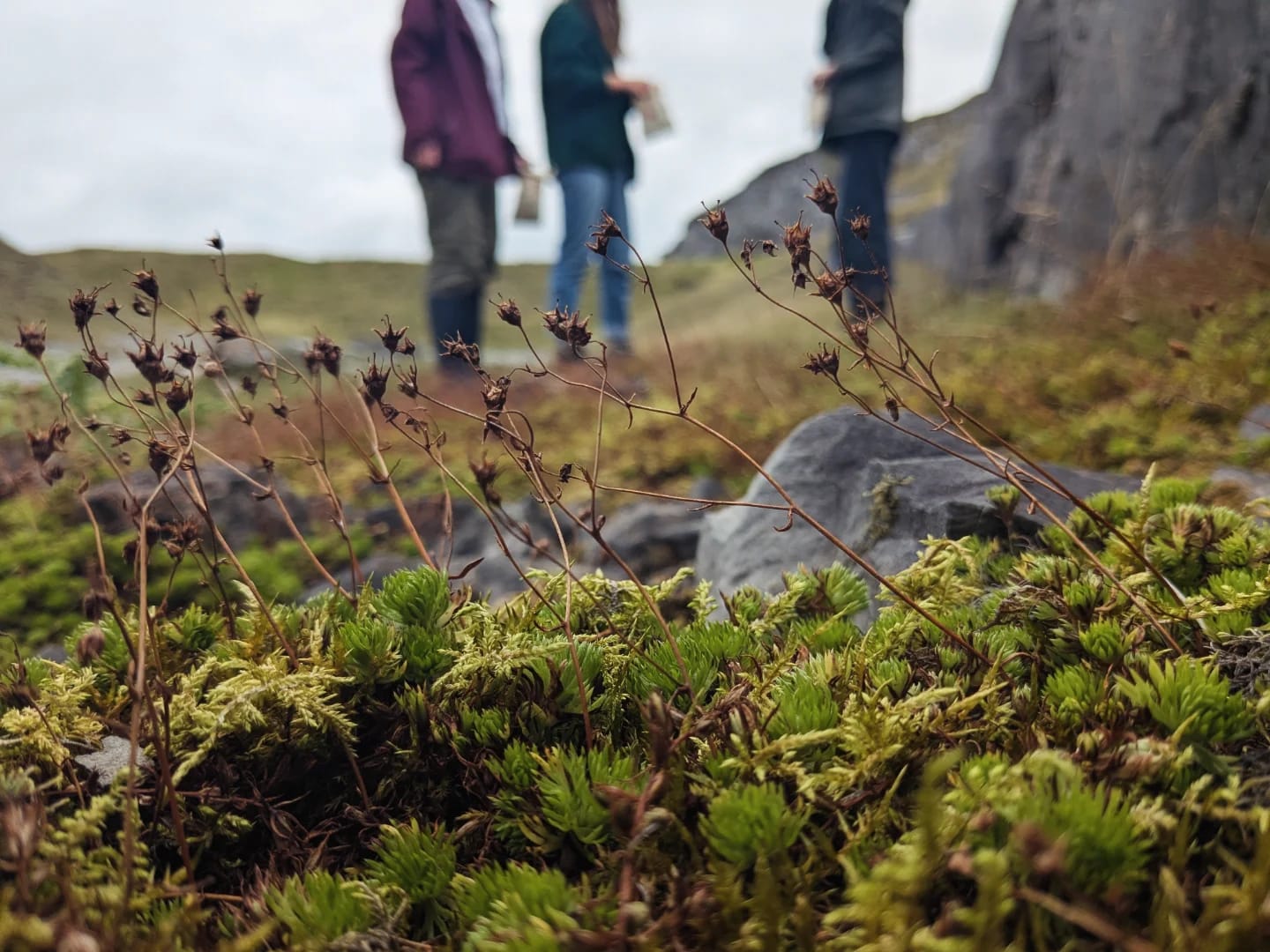
(Saxifraga hypnoides)
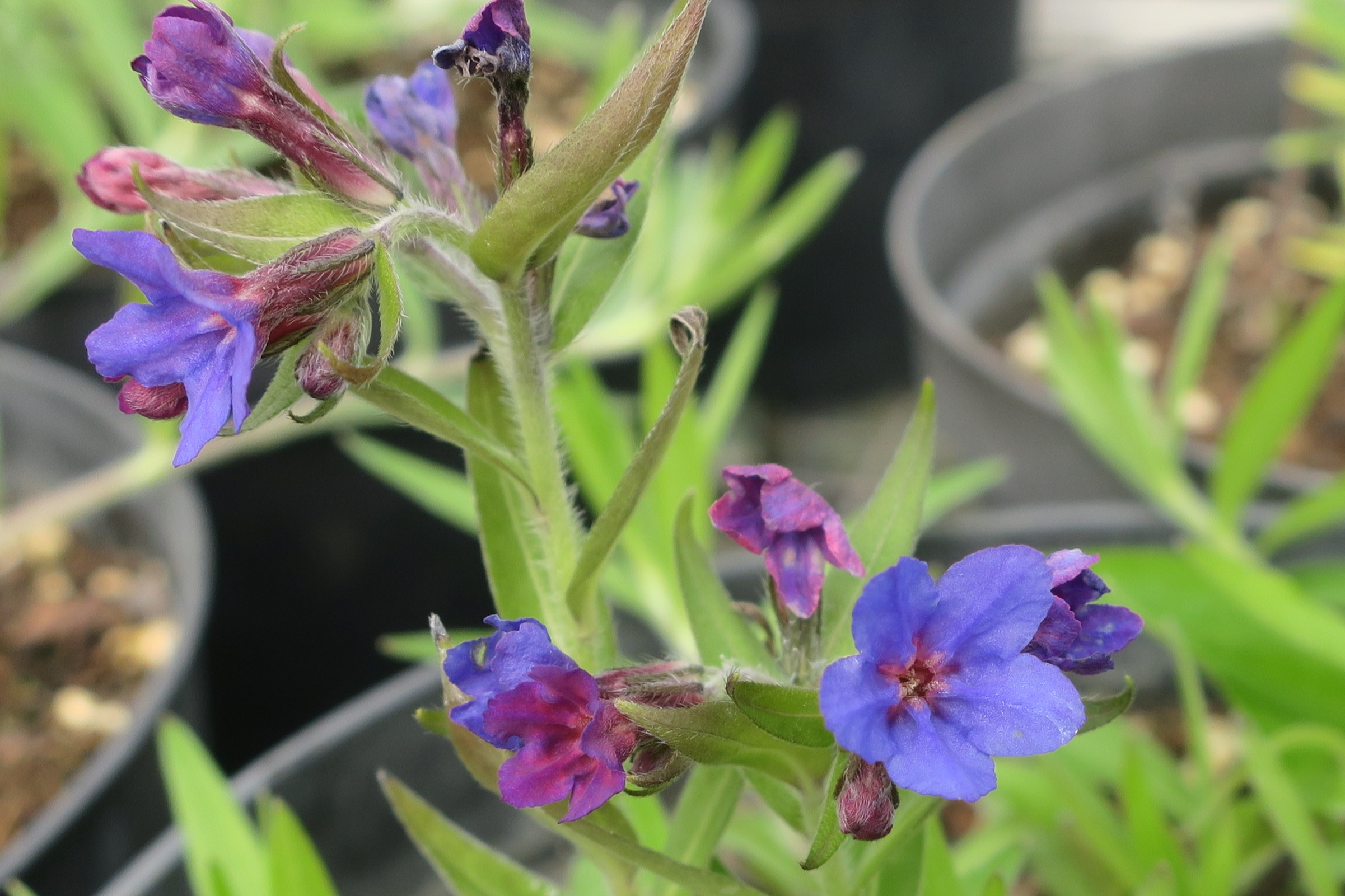
Purple Gromwell
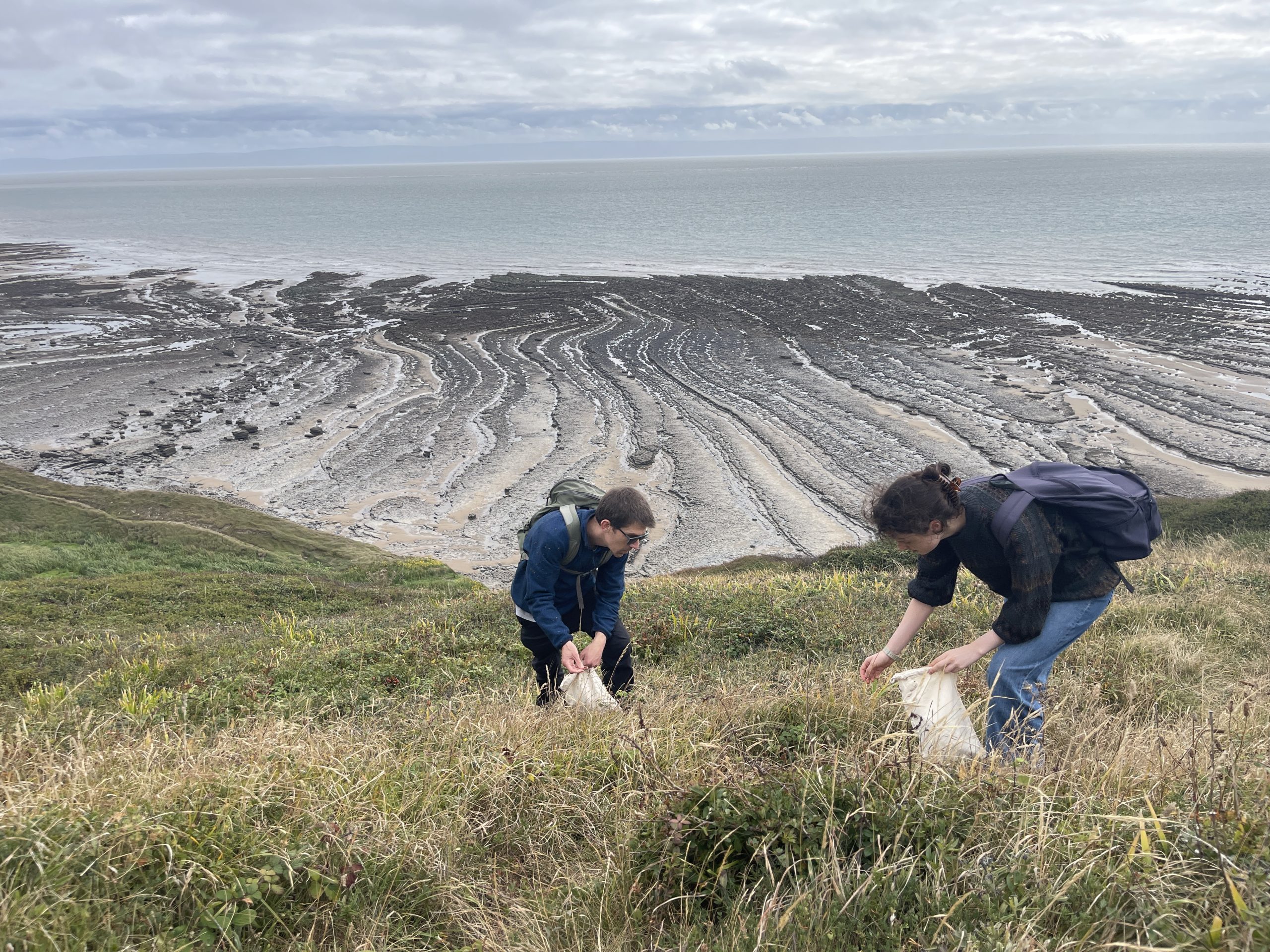
Another highlight was a visit to the Southerndown Coast to collect Purple Gromwell, which is an endangered species in Wales. The beautiful purple flowers can be seen in May and June, which had developed and ripened into shiny, white seeds with very hard seed coats by the time we visited the site in mid-August – a perfectly timed collection.
However, cut-tests in the field revealed that many of the seeds were empty. After finding a few full, healthy seeds we decided to proceed with the collection, making sure not to collect more than a 10% limit that we follow for small populations. We were rewarded with a collection of over 500 healthy seeds, adding yet another precious endangered species to our seed bank collection.

Marsh Gentian
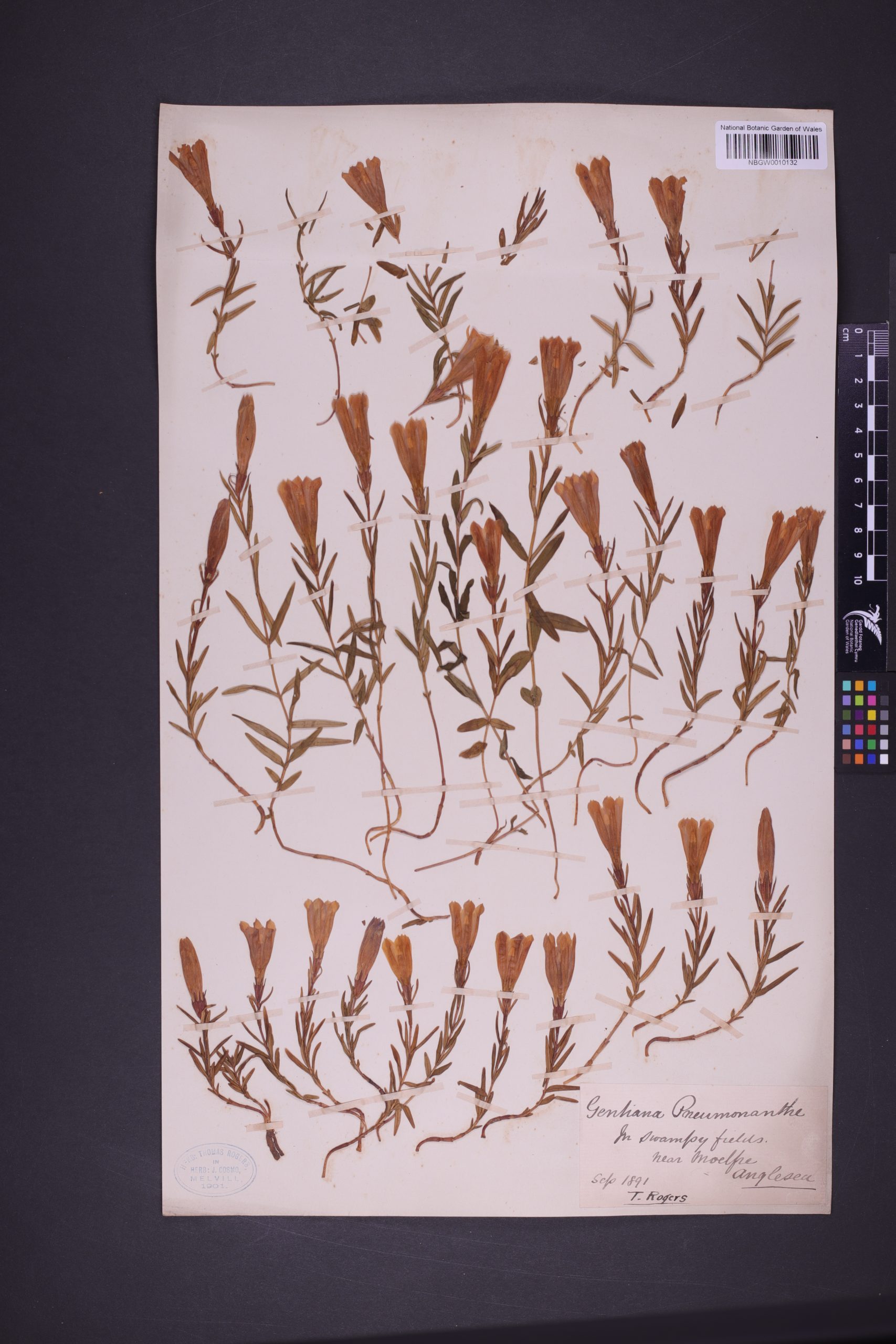
One plant that we were particularly excited to collect was Marsh Gentian – a rare plant of acidic bogs and wet heathlands, now found in only a few remaining locations on Anglesey. We were greeted by landowners, who guided us to a spectacular population of hundreds of bright blue, trumpet-shaped Marsh Gentian flowers.
This charismatic species was once highly sought after by Victorian plant collectors. In our historic herbarium, several specimens collected in 1891 – from a site very close to this very location – contain more than 20 individual plants pressed onto a single sheet. Returning to collect seed from the same area more than a century later made this a particularly poignant moment. Encouragingly, the population is thriving, allowing us to collect nearly 30,000 seeds without compromising the plant’s ability to regenerate in the wild.


Trees & Shrubs
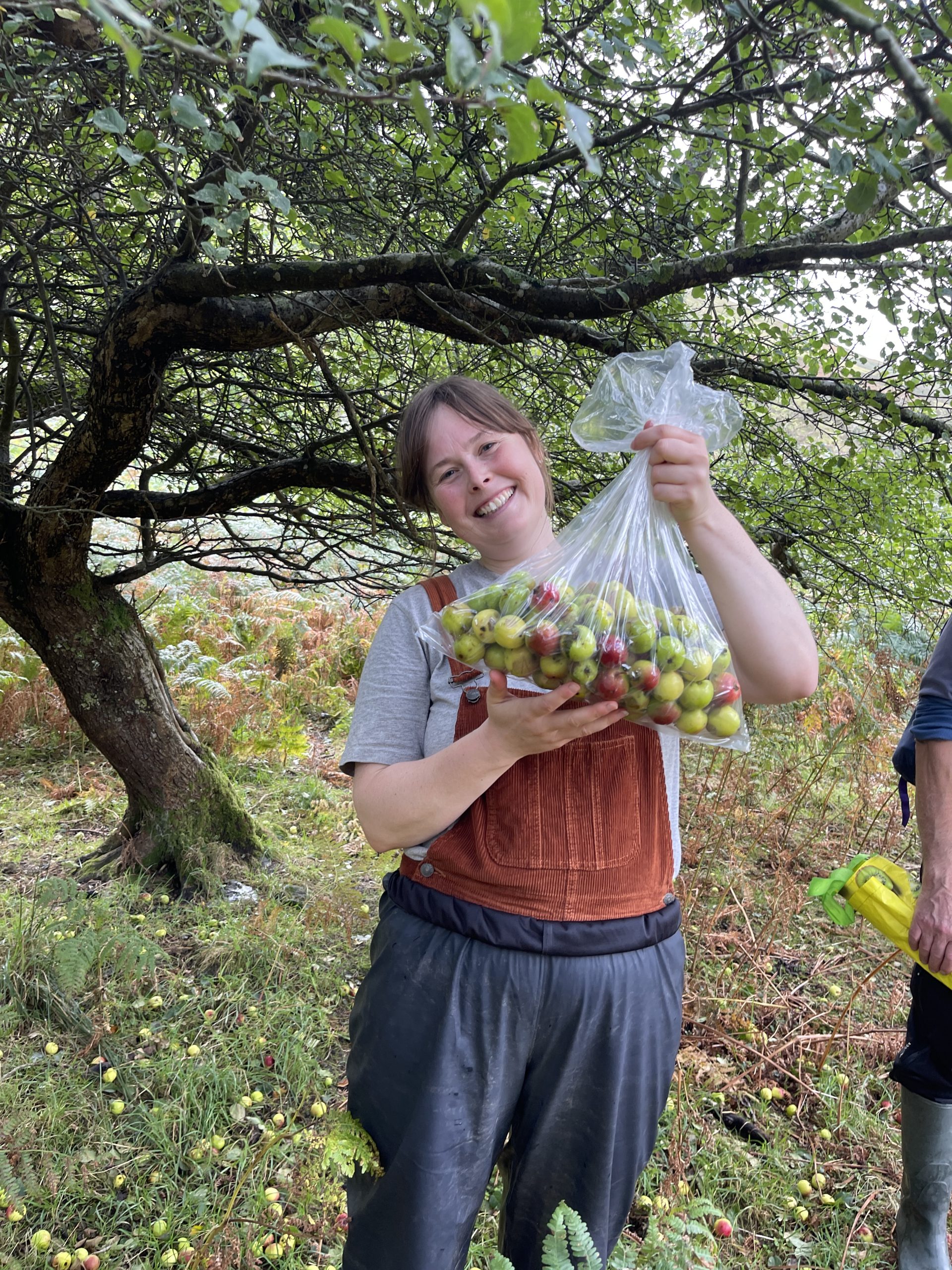
One of the most challenging collections of the year was that of Crab Apple from a picturesque site in north Wales. The team collected seed from 20 individual trees across the large site, and carried 20 kg of apples on their backs back to the car – at least the path was downhill on the return journey!
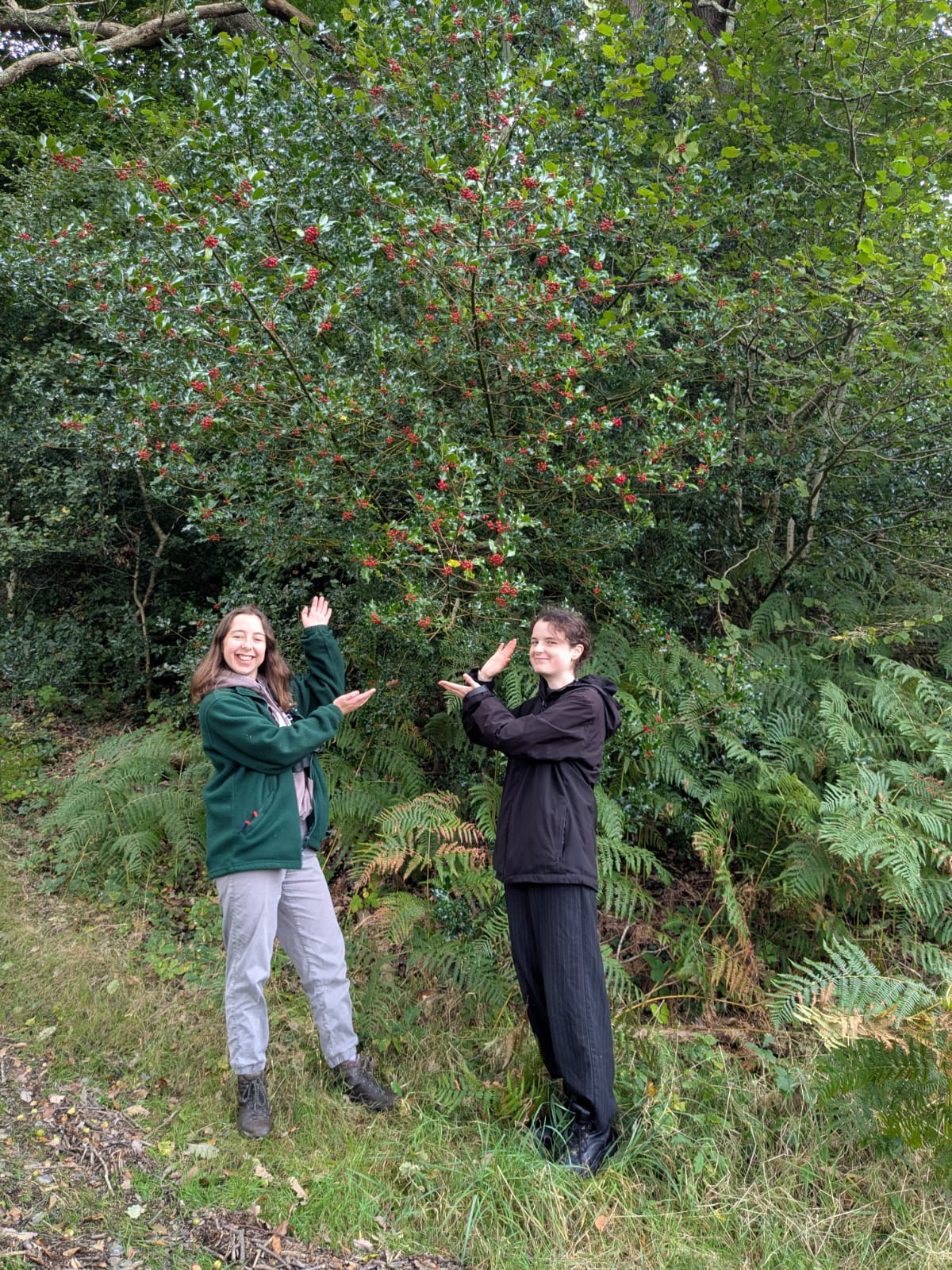
A second tree species on our target list was Common Holly, its bright red berries a familiar sign that Christmas is on the way. What began as a quick recce trip to a site at Aber Mawddach near Dolgellau soon turned into an impromptu collection, when we discovered that the berries were already ripe and ready to collect in mid-September. We observed that across the country, many fruits and berries ripened earlier than usual in 2025, possibly due to the prolonged warm weather over the summer.
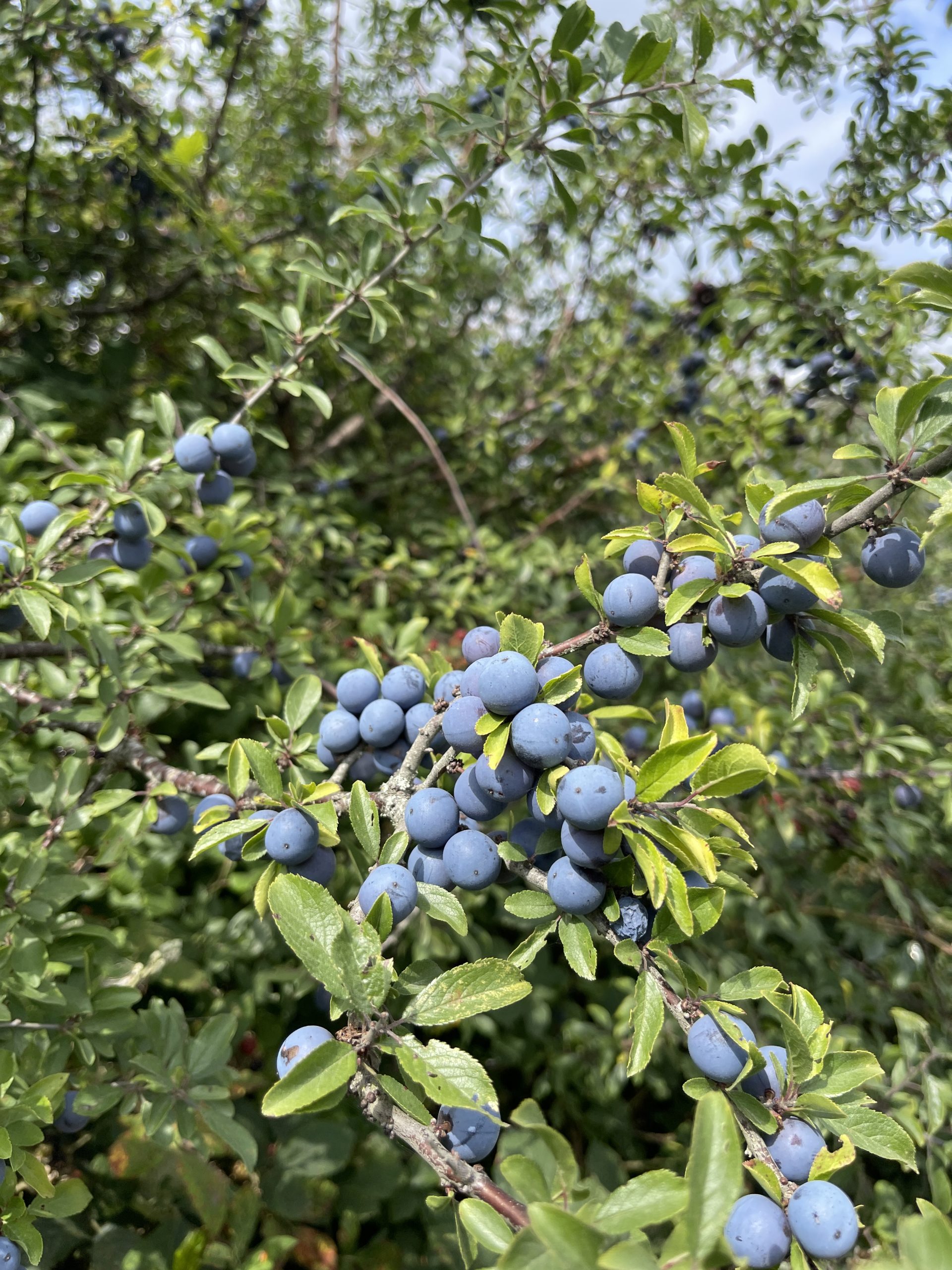
Blackthorn was another species collected earlier than expected at a nearby site along the Mawddach Trail. After struggling to find suitable fruiting shrubs in the area in 2024, it was a relief to return in 2025 to find the plants laden with sloes. The resulting collection was all the more satisfying after two years of effort to secure seed from this species.
Conservation Projects
We have also been involved with different conservation projects in 2025, using our collections, facilities and expertise to facilitate the research and active conservation of wild populations.
Tlysau Mynydd Eryri
The Science and Horticulture teams have been working together to grow material for the Natur am Byth! Tlysau Mynydd Eryri project, in collaboration with Plantlife and Treborth Botanic Garden. The project aims to conserve habitats and save species of montane flowering plants, ferns and trees in Eryri. Plants have been grown in the polytunnel, and collections from the seed bank and Waun Las National Nature Reserve will be used directly to grow material for this project.
Goldilocks Aster
In 2025 we were also lucky to host a trainee from Bumblebee Conservation Trust as part of another Natur am Byth! project. Amy Burchmore has been with us since April 2025, and has been busy propagating Goldilocks Aster plants, which are vulnerable to extinction and found in only three locations in Wales.
Cross-pollination experiments have been conducted between flowers from the three different populations (Gower, Pembrokeshire and the Great Orme in Llandudno) to see if seed-set can be improved. If viable seeds are successfully produced from the cross-pollinations, these can be used to grow more plant material to bolster the existing populations at the sites.
Rare Mosses
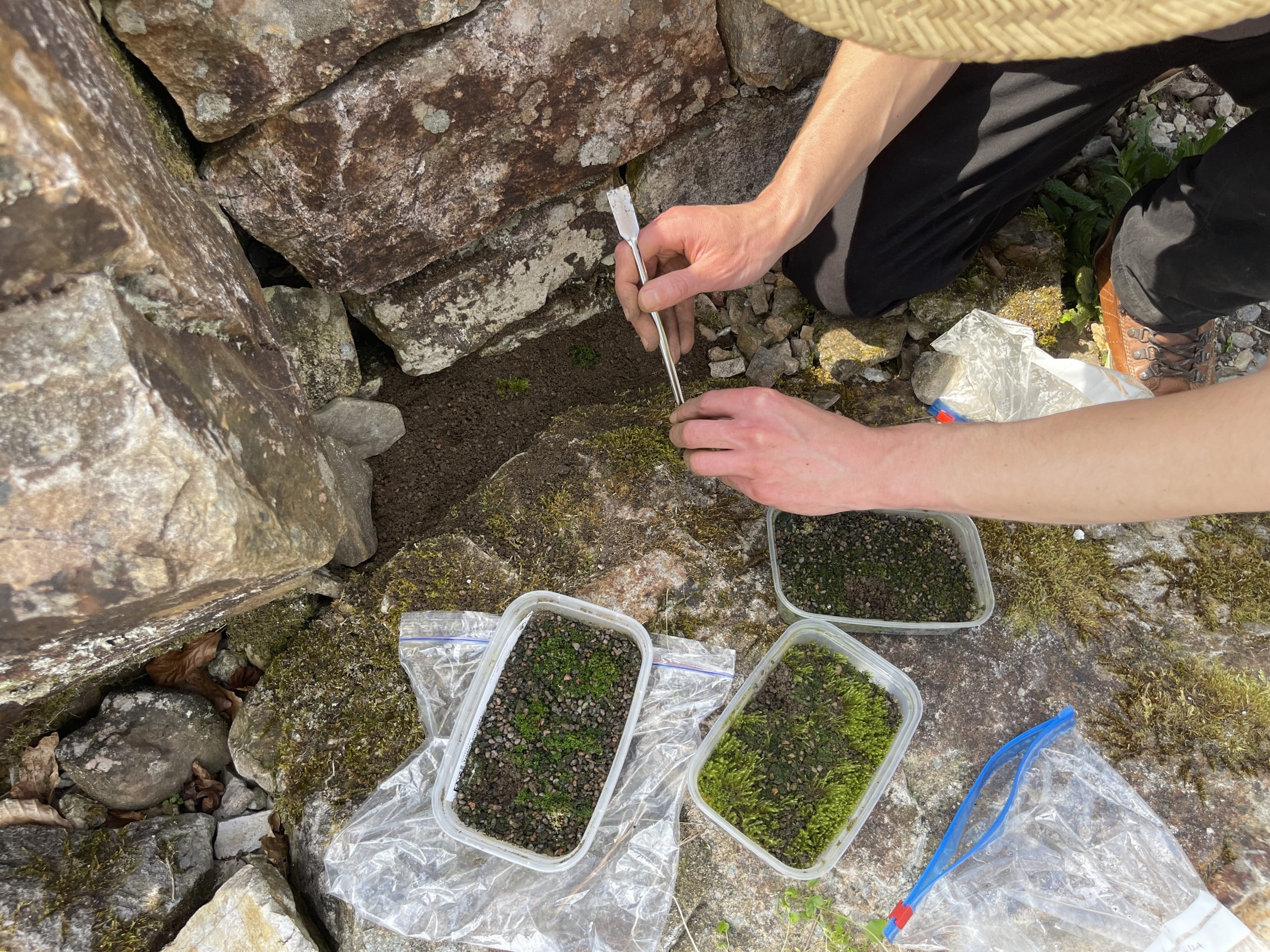
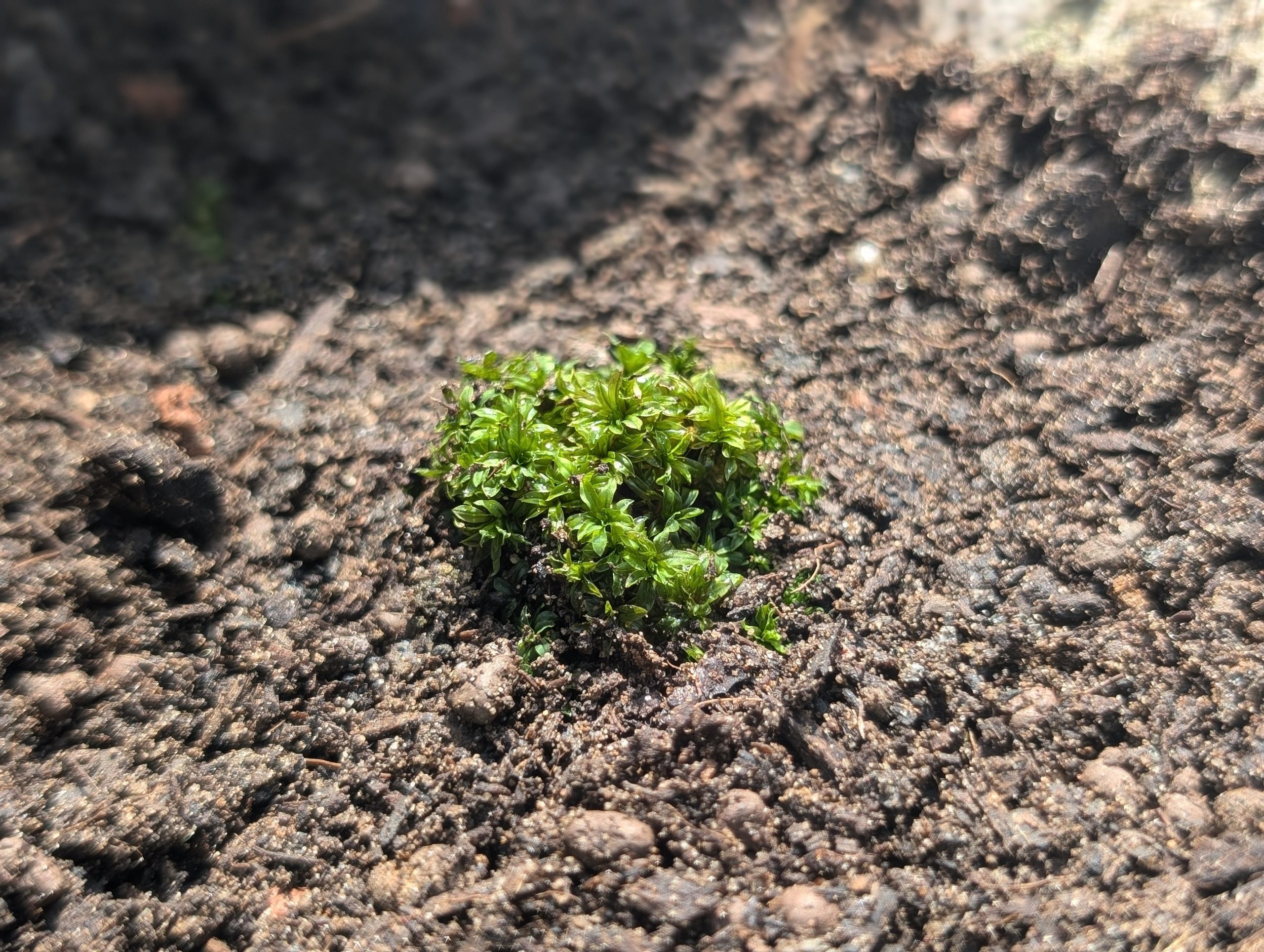
We have also been continuing to grow two rare species of moss, Tortula canescens and Bartramia stricta, as part of the Natur am Byth! Welsh Marches project, in collaboration with Plantlife.
Both species have been growing well in the incubator in the lab, and have now been planted out into the Boulder Garden to see how they withstand being transplanted into more natural conditions. The next stage of the project aims to plant out the material that we have grown in the wild to strengthen the populations in the Welsh Marches.
One Year, 25 Species
Looking back on the year’s achievements really highlights the level of collaboration and dedication that is needed to make our work possible. From landowners and local experts who shared their knowledge and welcomed us onto their land, to partner organisations, trainees and colleagues across the Garden, every success this year has been built on collaboration. We need everyone’s help to conserve and protect Wales’ precious plant diversity!
We look forward to continuing this work and seeing what seed collecting adventures are in store for us in 2026…
If you’d like to learn more about our work and see the Seed Bank in action, join us for a behind the scenes tour of the Seed Bank and Herbarium. Find out more and book tickets via the link below:
The Plants Past, Present and Future project is digitising our herbarium and is funded by the National Lottery Heritage Fund Dynamic Collections initiative, made possible thanks to National Lottery players.
