This week we have been celebrating National Moth Week, a time to showcase the incredible diversity of moth species and their habitats.
Moths are closely related to butterflies, both groups belonging to the order Lepidoptera, but they differ from butterflies in several ways:
- Moths have feathered antennae with no ball at the end, while butterflies have thin, clubbed antennae.
- Moths have a chunkier, more robust body shape, while butterflies have a more streamlined body shape.
- Butterflies are active during the day, mostly using the sun to warm up, while moths are mostly nocturnal and vibrate their wings to generate heat.
However, there are always exceptions to the rules – Burnet moths have clubbed antennae and are day-flying moths which you can see in abundance flying around our meadows at this time of year!
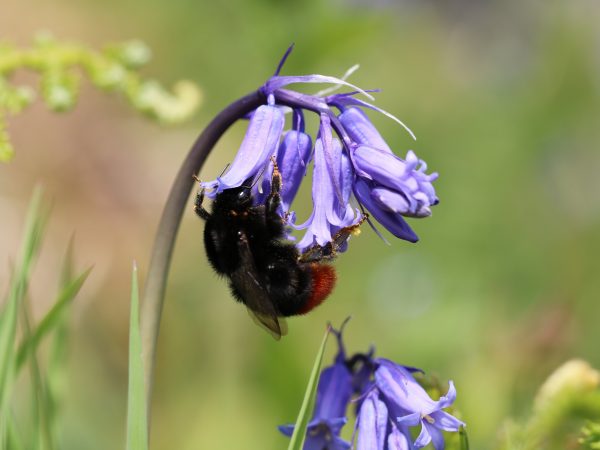
Moths are vital pollinators, with their long tongues able to reach the nectar within longer trumpet-shaped flowers like honeysuckle, which emits its strongest scent at night to attract these nocturnal visitors. Other flowers that are particularly attractive to moths include ragworts, Hemp-agrimony, buddleias, heathers and ivy. It has even been shown that moths are more efficient pollinators at night than day-flying pollinators such as bees!
Moth Trapping
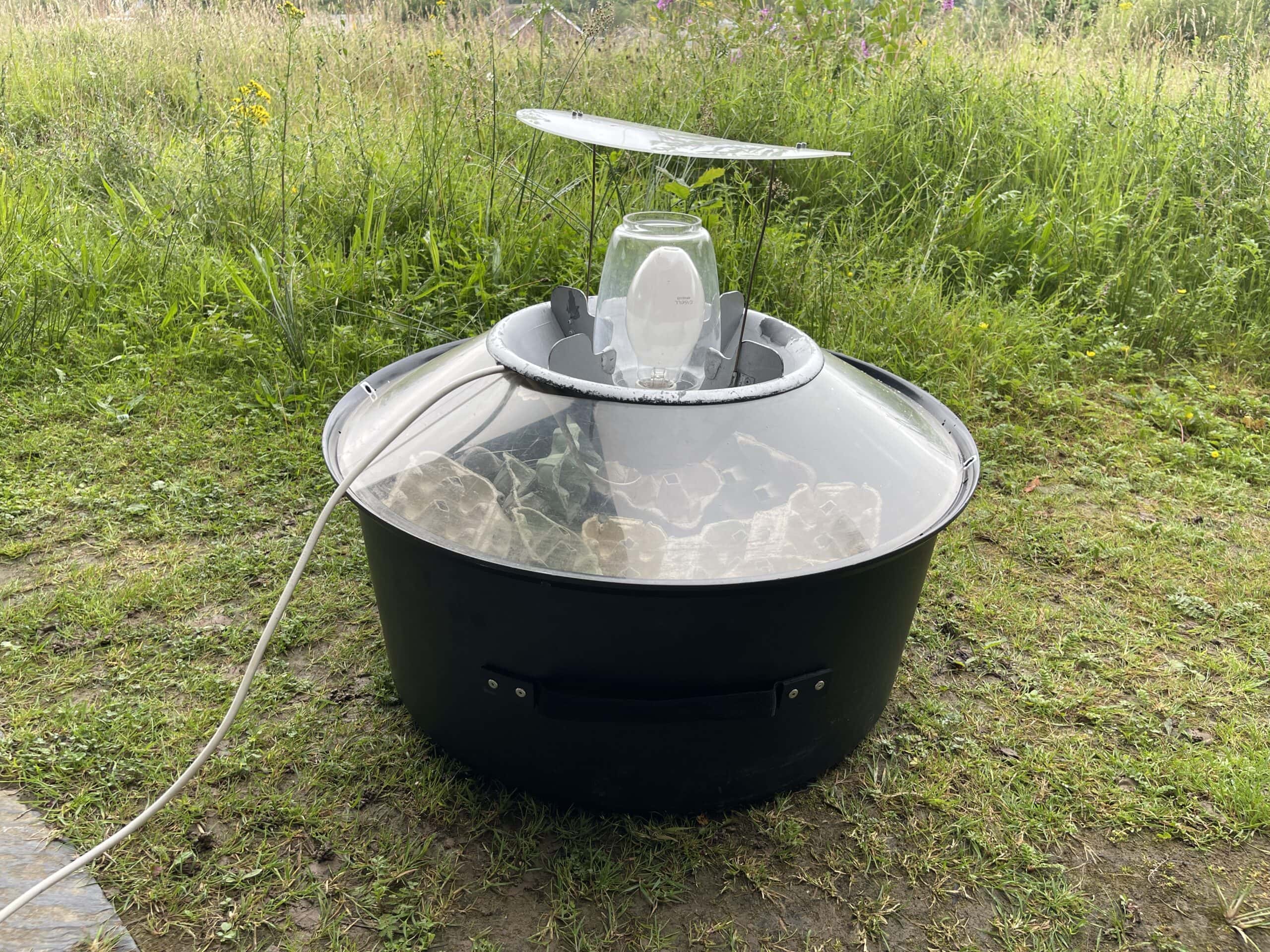
One of the best methods to observe a variety of moths is light-trapping, with ultraviolet light the most effective for attracting them. Moths fall into the trap and settle on egg boxes placed inside, and are released unharmed after being identified. At the Botanic Garden we use a Robinson trap, which is a large device with a bright light, which we run twice a month. Our dedicated moth volunteers identify each species captured, which can number in the hundreds during summer.
Since we began recording in 1998, even before the Garden opened to the public, nearly 6,000 moth records have been made from over 600 species. There are around 2,500 moth species in the UK, and we’ve found a quarter of them right here at the Botanic Garden!

Importance of Recording Moths
Recording moths has grown popular among wildlife enthusiasts and amateur recorders. This practice is crucial for monitoring changes in species distribution and populations. This has become more important than ever to understand how ecosystems are responding to the changing climate and habitats, and helping inform conservation efforts.
You can build your own moth trap and start recording moths in your garden. Check out this helpful guide by Butterfly Conservation to get started.
Highlights from our Moth Traps
Here are seven of our favourite moth species, each unique and special, all of which have been recorded at the Botanic Garden:
Elephant Hawk-moth (Deilephila elpenor)

This vibrant moth inspires awe with its striking colours. The caterpillars feed on Rosebay Willowherb, and resemble an elephant’s trunk, giving the moth its name! The adults feed at night from honeysuckle and other tubular flowers, using their long tongues to reach the nectar, making them important night-time pollinators.
Merveille du Jour (Dichonia aprilina)
The Merveille du Jour, meaning ‘marvel of the day’ is a true master of disguise, blending into its surroundings to evade predators. Adults fly from September to October, feeding on ivy flowers and over-ripe berries, while larvae feed on various oak species.

Chocolate-tip (Clostera curtula)

A recent addition to our records, this moth has a distinctive chocolate-brown blotch on its forewing. The first sighting in Carmarthenshire was recorded right here at the Botanic Garden in 2023, thanks to our moth volunteers. The caterpillars feed on Aspen and other poplar trees, and spend the winter as a pupa cocooned between the leaves.
Ermine Moth (Yponomeuta sp.)
The genus Yponomeuta includes several beautiful but hard-to-identify species of micro-moth. These tiny moths, with a wing length of up to 12 mm, evade bats by producing ultrasonic clicks. They demonstrate Müllerian mimicry, warning predators of their unpalatability.

Map-winged Swift (Korscheltellus fusconebulosa)

Named for the map-like markings on their forewings, these moths have short antennae and no functioning mouthparts. They spend most of their lives as caterpillars, feeding on bracken roots and overwintering twice before pupating after two years underground.
Chinese Character (Cilix glaucata)
This moth’s colouration and shape disguise it as a bird dropping. Despite its small size of 13 mm, it’s classified as a macro-moth and feeds on Blackthorn, Hawthorn, and Crab Apple as a caterpillar. It is the only species within the Hook-tip sub-family that does not have hooked forewings.

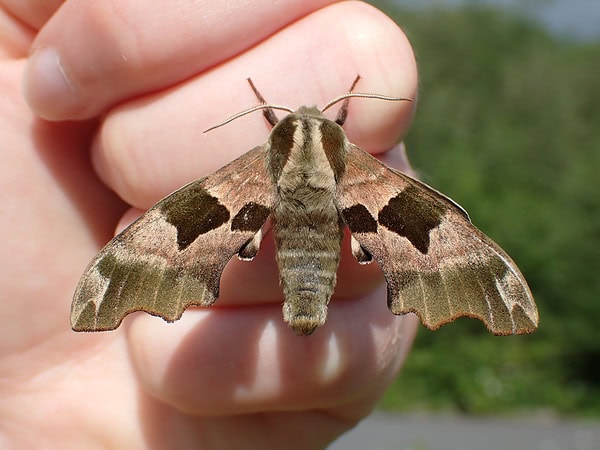
Lime Hawk-moth (Mimas tiliae)

With a wingspan of over 70 mm and distinctive pink and green colouration, this beast of a moth is unlike any other Hawk-moth found in the UK. First recorded at the Botanic Garden in 2021 as the most inland sighting in Carmarthenshire, it has only been seen a handful of times since. As its name suggests, the caterpillars primarily feed on Lime trees and are most often spotted crawling down the trunks or on the ground seeking a place to pupate.
Celebrating Moths
To celebrate National Moth Week, we ran an extra moth trap and shared our findings with visitors, showcasing the remarkable moths that were caught. We even managed to catch another first for the Garden – a Hemp Agrimony Plume moth (Adaina microdactyla), which has never been recorded here before!
Other highlights from our moth trap this week included a couple of Bordered Beauties, an Early Thorn, two Drinkers, a Burnished Brass and the micro-moths Pyrausta purpuralis and Aspilapteryx tringipennella. In total, we caught 53 moths of nearly 30 species!
Happy National Moth Week!


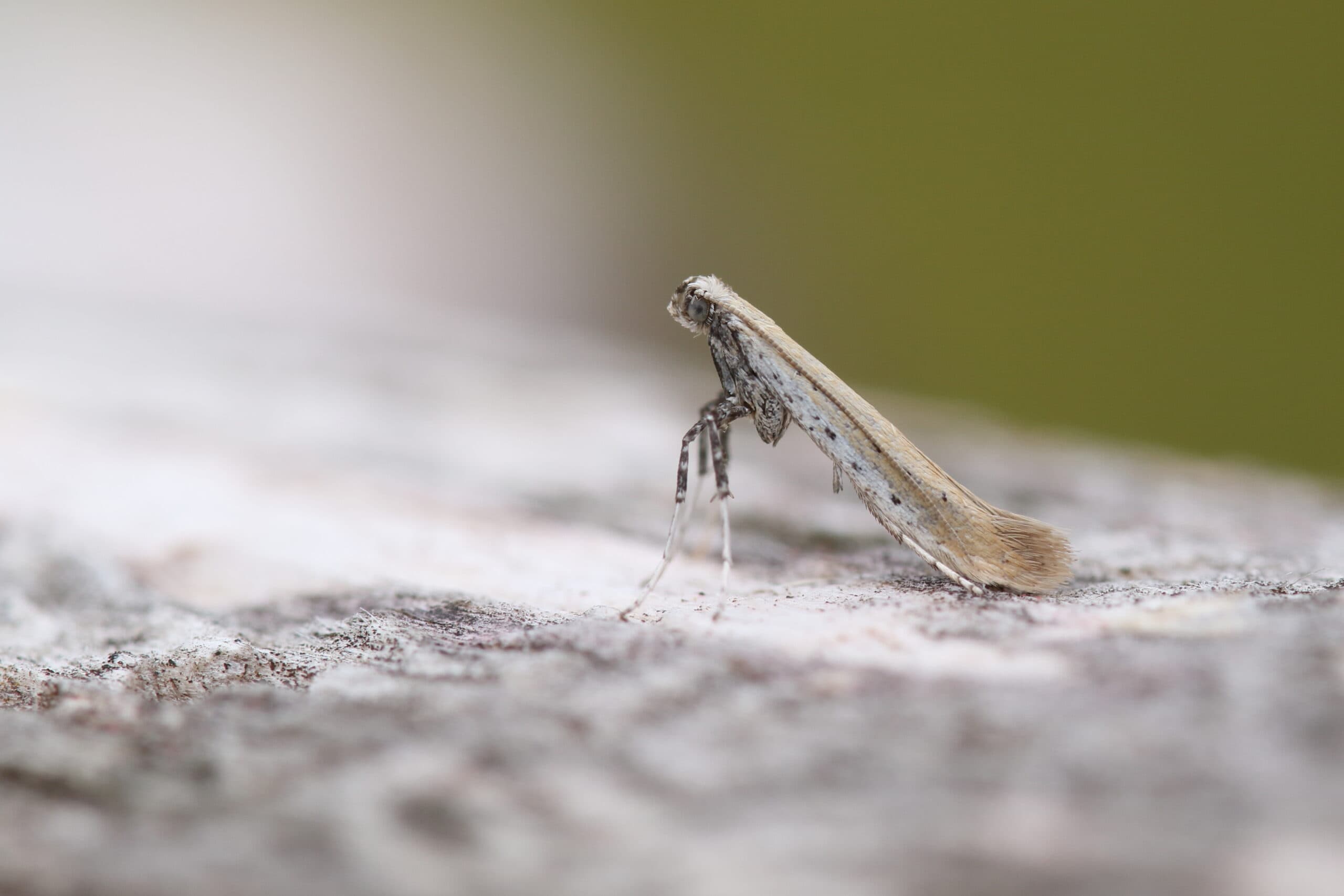
Photo Credit: Vaughn Matthews & Ellyn Baker
The National Botanic Garden of Wales is supported by Welsh Government’s Nature Networks Fund, funding work to deliver infrastructure improvements on Waun Las NNR, allowing us to manage the site for improved biodiversity and engage with visitors on our natural heritage.