Four months at the National Botanic Garden of Wales as Artist in Residence on the Plants Past, Present and Future Herbarium project – by Lily Tiger
At the beginning of July, I started my residency at the National Botanic Garden of Wales. Receiving the offer was a really exciting opportunity. I used to visit the garden with my family as a child, and I have fond memories of sending rafts of twigs and leaves down the stream and running around the Great Glasshouse with my sisters, trying to find our supposed long lost brother Mr Sticky… (still haven’t found him, sorry dad!) Needless to say, my first day was a nostalgic trip down memory lane!
I applied for the opportunity off the back of another project on Ynys Enlli last September alongside an old school friend, biologist and herbalist Sophia Goard. Inspired by a chance encounter with an old botanical book listing Welsh plant names in English, Latin, and Welsh, I became captivated by the richness and specificity of regional plant naming. During a series of participatory and sensory workshops, participants were given the opportunity to think up new plant names, igniting a personal connection and an imaginative taxonomy of nomenclature.
The opportunity to work with the Garden was a moment to pursue this research into Welsh plant names further. Working with the herbarium collection of over 30,000 pressed plants, I was particularly eager to explore the disappearing species: What do their Welsh or English names tell us about their ecological roles or cultural significance? Who remembers them? What plants have taken their place? What does it mean to name something which no longer exists?
As is the case with a lot of creative projects, the outline started to shift and morph as I spent more time at the Garden, learning from the conservationists, horticulturists and volunteers that work here, and exploring the changing history of the site. From a 17th century mansion and estate grounds to becoming council owned tenant farms in the 1930s and on to a contemporary botanic gardens and nature reserve by the 2000s. It was this kind of site specific information which passed me by as a child but sparked a sense of excitement for responding more specifically to the locality.
The research into Welsh plant names would be a longer-term quest in my creative practice – something to chip at slowly for years to come. But for now I wanted to work more presently by responding directly to the Garden. Anysia, a student intern at the Garden, told me to get involved with whatever I could here and I definitely followed that advice. My summer felt like I was at a science camp for grown ups!
“Being able to wander through native wildflower meadows is quite an unusual feature for botanic gardens”
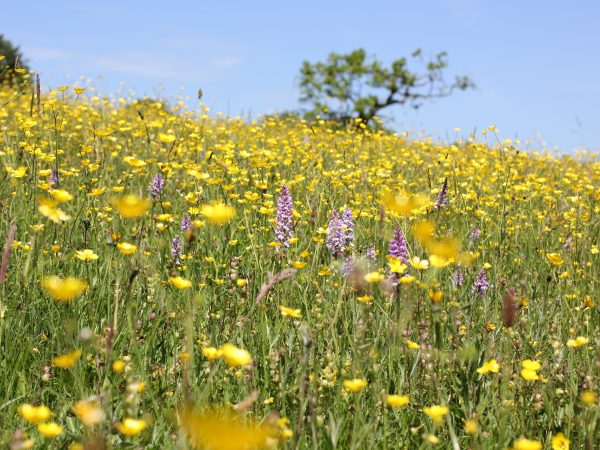
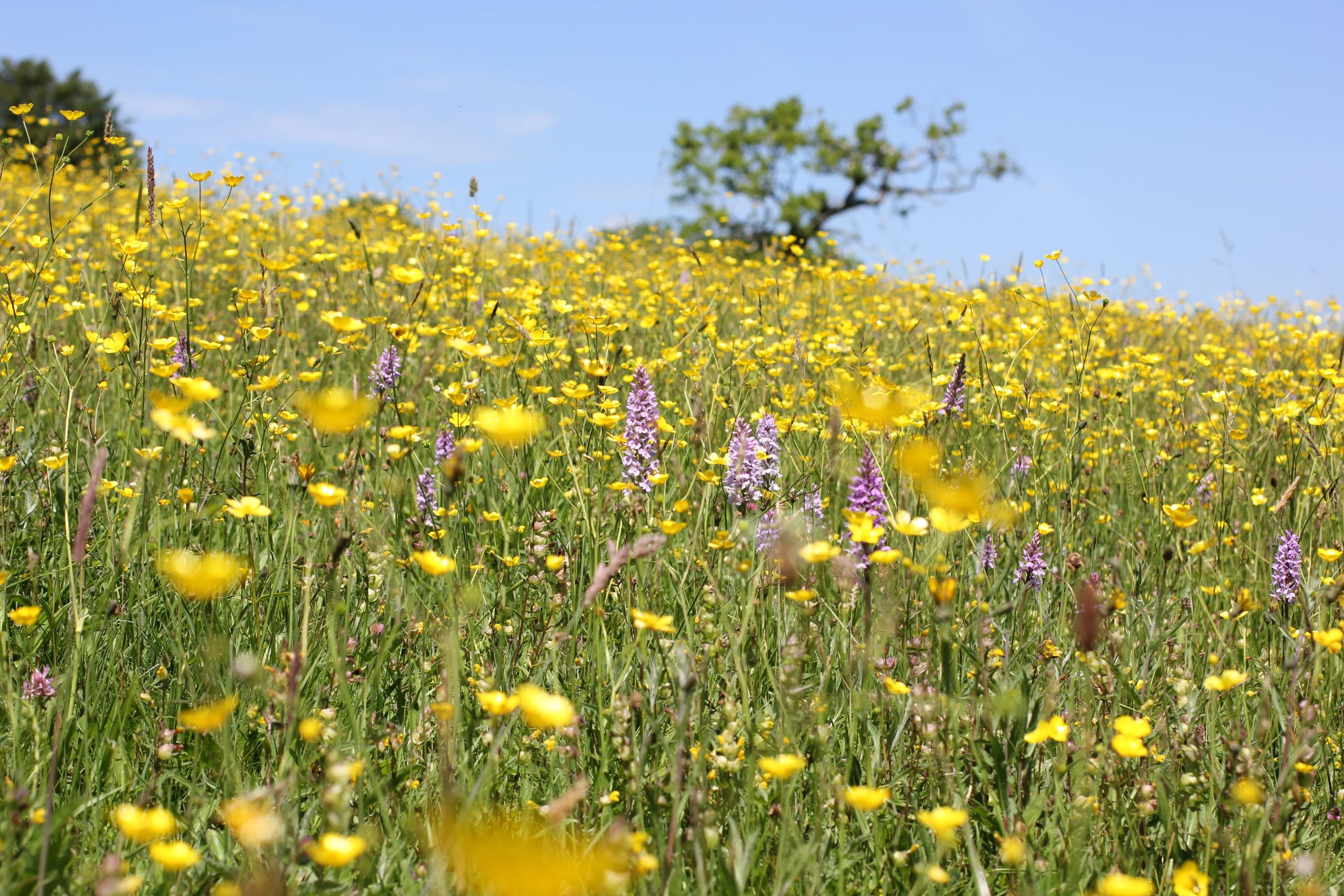
When I arrived in July, the Trawscoed and Waun Las meadows were abundant with the buzz of insects and bright blooms of Knapweed, Yellow Rattle, Bird’s-foot Trefoil and Tufted Vetch amongst many others. Being able to wander through native wildflower meadows is quite an unusual feature for botanic gardens. Taking part in the BioBlitz Festival was a fantastic opportunity to explore the Waun Las National Nature Reserve and learn more about biodiversity recording techniques. While monitoring the meadow species, Yellow Rattle particularly piqued my interest as a hemi-parasitic herb referred to as a ‘meadow maker’ by Laura, one of the Science Team. I became quite fascinated by its ability to weaken dominant grasses and allow other species to thrive, inviting in a wealth of pollinators thereby becoming reservoirs of biodiversity.

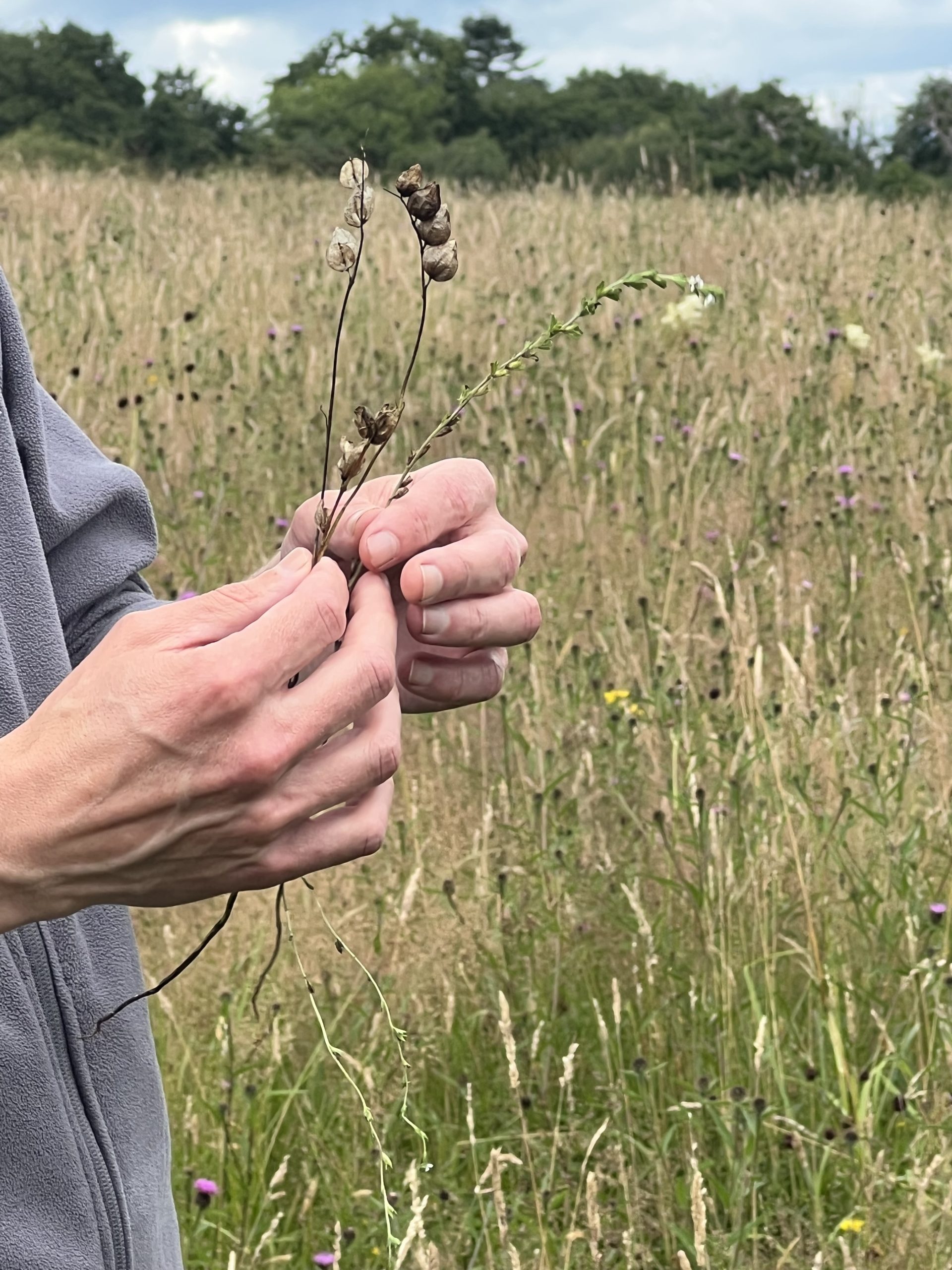
As this summer was extremely sunny, many things went to seed a little sooner than usual. I watched as the Yellow Rattle turned from yellow flowers into rattling capsules which looked a lot like paper lanterns. I felt the need to try to make one, so I asked Matt to cut some of the willow down by the playground, and I got to work experimenting with different seed head shapes, stretching paper over the forms… with the vague idea of projecting film and images collected from my research onto these forms at a later date.
Conversations with the Science Centre team unveiled more about species rich grasslands and their decline since industrialised agriculture, a 97% decrease since the 1930s. I was eager to find out more and wondered whether Yellow Rattle could be a symbolic vessel for conversations around conservation vs the demand of land for food production and economic viability for farmers. Something about the hemiparasitic nature of the plant as existing in more than one realm echoed in its wider debated reputations. I went to interview a local farmer who started his farming career on one of the tenant farms at the site in the effort to hear more about the problems meeting some of the environmental legislations.
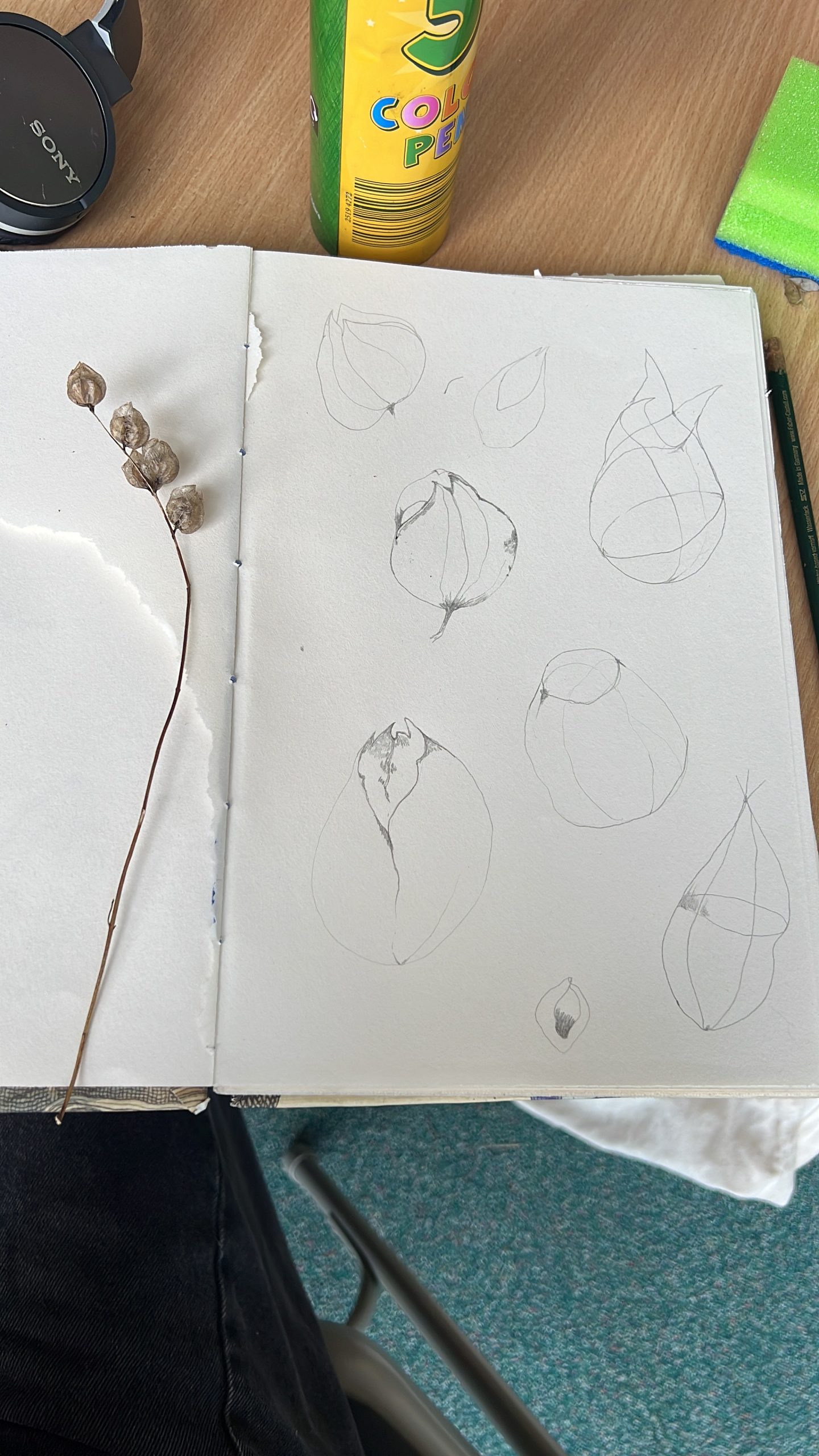
Listening and consolidating formed a large part of my process at the gardens. It was a period gathering and sense-making with a particular focus on the meaning within the meadow. Cushioning the glasshouse, I wondered how their untamed character challenges the idea of what a “tidy” garden should be. In working with Live Well Growers, a group of people recovering from brain injury and neurological illness, I learned how gardening supports the relearning of motor skills and helps rephrase ideas of linear recovery. In this context, the meadows’ contrast to the neatness of a walled garden became a metaphor for loosening fixed ideas of order, opening space for new ways of thinking. Working in pairs, we created seed head lanterns and pressed flowers found in the compost heaps and from the cuttings of the wildflower meadows.

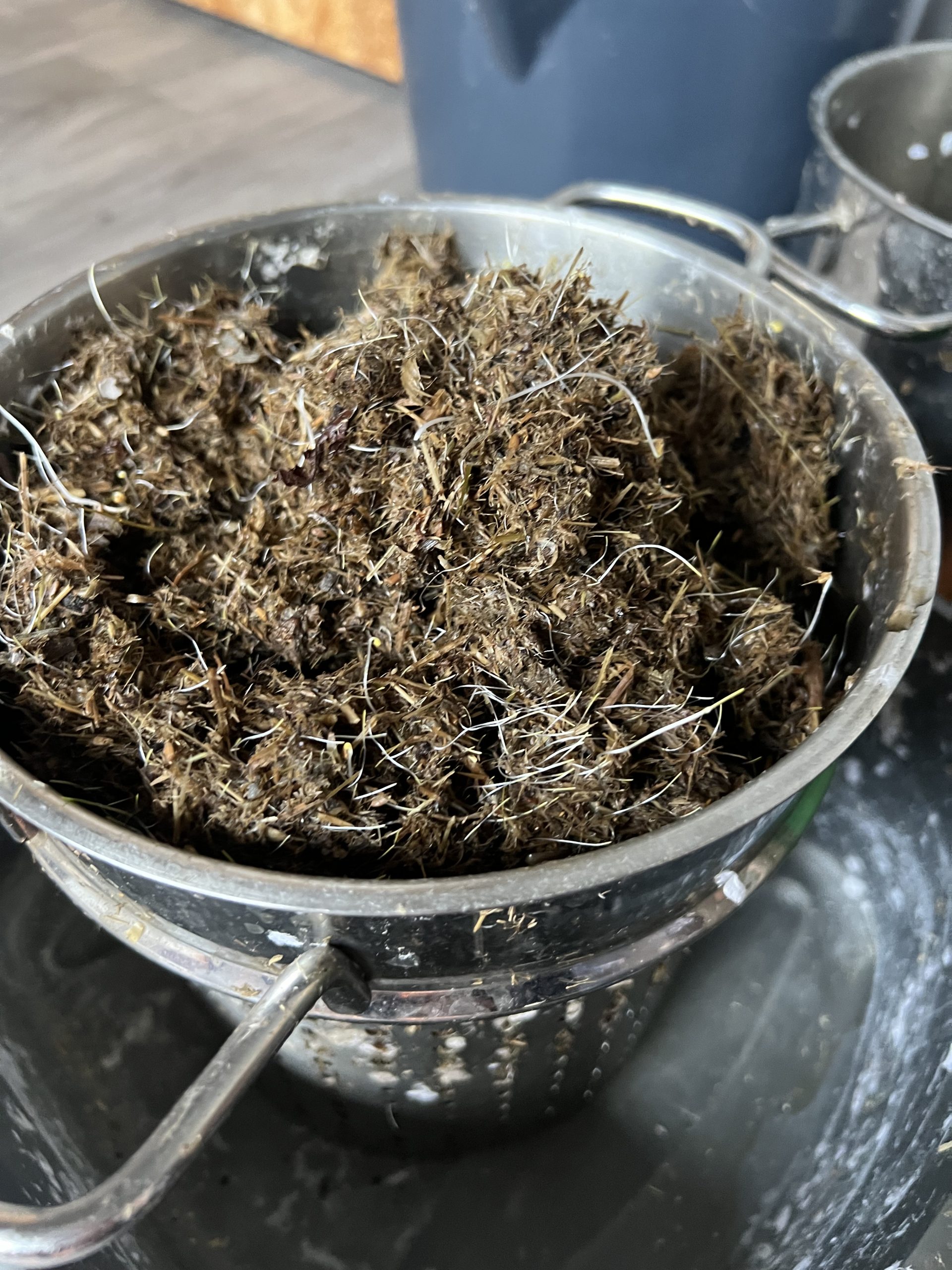
At the same time, I’d been spending more time in the meadow, and when the grass was finally cut in early September, I had a small eureka moment. I wondered whether I could make paper from the meadow cuttings, (after the seeds had been sieved) as an alternative kind of document of this year’s hay meadow. The next few weeks became a period of trial and error as I worked out how to make large sheets of paper from the material.
I built a 1×1 m mould and deckle and experimented with a potamogeton tank and two different paddling pools as pulp vats. I borrowed a huge pot from the kitchens to help break down the fibres, destroyed a hand blender, bought a terrifying rotating-blade device (which didn’t work), and repurposed planting grids as drying racks. Following YouTube tutorials, I used okra juice as a binding agent and scavenged waste paper from the office bins to strengthen the pulp. Eventually, I abandoned the mould altogether and found a solution by pressing the meadow mixture straight onto the grids – more like papier-mâché or cob building than traditional papermaking.
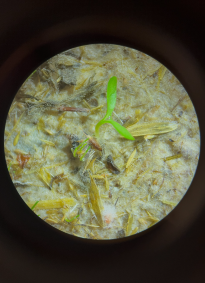
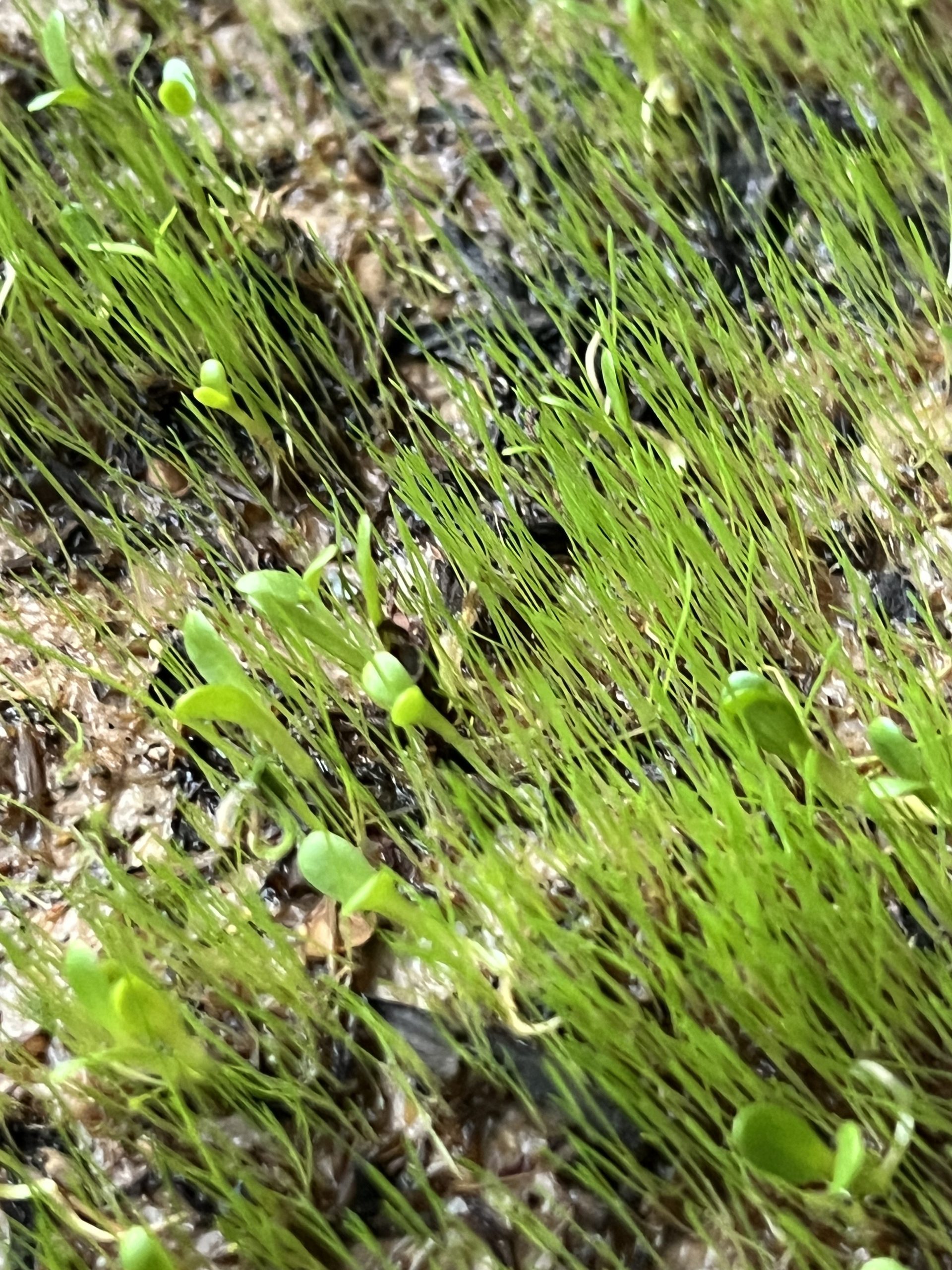
Curious whether the paper would germinate, Ellyn and I placed the dried sheets in the incubator, mimicking spring temperatures and light cycles. What felt like magic – the paper squares became seedbeds: a meadow growing from a meadow. The process ended up echoing, in a slightly artificial way, the principles of green hay, cut vegetation being used to reseed land.

“I came to learn that ecologically, all land is always moving toward forest; without grazing by large herbivores, meadows would quickly turn into woodlands. Human intervention, traditionally through grazing or haymaking, actually maintains biodiversity rather than destroying it.”
Conversations with the Science Team also reshaped my thinking about “wildness.” I came to learn that ecologically, all land is always moving toward forest; without grazing by large herbivores, meadows would quickly turn into woodlands. Human intervention, traditionally through grazing or haymaking, actually maintains biodiversity rather than destroying it. It suggests that humans are not inherently a disturbance to nature but part of the system, shaping and sustaining species-rich grasslands.
Historically, the story reinforces this: after the last ice age, mosses and pioneer plants colonised newly exposed ground; grasses, herbs, and sedges developed over time. European grasslands, rich in species diversity, expanded with early agriculture around 6,000 years ago, when people began clearing woodland. These habitats were sustained for millennia by low-intensity farming: grazing, cutting, and haymaking.
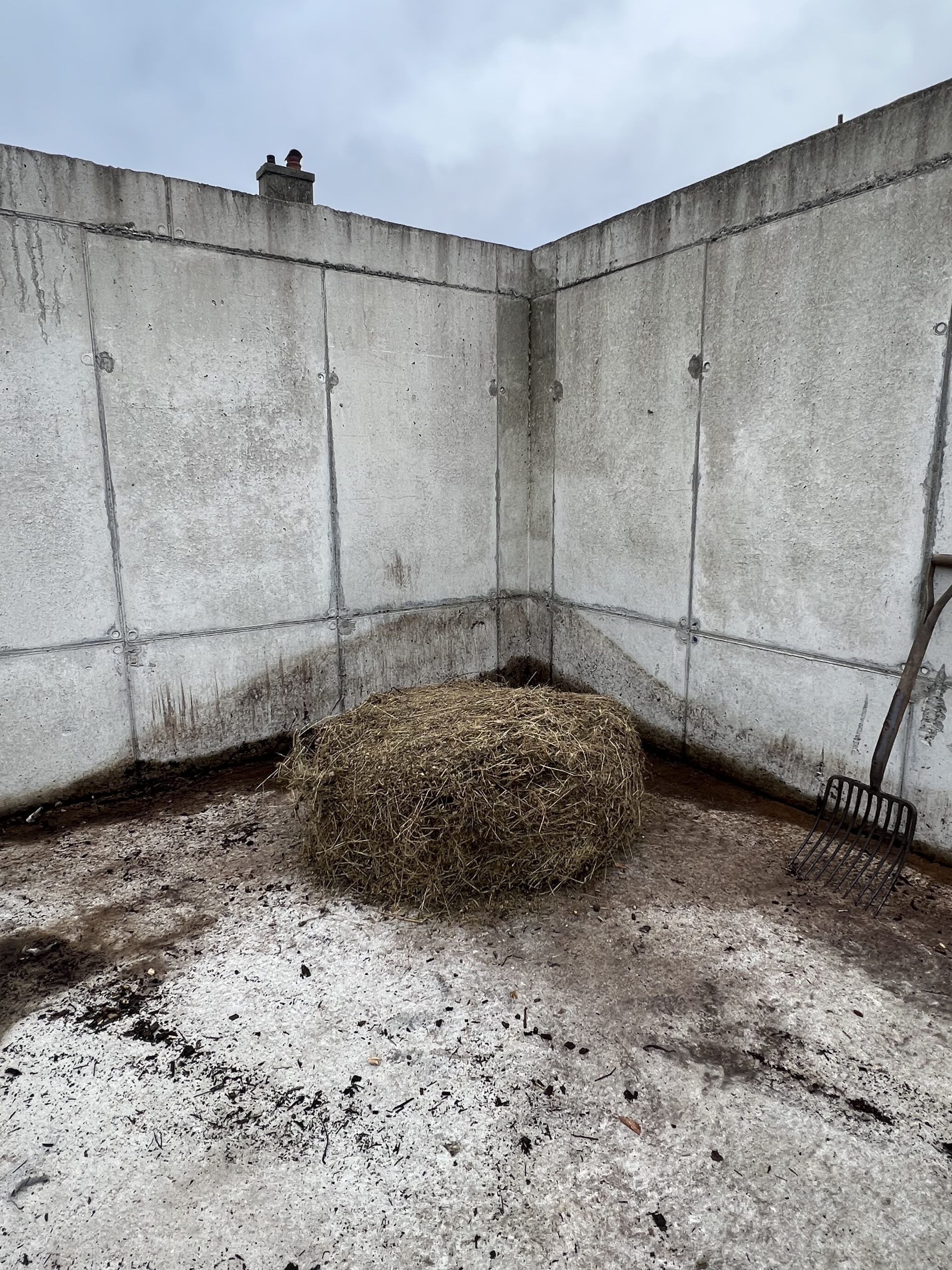
The exhibition is a collage of this research. At its centre is a large 1×1 metre sheet of the handmade meadow paper, mirroring the quadrats used for biodiversity sampling in the meadow, reinforced and sewn with the wildflower seeds. Suspended in the gallery, it will form a small “floating meadow” as the seeds germinate and grow and turn the paper a shade of green. Below it, the remnants of unprocessed meadow cuttings as its shadow of an original state.

Around the gallery walls are additional sheets sized to match traditional herbarium paper. These will include embossed impressions of various meadow wildflowers throughout the season.
Accompanying the work is an audio documentary that weaves together conversations with meadow specialists, conservationists, and farmers, offering context for the project and the questions it raises.
With thanks to ALL of the wonderful Botanic Garden team, from the Science Centre to the polytunnels, the volunteers and the farm for dealing with my nuisance antics and leaving bits of grass and strange smells in the Science Centre.
The Plants Past, Present and Future project is digitising our herbarium and is funded by the National Lottery Heritage Fund Dynamic Collections initiative, made possible thanks to National Lottery players.