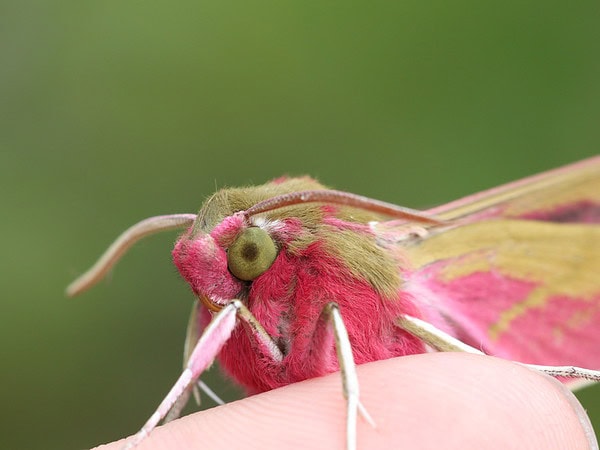
Following the end of another successful year of moth recording, the five-strong team of volunteers from the Botanic Garden’s Conservation Group take the opportunity to review their 2025 results.
For the past 12 years on every other Monday evening, a Robinson moth trap has been set outside the Science Centre here at the Botanic Garden. A dedicated group of the site’s conservation volunteers – including Frances, Maud, Gilly, Hazel and Eddie, often with the assistance of the science team’s placement students – examine its contents the following morning.
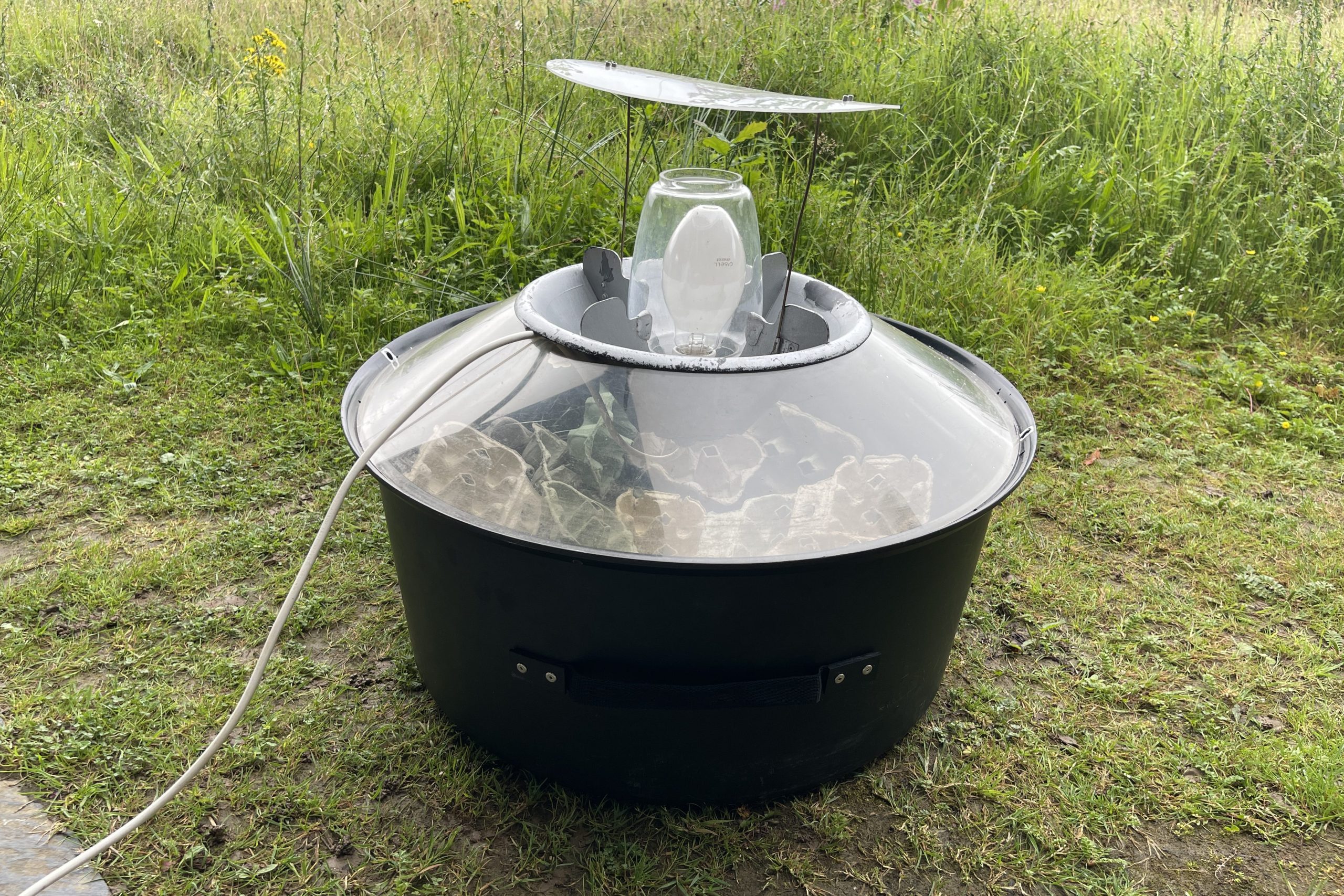
Robinson traps consist of a powerful lightbulb suspended above a bucket filled with eggboxes, providing dark places for night-flying, light-attracted moths to safely settle.
In the morning, volunteers gently transfer these trapped moths into pots to be identified, allowing them to be examined in detail by referring to a range of guidebooks. While some species are relatively easy to identify, others are more challenging – and the team often have friendly, robust discussions to reach a consensus.
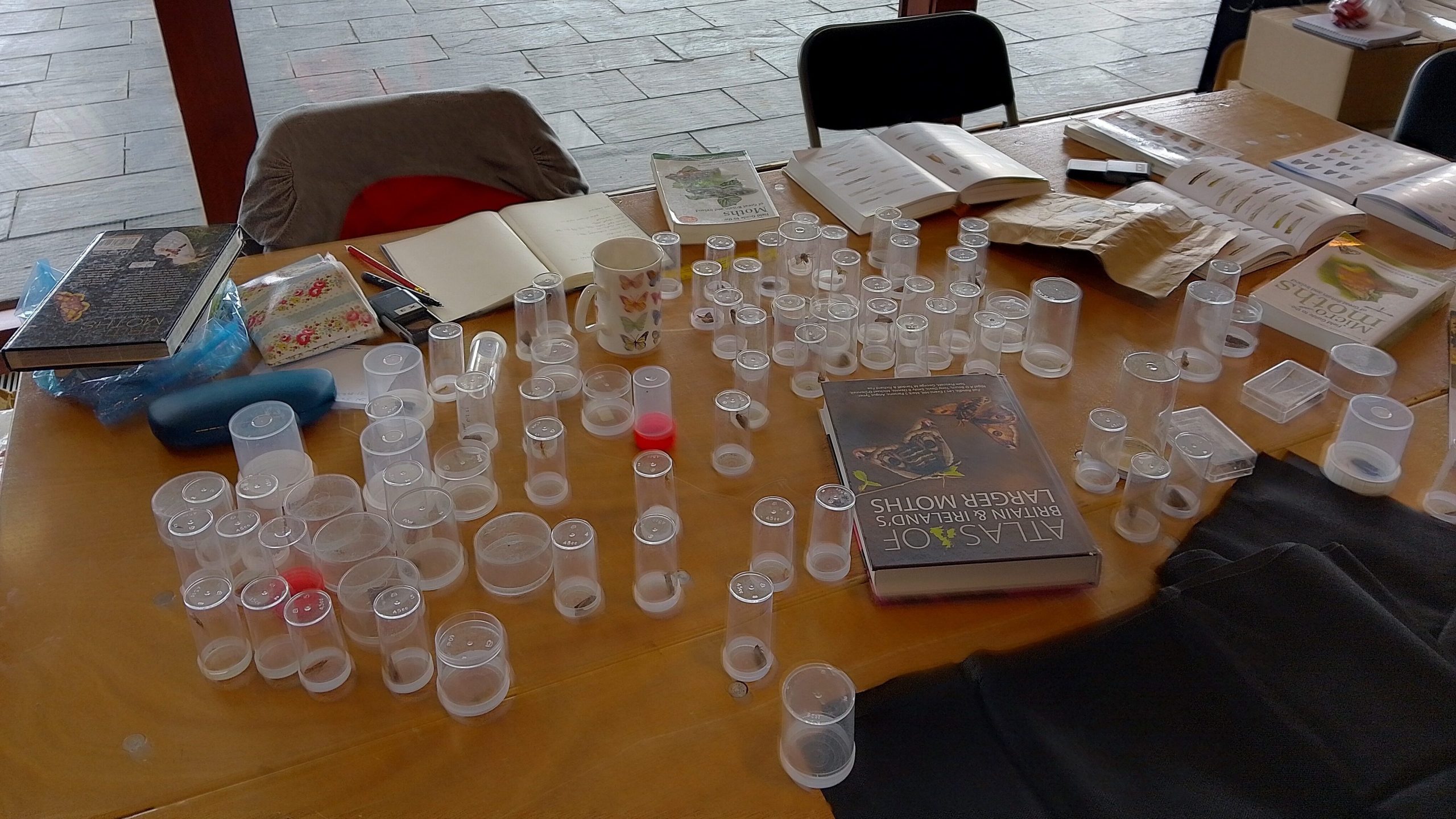
Once all moths in the trap have been identified and released, volunteer Maud uploads the number of each species observed to iRecord – a wildlife recording database operated by the Biological Records Centre. Records uploaded to this database can then be verified by experts, ensuring identifications are reliable before they are passed to the NBN Atlas – the UK’s largest repository of publicly available biodiversity data. In this way, the volunteer’s observations contribute valuable information to understanding national trends in insect distributions and abundance.
Winter
With few moth species adapted to fly in the colder months of the year, January and February were relatively quiet in the Robinson trap – with only one individual recorded (Clouded Drab, Orthosia incerta). However, the team made the most of this opportunity to spend time studying their guidebooks – building their knowledge of caterpillar food plants and flight times. This culminated in a survey of trees across the Botanic Garden to monitor overwintering caterpillars – which can enter a state similar to hibernation to survive the harsh conditions.
Spring
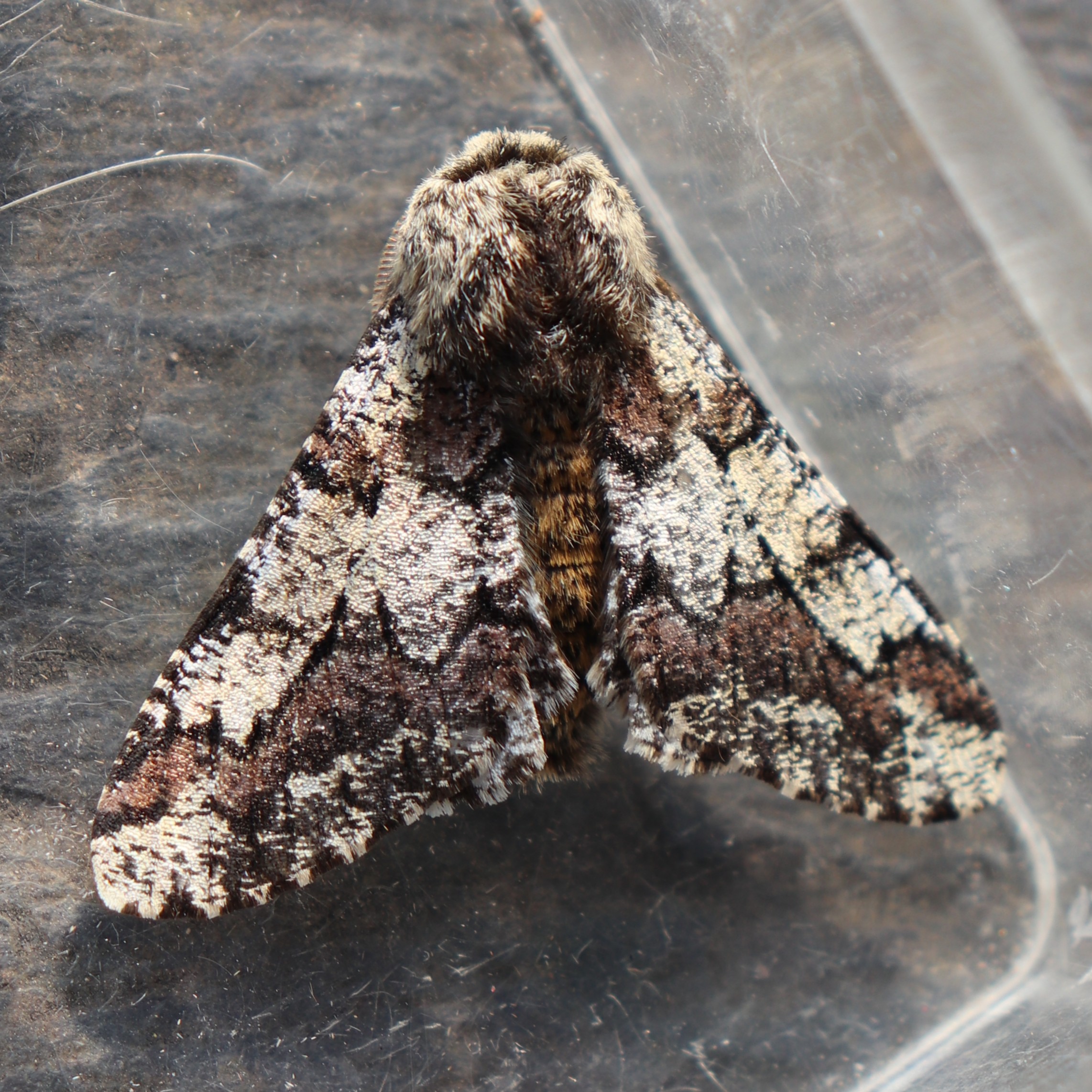
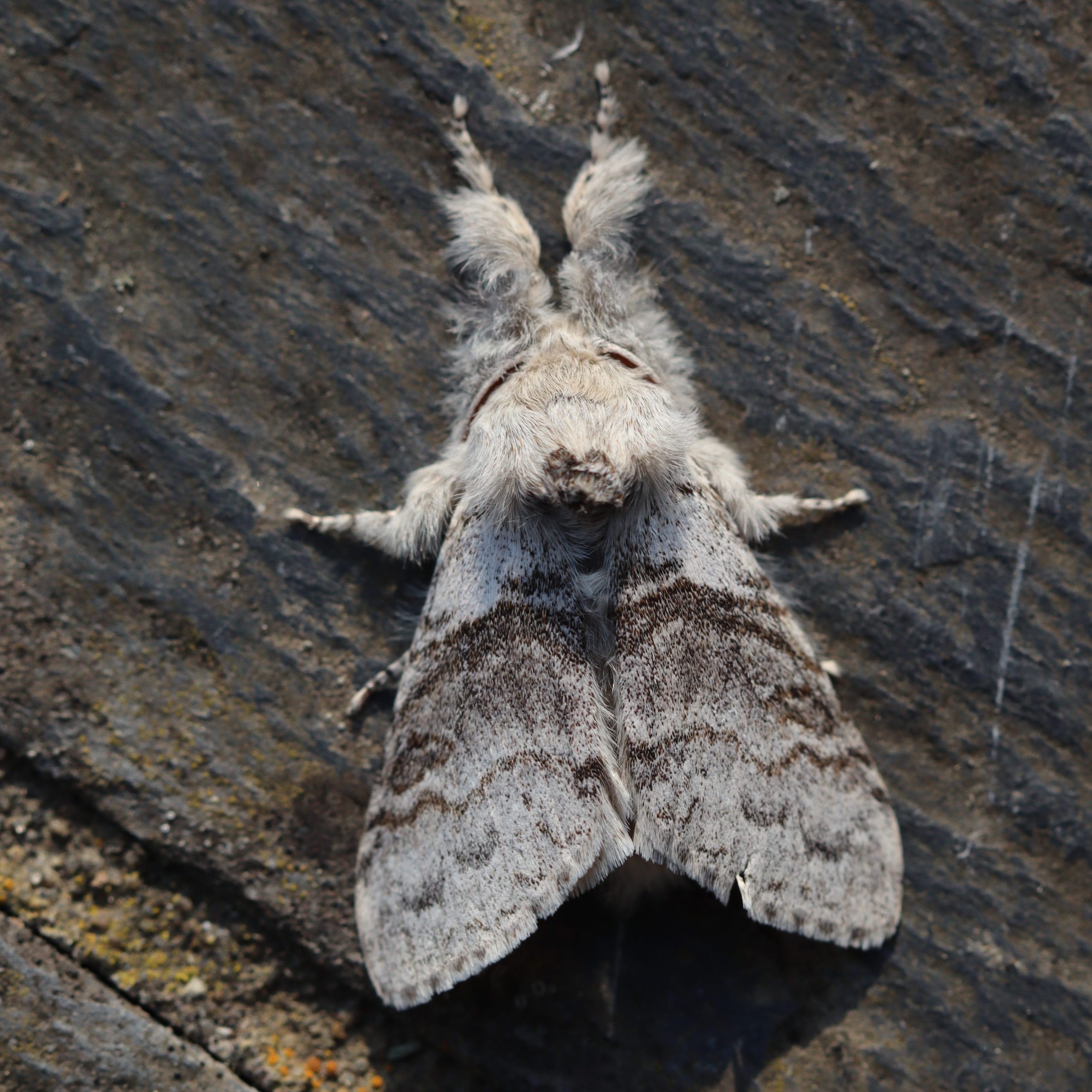
As the weather warmed and many of the flowering plants which moths rely on for nectar bloomed, the months from March to May saw the volunteers record 228 individuals and 61 species. Highlights included (left to right below): Oak Beauty (Biston strataria), Great Prominent (Peridea anceps), and Pale Tussock (Calliteara pudibunda) – photographed by Conservation Engagement Officer Ellyn.

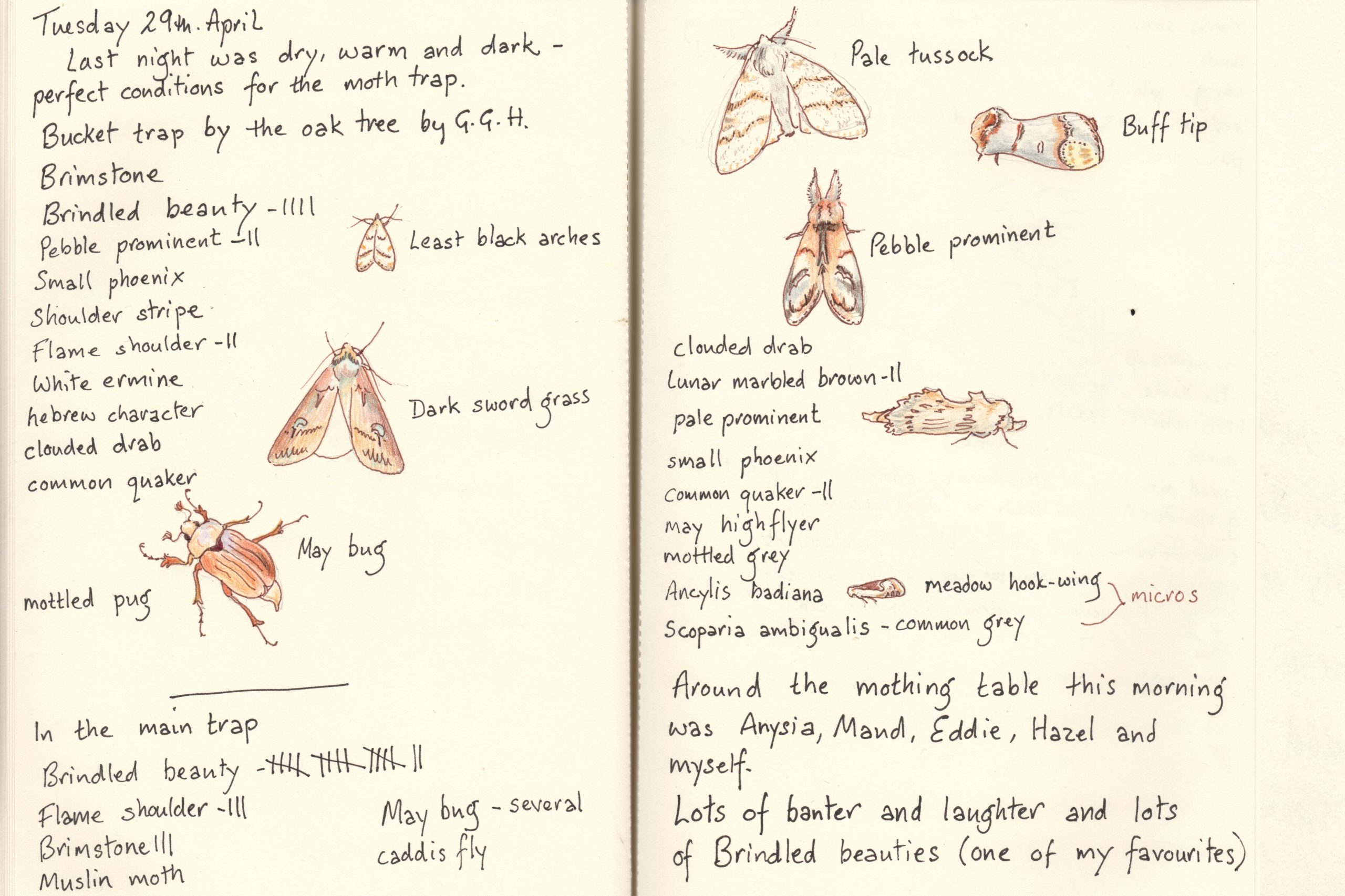
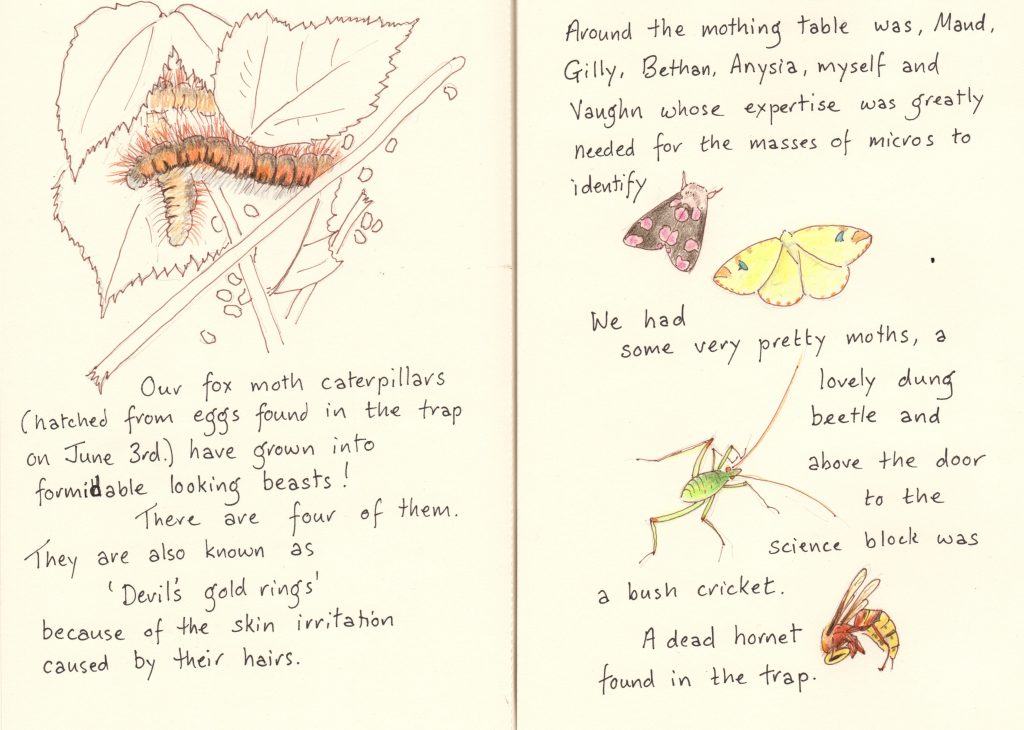
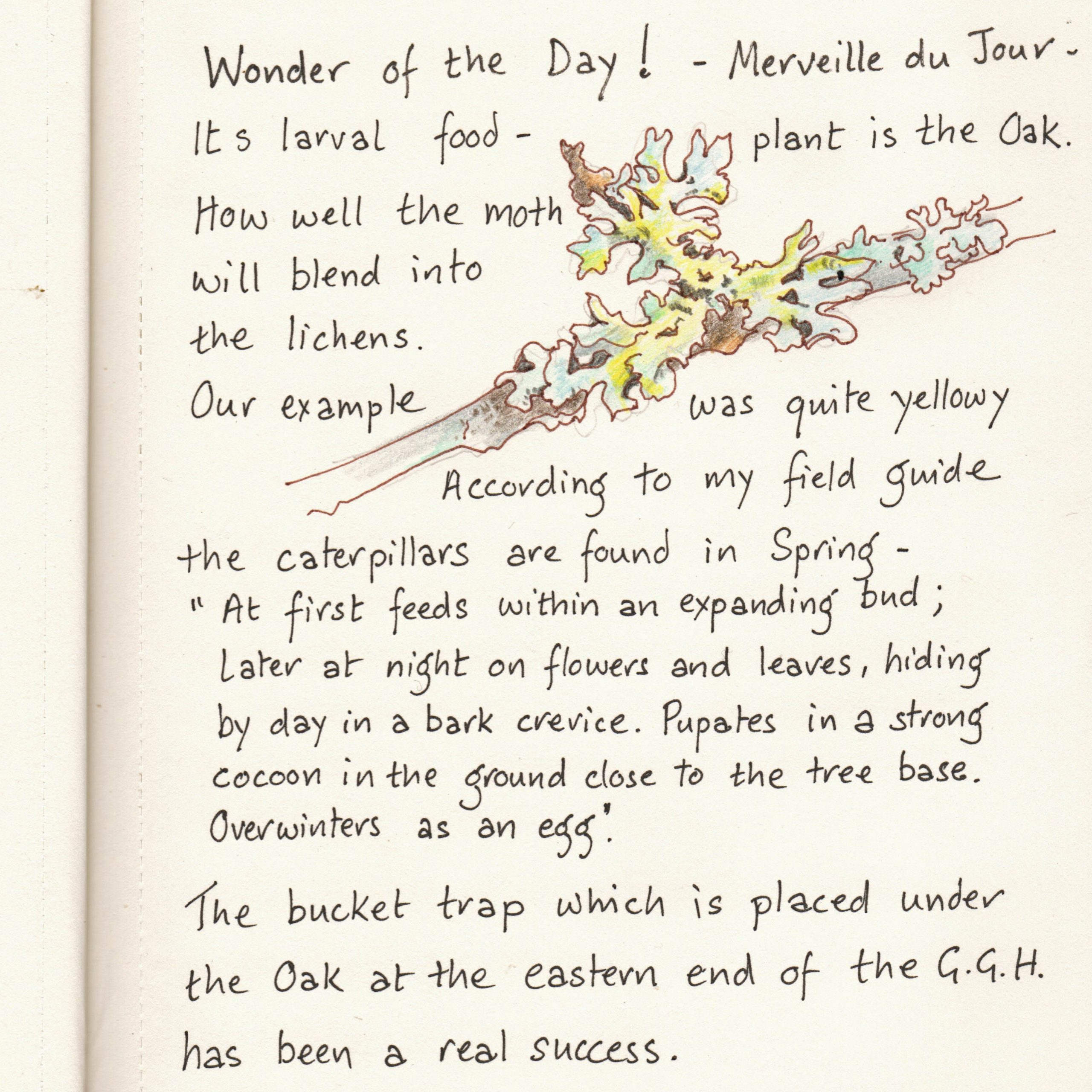
As well as being an opportunity to collect valuable data, the joy in learning and social connection that the volunteers gain from moth trapping also shone through this spring – recorded in Frances’s journal alongside beautiful illustrations of selected species.
Summer
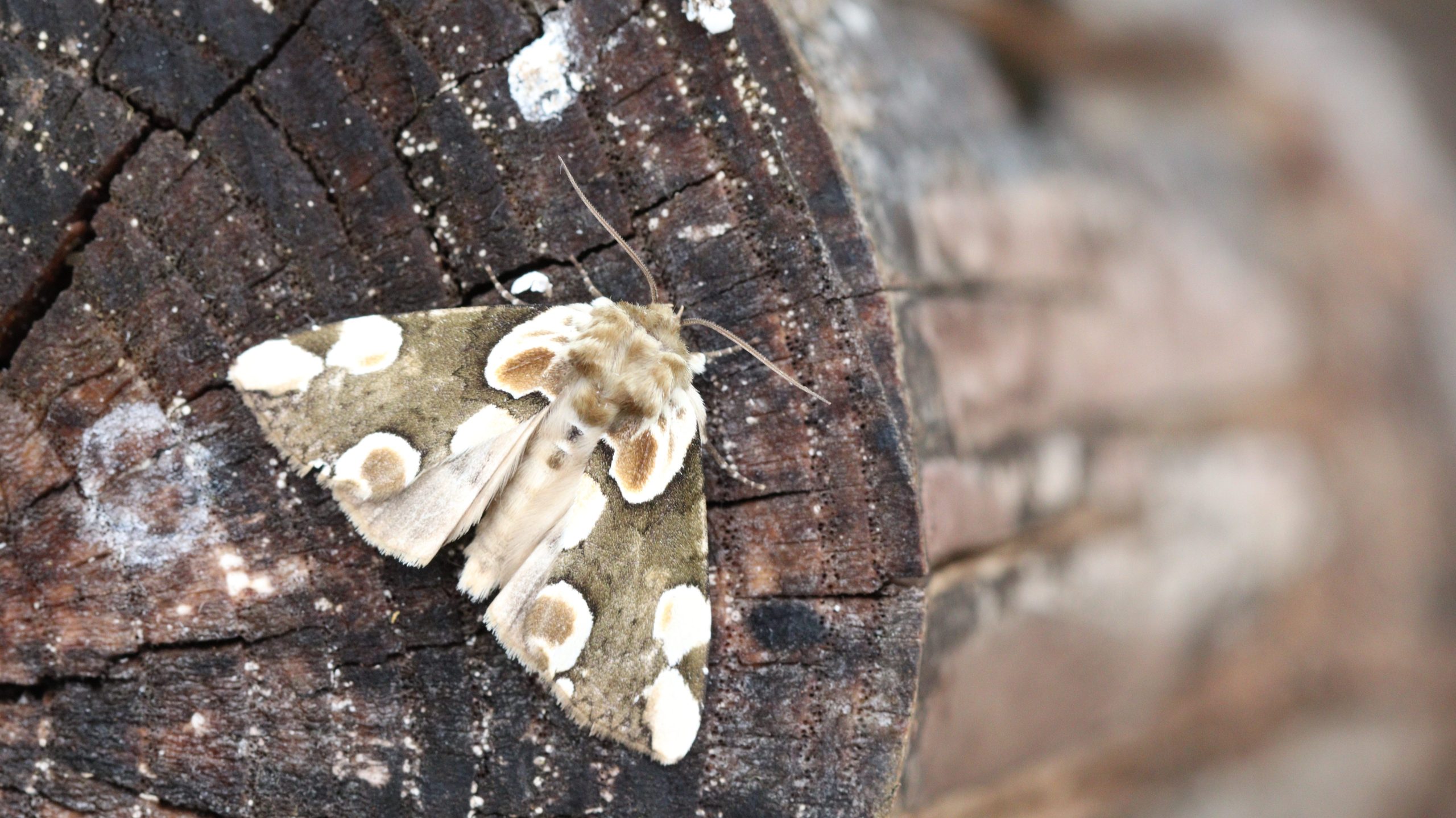
The months of June to August were jam-packed for the volunteers! With over 900 individual moths and 211 species recorded, highlights included the Peach Blossom (Thyatira batis, pictured below), Elephant Hawk-moth (Deilephila elpenor), and Peppered Moth (Biston betularia) – a species famed for its role in evidencing Darwin’s theory of evolution by natural selection.
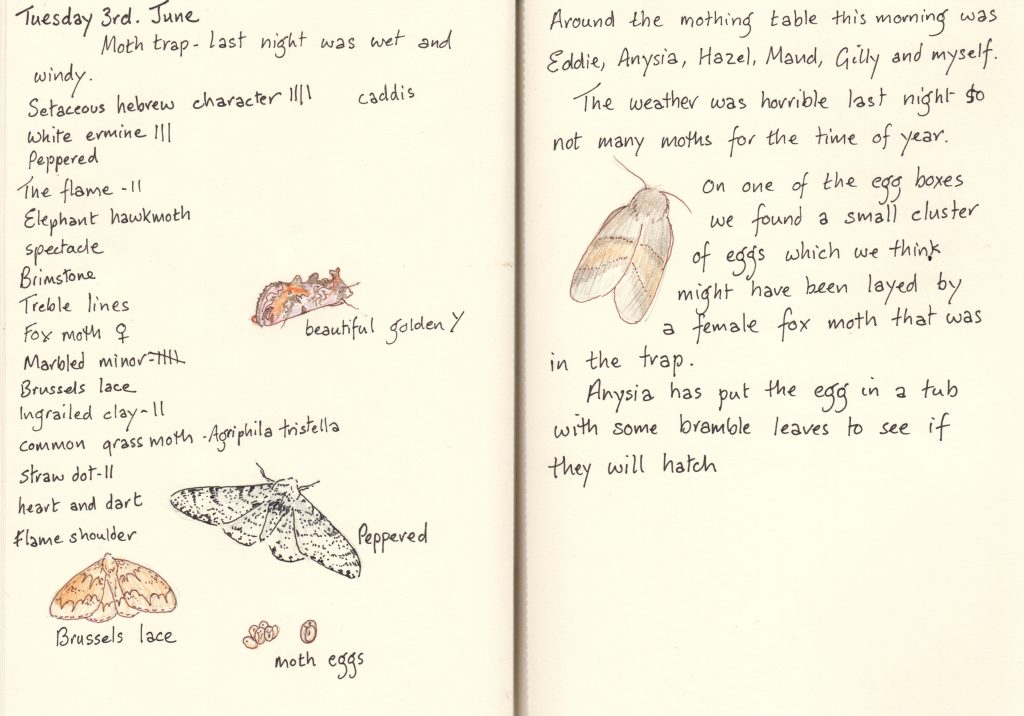
In June the volunteers also discovered that the eggs of a Fox Moth had been laid inside the trap. To learn more about the life cycle of this species, the eggs were carefully raised to caterpillars indoors and illustrated in Frances’s journal. These large, hairy caterpillars were released in August to continue feeding before their long overwintering period. Observing this process underlined how the life cycles of our UK moth species depend on a close interaction between the availability of specific foodplants, habitat, and phenology – and the value in monitoring moths as indicator species to understand environmental change.
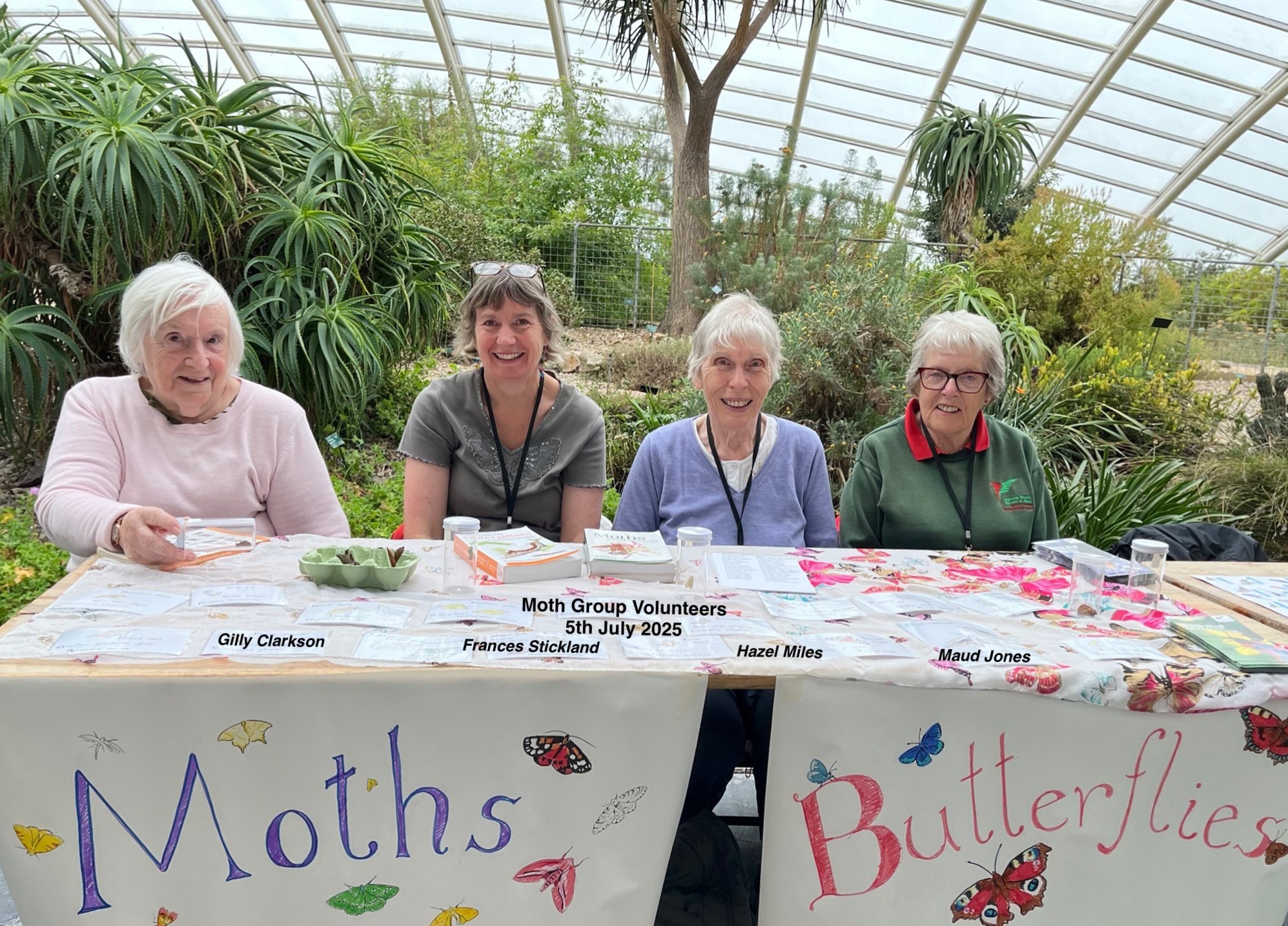
In July, the volunteers played an active role in the Garden’s first ever Bioblitz Festival, supporting our visitors to become citizen scientists and identify as many species as possible over two days across the site – resulting in 82 moth records! The team was also involved in a Girlguiding event this summer, inspiring the next generation of lepidopterists.
Autumn
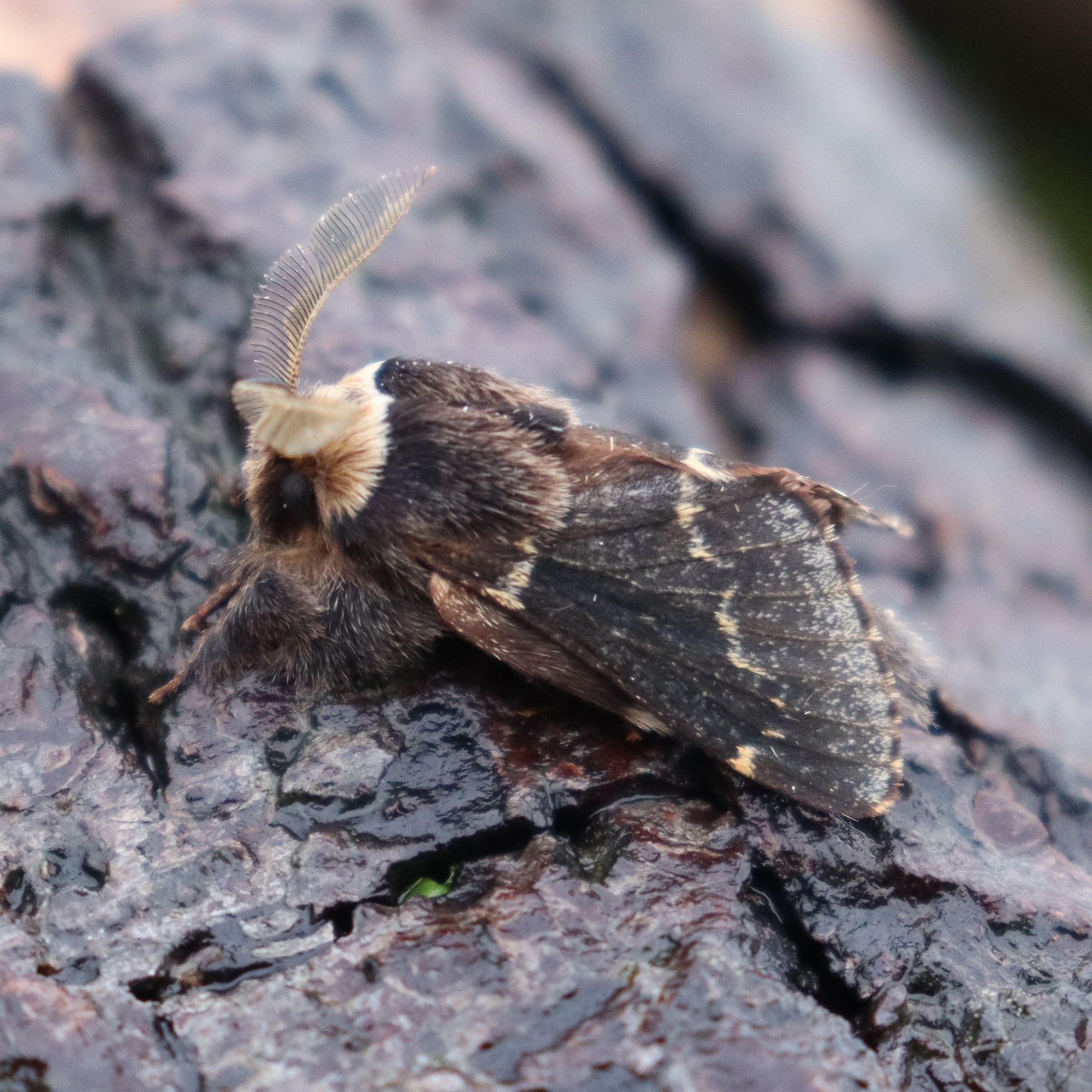
As the weather turned cooler and wetter, the number of species and individuals caught in the Robinson trap began to decline. However, there were still plenty of surprises! In November, the first December Moth (Poecilocampa populi) of the year was recorded – a species which is non-feeding as an adult and relies solely on energy reserves accumulated as a caterpillar to survive.
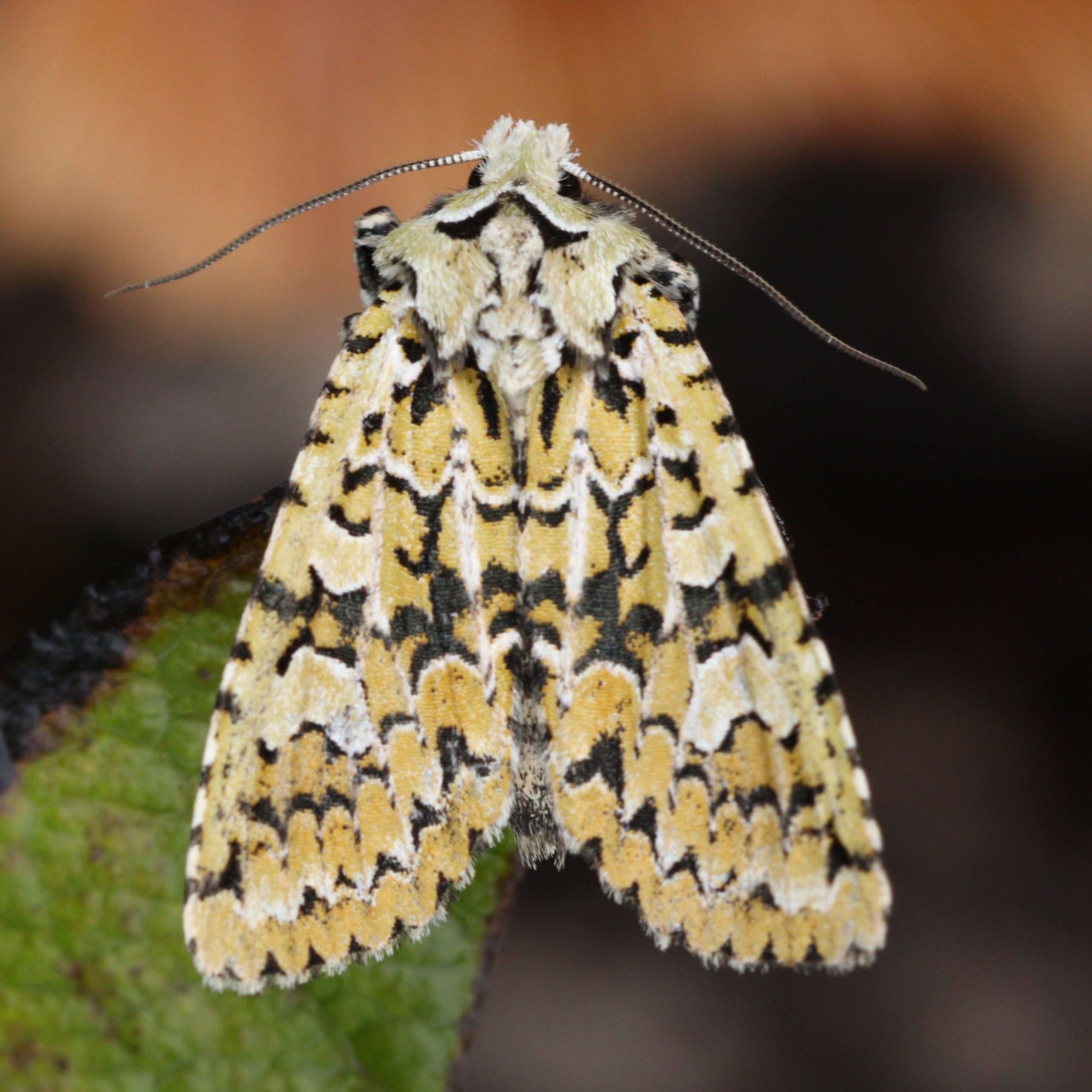
In addition to setting the Robinson trap every fortnight, a portable light trap was also periodically set under an oak tree near the Great Glasshouse, which yielded several species not recorded in any other locations on site in 2025. This included the beautiful Merveille du Jour (Griposia aprilina), a species whose wing patterns resemble lichen.
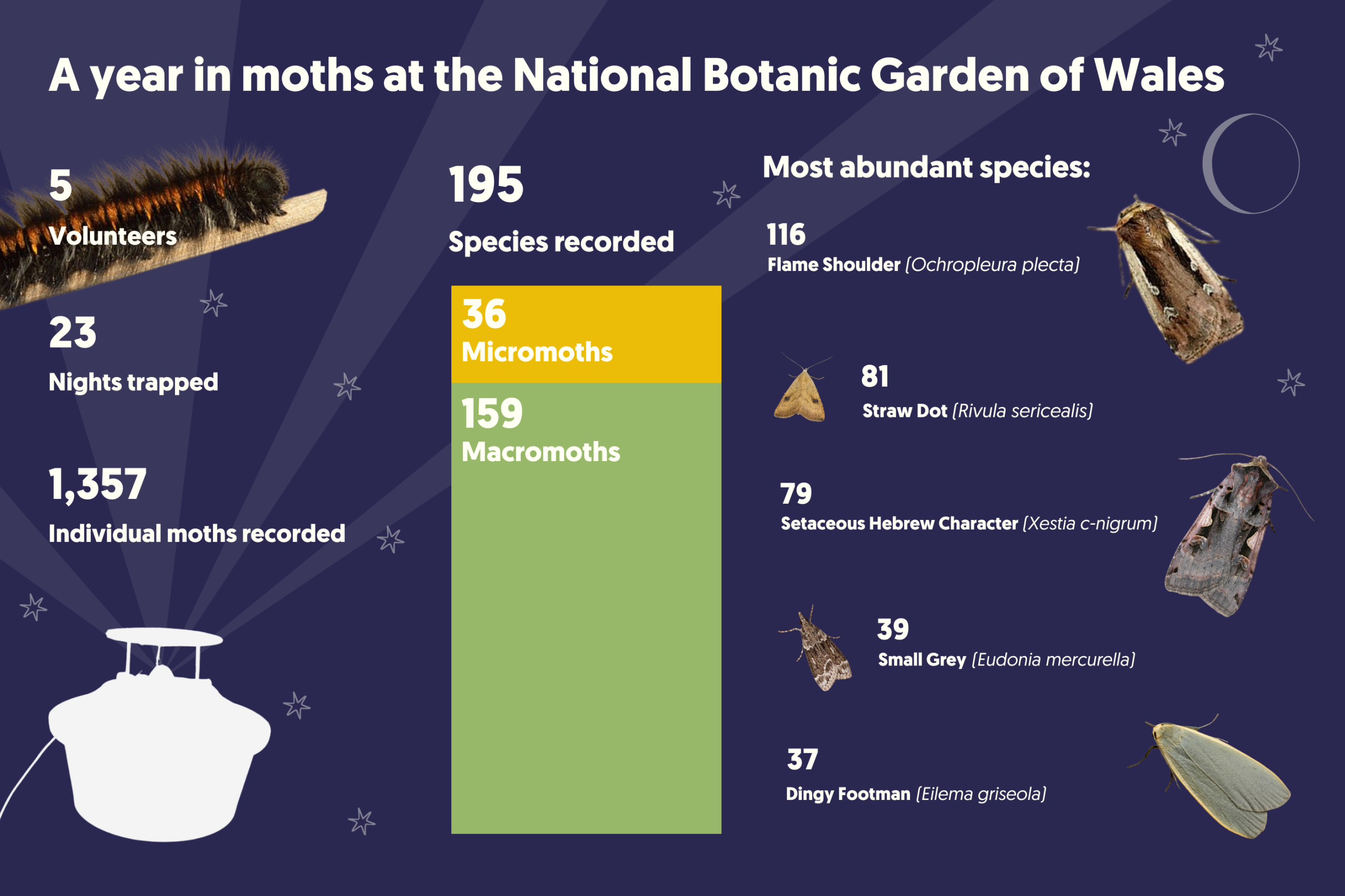
2025 in numbers
After a year of hard work by the volunteers, particularly on identifying many challenging micromoths, 195 species were recorded overall. This is the highest number the volunteers have recorded in a single year! Representing 30% of the species ever recorded on site, this figure is a commendation to the team’s hard work. Seven of the species recorded in 2025 are also of elevated conservation concern on the Great Britain Red List, and many more have not yet been assessed – with observations from traps providing valuable data on their population status. While many species are of conservation concern, the 2021 State of Moths Report also found that not all species are declining in abundance in the UK – with the Straw Dot (Rivula sericealis) increasing by 51% over the last 10 years – a trend similarly reflected on site.
The volunteers look forward to another great year of moth recording in 2026 after some much-needed overwintering!
If you are interested in joining the Garden’s conservation volunteers, please click here for more details and to get in touch – all levels of experience are welcome!
Reference Books used for identification include:
- Moths of Great Britain and Ireland – Marrin Townsend and Paul Waring
- British Moths – Chris Manley
- Field Guide to Micro Moths – Phil Sterling & Mark Parsons
- Atlas of Britain & Ireland’s Larger Moths – Zoe Randle, Les J Evans-Hill, Mark S Parsons, Angus Tyner, Nigel A D Bourn, Tony Davis, Emily B Dennis, Michael O’Donnell, Tom Prescott, George M Tordoff & Richard Fox
Image credits for infographic:
The National Botanic Garden of Wales is supported by Welsh Government’s Nature Networks Fund, funding work to deliver infrastructure improvements on Waun Las NNR, allowing us to manage the site for improved biodiversity and engage with visitors on our natural heritage.